CHENNAI, India — The Kasimedu Fishing Harbour, officially known as the Royapuram Fishing Harbour, lies along the Coromandel Coast of the Bay of Bengal and remains one of the most vital engines of Tamil Nadu’s marine economy. Its estimated 30,000 informal workers, however, operate without formal regulatory safety nets as the historic facility buckles under severe infrastructural bottlenecks.
Built in the 1970s under the Chennai Port Trust for fewer than 600 boats, the harbor now serves well over 1,000 mechanized trawlers and motorized craft every day. Basic dock infrastructure, waste management and social security systems have not expanded with the fleet. Kasimedu is also a major wet market and regional export feeder, processing hundreds of tons of seafood daily.
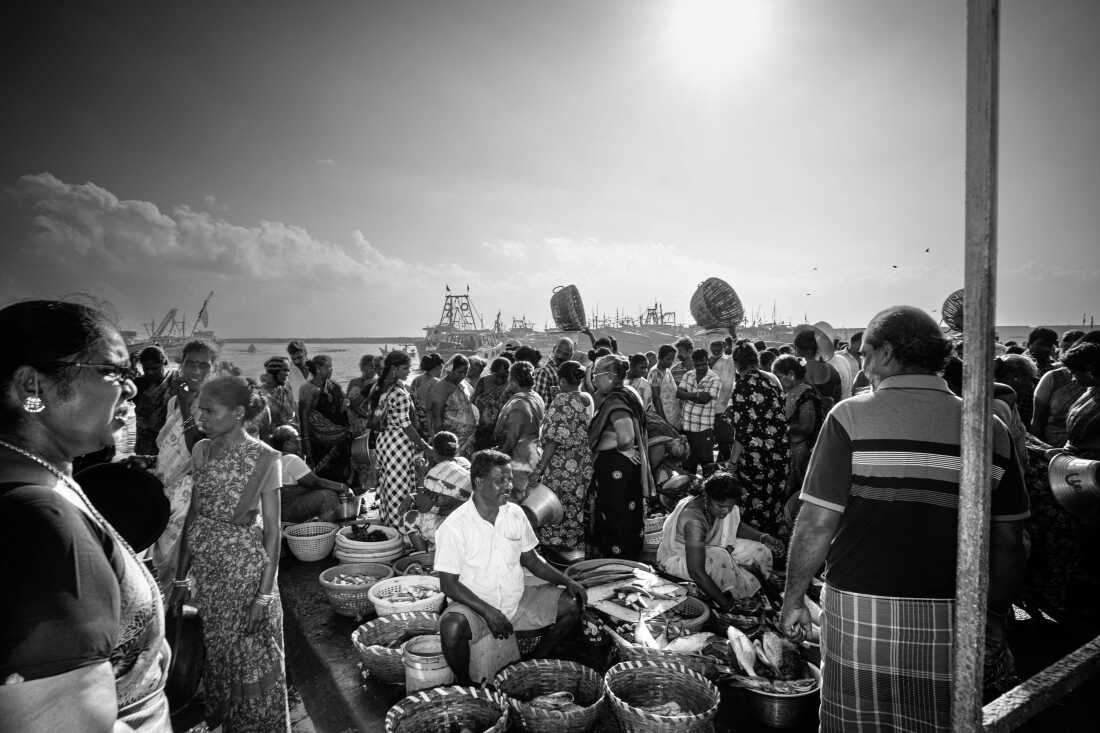
The harbor’s workforce reflects the wider marine sector, where the vast majority of India’s fisheries workers are part of the informal economy. At the bottom of Kasimedu’s economic hierarchy are the “basket men,” mostly migrant laborers who carry the daily catch by hand.


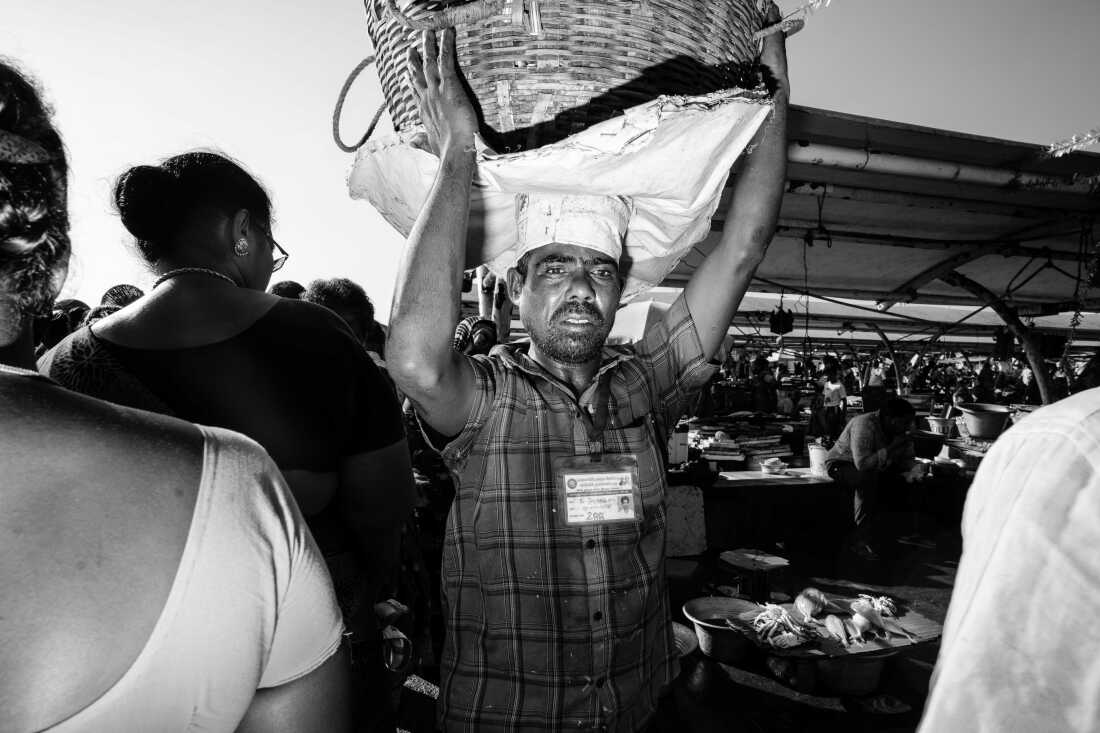
Pavadairayan, 60, begins work at 2 a.m. and continues until 7 a.m. He moves through a third of a mile of wet, slippery pathways covered in fish scales and seawater, carrying 35-pound baskets from docked boats to the auction house. The auction starts at 4 a.m., and he makes the journey 40 to 50 times during a shift.
Nearly 1,000 basket men earn approximately $5 a day for this labor. They have virtually no labor rights or contract protections, and their informal piece-rate work places them under constant scrutiny from supervisors. Wages can be docked arbitrarily, while suspected missing fish can bring fines of several thousand rupees.
Pavadairayan does not take supplementary odd jobs during the day. He rests and sleeps in the harbor area instead. “This money is enough for me,” he said, referring also to the value of having his afternoons free.
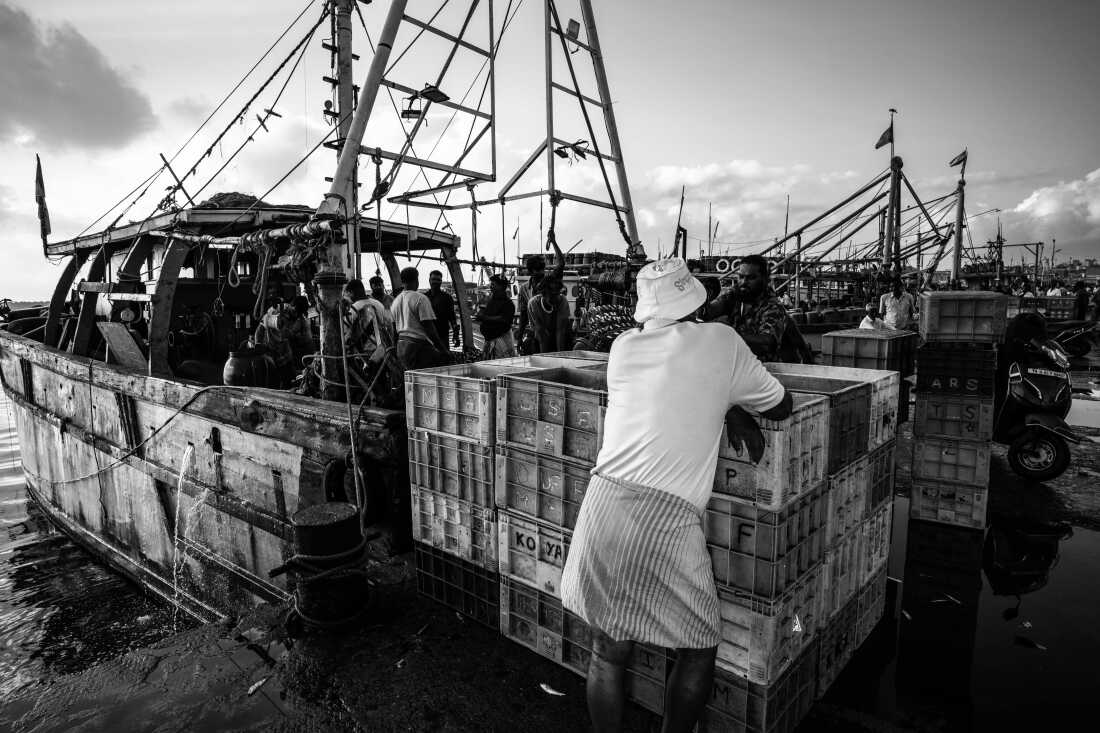
Younger members of traditional fishing communities increasingly seek other employment because of the harbor’s physical hazards and financial instability. Nizamuddin, 25, remains among the few younger fishermen active on the docks. Wearing a wetsuit, he repairs nets, secures boats and hauls catches from the holds to the basket men.
Nizamuddin used his earnings to pay for the high school and college educations of his two older brothers. Both have since moved into formal corporate jobs. “This is the only work I know and it has helped my family survive,” Nizamuddin said.
Bhagat Singh, a researcher and Coastal People Rights Movement (CPRM) social worker whose father was a fisherman, said active fishermen earn an average of $200 a month, but only in seasons with favorable catches. “It’s feast or famine. That is the rhythm of life at the harbor,” Singh said. “One bad season, one poor catch, or one spell of illness can be enough to push a family into dire poverty. There are no safety nets.”
CPRM is a grassroots campaign made up of traditional fishing and indigenous communities. It works to protect marine ecosystems and customary coastal land rights from corporate displacement and port expansions, and to oppose the dilution of India’s Coastal Regulation Zone (CRZ) rules.
Singh said many young people from the community first pursue corporate jobs to escape the volatility, but a desire for professional autonomy often brings them back to commercial fishing later in life.
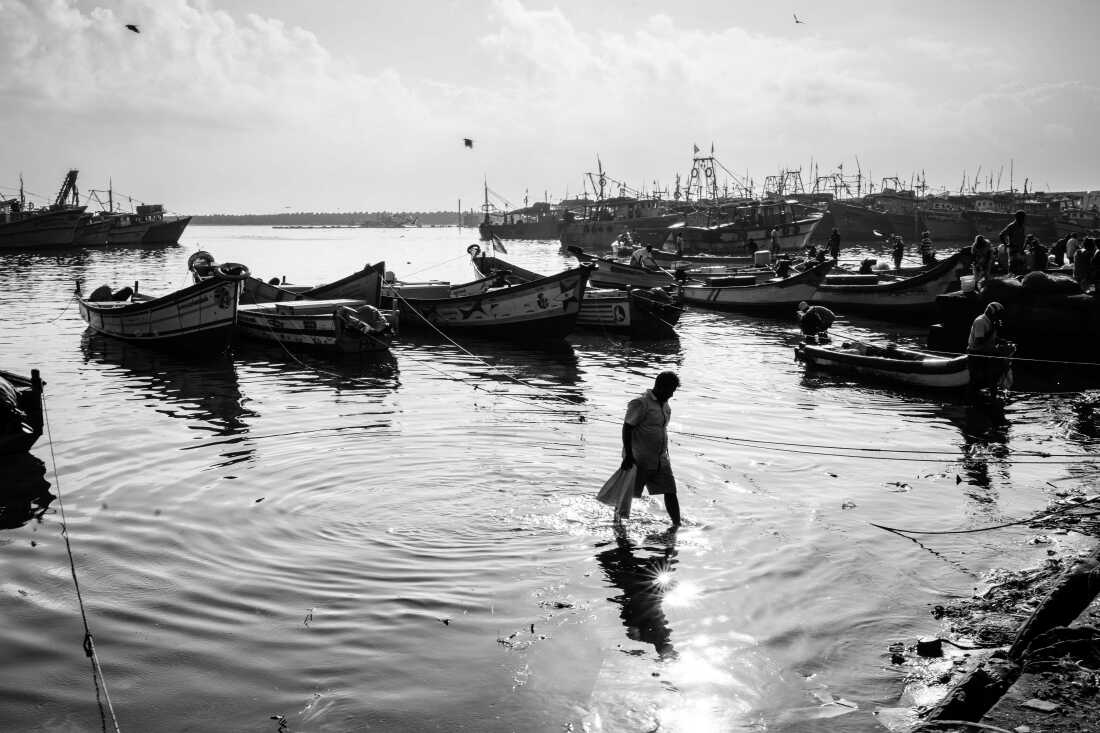
Commercial fishing was not always the only way to make a living along this coast. During the 1970s and 1980s, steep import tariffs and stringent consumer-goods quotas under India’s “License Raj” created a booming market for coastal smuggling.
Nandu Kumar, 65, now runs a retail fish shop at the harbor. In the early 1980s, severe financial pressure led him to use his boat to smuggle imported alcohol and cigarettes into Chennai. That profitable trade declined abruptly after 1991, when the union government slashed import tariffs, dismantled trade barriers and liberalized the economy, eliminating the high profit margins that had sustained coastal smuggling operations.
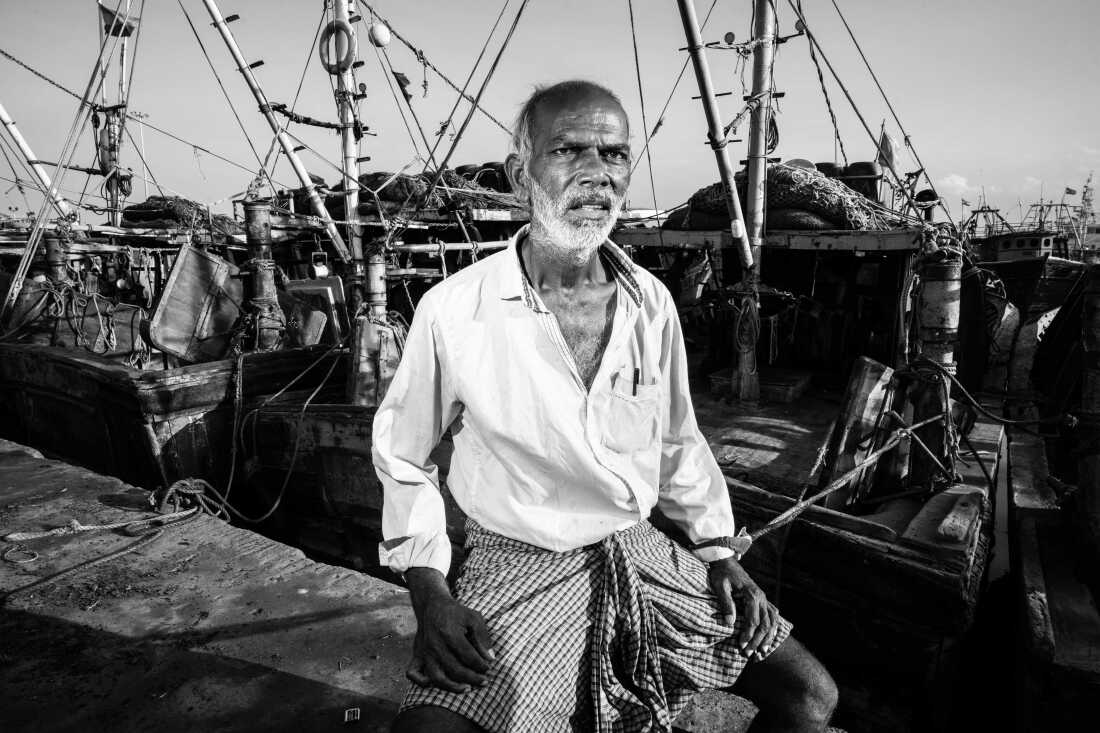
After liberalization, Kumar returned exclusively to commercial fishing. The bodily toll of manual fishing contributed to systemic problems in the community, including substance abuse. In December 2010, his son-in-law drowned after falling from a fishing vessel in an alcohol-related accident.
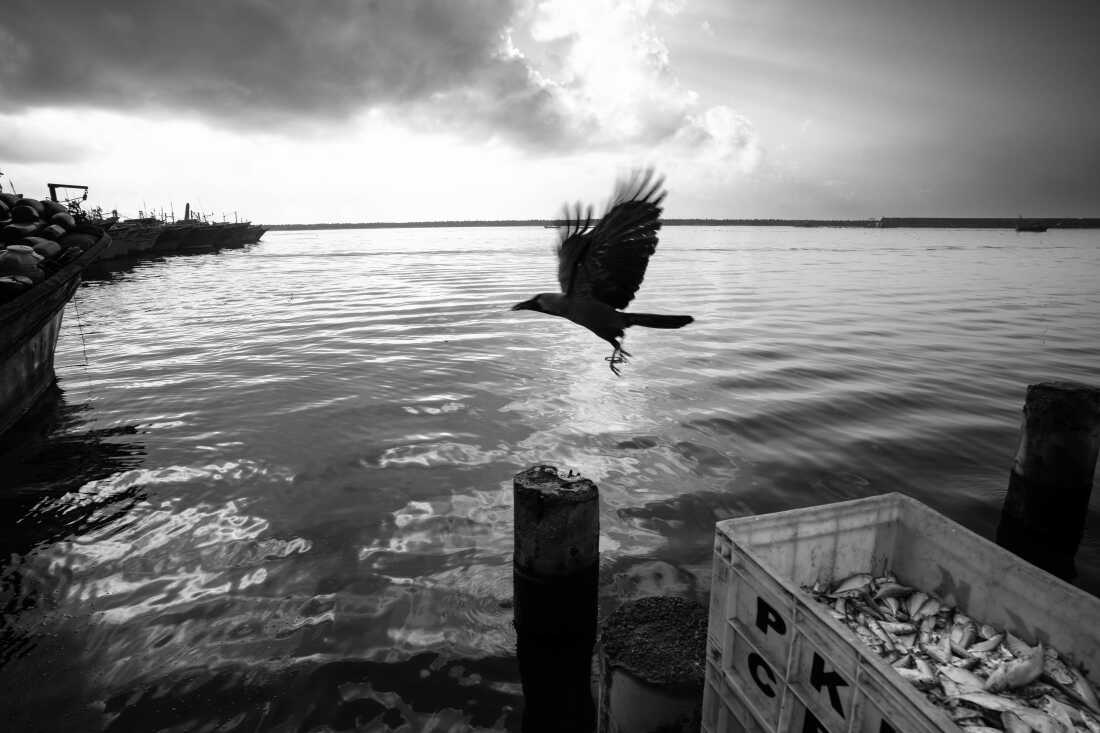
“This fishing life—it’s harshest on the body,” Kumar said. “Your shoulders ache all the time. Sometimes, alcohol is the only way you can cope and forget the pain.”
Months later, Kumar’s daughter took her own life by ingesting agricultural pesticide. Pesticide self-poisoning remains a significant public health issue in rural and semi-urban India because highly toxic chemical compounds are widely accessible.
After her death, Kumar took custody of her infant son and daughter. Multi-week deep-sea fishing voyages, which carry high financial risks and offer no guaranteed catch, were no longer feasible while he was raising young children. With support from his two sons, he moved into shore-based retail and established a fish stall at the harbor that now provides a stable daily income.
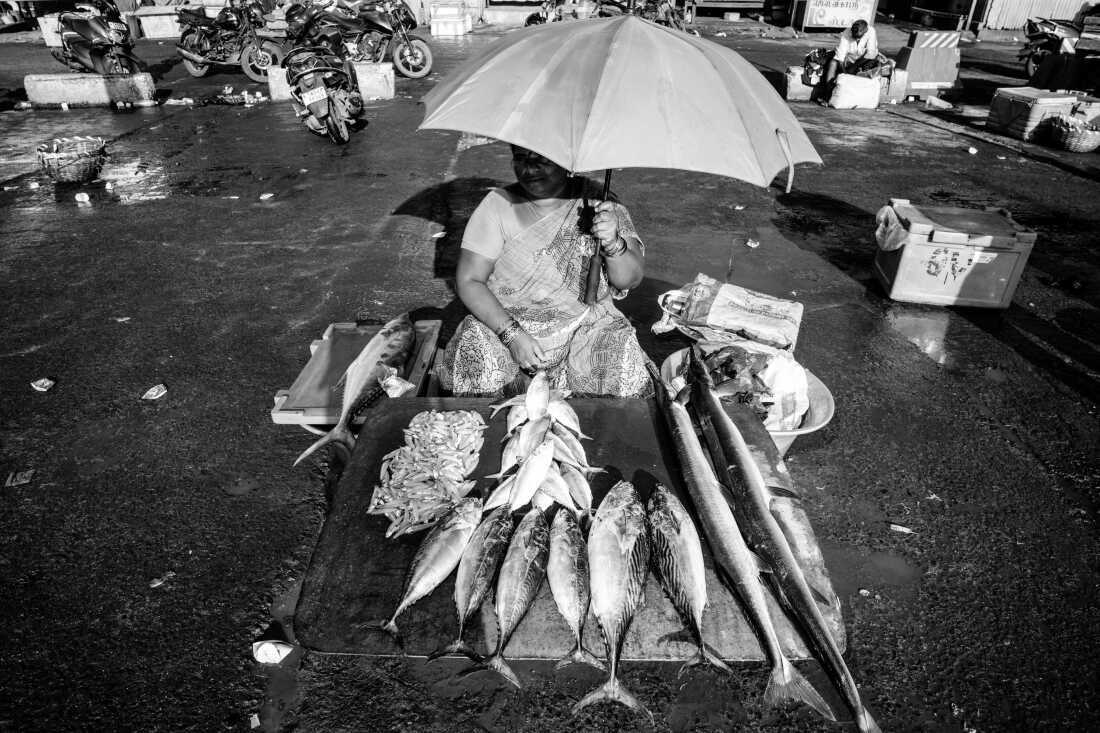
Kasimedu’s older generation retains a strong cultural connection to the ocean despite the trade’s physical demands and personal losses. Kumar still regularly watches fishing vessels return to port in the early hours.

“It’s like your mother’s lap,” Kumar said of the sea. “You may travel far and wide, and don’t need it anymore, but you will return for the warmth and comfort it gives you. Life on a boat is hard, but it is also exhilarating.”