

Harvard Legacy Admissions and Z-List Face Federal Review as States Move to Restrict Preferences
Court records show large differences in legacy acceptance rates as lawmakers consider new restrictions.
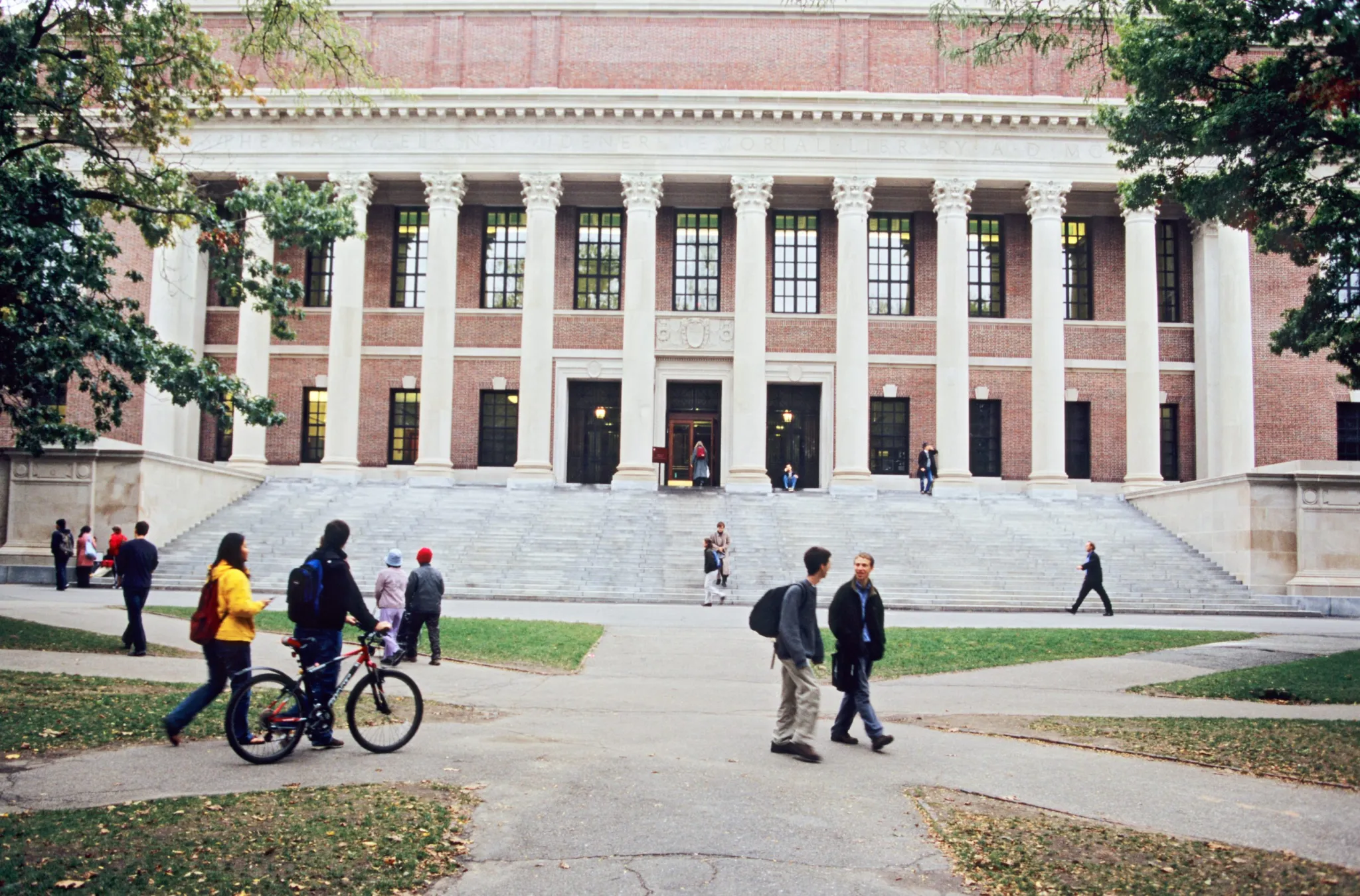
Harvard’s legacy and donor-related admissions practices are under federal investigation, with scrutiny also extending to the university’s little-publicized “Z-List” deferral pathway. The review follows the U.S. Supreme Court’s June 2023 decision ending race-conscious affirmative action and comes as states and federal lawmakers pursue restrictions on admissions preferences for relatives of alumni and major donors.
The Department of Education formally opened an investigation into Harvard’s legacy and donor practices in July 2023. Weeks after the Supreme Court ruling, Lawyers for Civil Rights filed a complaint with the department’s Office for Civil Rights on behalf of the Chica Project, the African American Coalition Committee and Greater Boston Legal Services. Harvard said it was conducting an internal review of its admissions processes; that inquiry remains ongoing.
The complaint alleges that legacy and donor preferences violate Title VI of the Civil Rights Act of 1964, which prohibits discrimination based on race, color or national origin in programs receiving federal financial assistance. It argues the preferences produce an unlawful disparate impact, citing that roughly 70% of legacy and donor-related applicants at Harvard are white.


Harvard’s Z-List, established in the late 1970s, typically admits 50 to 60 applicants a year on the condition that they defer enrollment for one academic year and enter Harvard College as freshmen the following fall. Applicants do not check a specific box on the Common Application, and the pathway is not detailed on the university’s undergraduate admissions website.
Internal statistics disclosed during federal court proceedings show that Z-List students disproportionately include children of major financial donors, alumni and prominent public figures. On average, their standardized test scores and grade point averages are lower than those of students admitted through regular decision or early action. Because Z-List students defer matriculation, their academic credentials are categorized differently in standard annual reporting metrics, allowing Harvard to admit applicants with lower credentials without altering the published academic profile of the incoming freshman class.
Court documents and expert testimony in *Students for Fair Admissions, Inc. v. President and Fellows of Harvard College* (600 U.S. 181) also detailed how Harvard tracked applicants in the “ALDC” group: Athletes, Legacies, Dean’s Interest List candidates, and Children of faculty or staff. The Supreme Court decided the case on June 29, 2023.
Duke University economist Peter Arcidiacono analyzed Harvard admissions data from 2009 through 2015 for research submitted in the case. Applicants with parental alumni status had an average acceptance rate of 33.6%, compared with approximately 5.9% for non-legacy applicants. ALDC applicants made up less than 5% of the applicant pool but accounted for more than 43% of admitted white applicants during those years.
The admissions office also managed a Dean’s Interest List tracking applicants affiliated with major financial donors or prospective benefactors. The list assigned special numerical ratings to increase applicants’ likelihood of acceptance.
Governments have begun restricting such preferences. Colorado became the first state to ban legacy admissions at public higher education institutions in 2021. Proposals to prohibit legacy preferences at private and public colleges have also been introduced in Massachusetts, New York and Connecticut.
California’s Assembly Bill 1780, signed into law in September 2024, takes effect September 1, 2025. It bars private nonprofit higher education institutions from evaluating applicants based on legacy or donor connections if they participate in the state’s Cal Grant financial aid program. Covered institutions, including Stanford University and the University of Southern California, must submit annual compliance disclosures to the state legislature on the academic credentials and demographics of admitted students.
In Congress, Sen. Jeff Merkley (D-Ore.) and Rep. Jamaal Bowman (D-N.Y.) sponsored the *Fair College Admissions for Students Act*. The bill would amend the Higher Education Act of 1965 to make participation in federal financial aid programs conditional on eliminating legacy and donor preferences.
Private universities have taken different approaches. Johns Hopkins University ended legacy preferences in 2014 under President Ronald J. Daniels. The university later reported a significant increase in the proportion of Pell Grant-eligible low-income students. In 2018, alumnus and former New York City Mayor Michael Bloomberg gave Johns Hopkins $1.8 billion exclusively for undergraduate financial aid, establishing permanently need-blind admissions without requiring legacy consideration for donors.
Amherst College formally ended legacy preferences in October 2021 while expanding its financial aid budget. Wesleyan University announced an immediate end to legacy admissions in July 2023, following the Supreme Court’s affirmative action decision. The Massachusetts Institute of Technology (MIT) and the California Institute of Technology (Caltech) have historically excluded legacy status from undergraduate admissions evaluations. The University of California has barred legacy preferences since 1998.
The practices have also drawn attention from legal scholars and tax authorities over charitable deductions and institutional fundraising. Under Internal Revenue Code Section 170 and Treasury Regulation § 1.170A-13, taxpayers who contribute to a tax-exempt 501(c)(3) organization and receive a tangible benefit or service in return—a “quid pro quo” contribution—must reduce their tax deduction by the fair market value of that benefit.
Federal tax law has not explicitly classified an admissions preference or a place on a special deferral list as a taxable financial benefit. Legal analysts say the practice remains at the center of debates over federal oversight of tax-exempt educational endowments and nonprofit governance standards.









