French Teen Loses Hand to Police Grenade in School Protests
Over 5,000 arrests, mostly minors, have been made as blockades shut down 400 schools nationwide ahead of the presidential succession race.

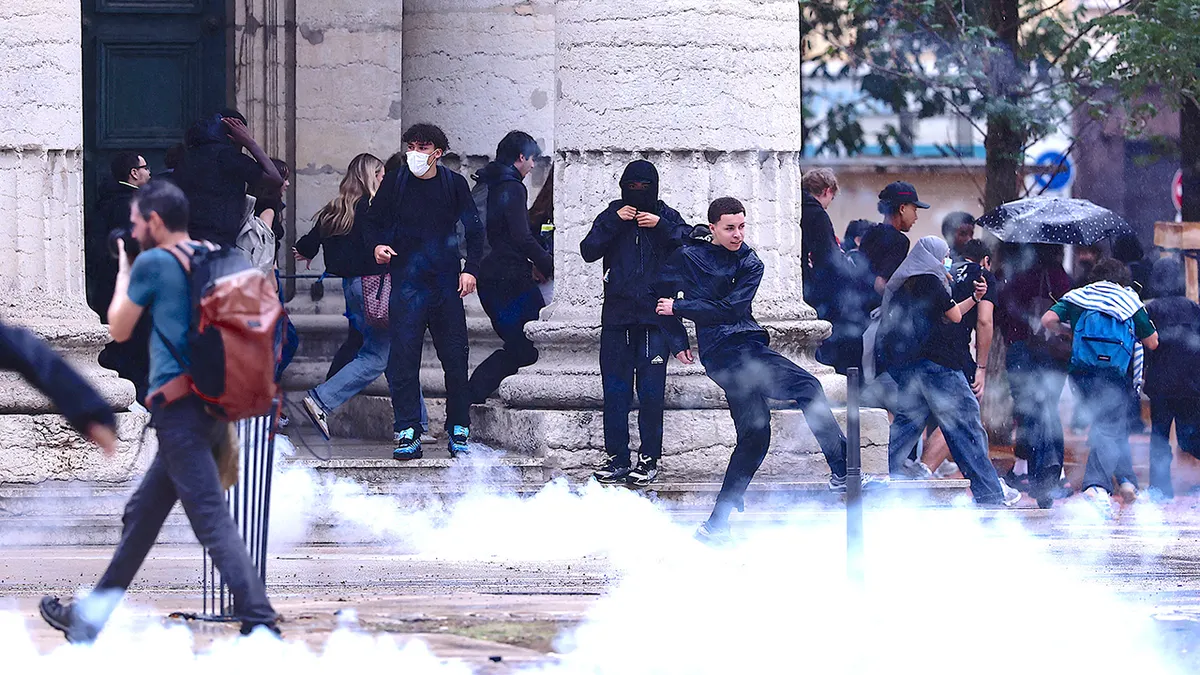
A 15-year-old boy lost his hand and part of his lower arm after picking up a French police dispersal grenade during high school protests in Lens, marking the most severe injury in three weeks of nationwide demonstrations over deteriorating educational conditions.
The blast occurred as roughly 200 to 250 protesters hurled objects at officers, according to François-Xavier Lauch, prefect of the Pas-de-Calais department. The incident took place just one day before a national demonstration organized by pupils’ unions demanding action on chronic underfunding, overcrowding, and crumbling infrastructure across the country’s public lycées.
More than 400 schools remained shuttered as of early October 2026. What began in late September as localized blockades in the disadvantaged suburbs of the Paris region — known as Île-de-France — has expanded into major cities including Lyon, where clashes between students and riot police intensified on Oct. 1. Grievances range from massive teacher shortages and chaotic timetables to overheated classrooms that became unbearable during this year’s prolonged heatwaves.


France’s education system has faced mounting pressure for years. The country relies heavily on untrained contract staff to fill teaching vacancies, a structural issue that leaves many classrooms without permanent instructors well into the autumn term. Unlike neighboring Germany or the Nordic countries, France has historically centralized its education funding and staffing decisions through the Ministry of National Education in Paris, leaving individual school principals with little autonomy to hire substitutes quickly when staff depart.
<img src="https://nile1.com/wp-content/uploads/2026/10/1791223880_886_france-1-scaled-1.jpg" alt="France student protests” width=”1200″ height=”675″ />
The scale of the law enforcement response has been vast. Over 5,000 people have been arrested since the unrest began, with the Justice Ministry reporting that 87% of those detained are minors. Prosecutors are pursuing cases against more than 1,800 individuals, including 1,483 underage suspects, though specific charges have not been made public. French juvenile justice procedures typically mandate specialized courts and prioritize educational sanctions over incarceration for offenders under 18, but mass arrests of this magnitude strain those standard protocols.
Police use of dispersal grenades remains highly contentious in France. Following deadly crowd-control incidents during the 2018 Yellow Vest movement, authorities phased out older explosive tear gas canisters in favor of less-lethal alternatives. However, the devices deployed to disperse crowds still carry significant risks if handled directly, particularly by teenagers who may not recognize them as live munitions.
Education Minister Edouard Geffray stated that the wave of protests had begun to decline in recent days. In response to the unrest, the government announced plans to launch a digital platform allowing students to formally register their complaints, an attempt to channel street-level anger into administrative feedback.
For demonstrators on the ground, institutional promises have done little to halt the blockades. “We’re going to keep blocking until the government hears us,” Sami Karen, an 18-year-old protesting outside the Charles de Foucauld high school in Paris, told Reuters. “As long as they don’t listen to us, we won’t stop this fight.”

The unrest carries heavy political weight. President Emmanuel Macron is constitutionally barred from seeking a third consecutive term in the upcoming presidential election, leaving a wide-open race to succeed him. Youth mobilization and suburban dissatisfaction have historically reshaped French electoral dynamics, and the prolonged closure of hundreds of schools forces the crisis directly into the daily lives of millions of working parents ahead of the campaign season.
Masked protesters have erected barricades near institutions such as the Lycée Berthelot in Aubervilliers, a northern Paris suburb, carrying placards reading “Same studies, but not the same rights.” Government officials confirmed that several school buildings have been ransacked during the confrontations. The Justice Ministry continues to process the backlog of minor defendants as the national pupils’ union advances with its scheduled demonstration.