Foldable Phone Owners Warned: Sand and Pocket Debris Pose Bigger Risk Than Drops
Why sand and lint — not drops — are killing flexible screens, and what manufacturers won't tell you about IP ratings and hinge life
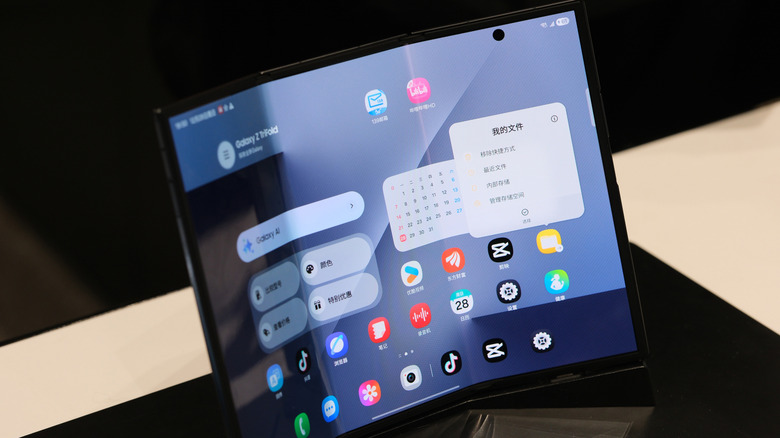
The biggest threat to a foldable smartphone isn’t gravity — it’s what’s already in your pocket. Repair technicians and manufacturers agree that microscopic debris, particularly sand and dust, causes more inner-screen damage than accidental drops, a risk that grows as foldables move from niche gadgets to mainstream devices.
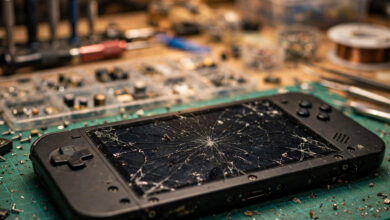
Samsung’s own care guidelines explicitly warn that cards, coins, and keys can scratch or puncture the flexible display when the device snaps shut. But repair shops report that fine particulates — beach sand, construction dust, pocket lint — are the silent killers. Unlike a visible key, grains of silica slip unnoticed between the folding halves, grinding into the plastic OLED layer with each open-close cycle.
“We see more screens destroyed by a day at the beach than by a drop on concrete,” said a technician at uBreakiFix, a Samsung-authorized repair chain. “The hinge mechanism creates a tiny gap when folded. That gap is a magnet for abrasive particles.”


The vulnerability stems from fundamental physics. Foldable inner screens use ultra-thin glass (UTG) or advanced polymer layers that must bend repeatedly. They lack the rigid Gorilla Glass Victus or Ceramic Shield armor found on slab phones. Pressing a fingernail into a stuck pixel — a harmless habit on traditional displays — can permanently dent the active matrix.
Compounding the problem: factory-applied screen protectors look like disposable shipping film. Early Galaxy Fold reviewers peeled them off, instantly voiding warranties. Samsung now tucks edges under the bezel, but confusion persists. Third-party protectors often interfere with the folding radius or adhesive sensors. Only manufacturer-listed accessories are validated for the specific hinge tension and curvature.
Stylus use adds another failure point. The Galaxy Z Fold series supports S Pen input, but only with the Fold Edition or Pro models designed with softer tips. Standard S Pens or third-party styluses concentrate force on a needle-point tip, risking puncture.
Water and dust resistance ratings tell an incomplete story. The Galaxy Z Fold 6 and Fold 6 Ultra carry IP48 ratings — protected against 1 mm solids and immersion. The Google Pixel 9 Pro Fold matches IPX8. But the “4” in IP48 means dust ingress is expected; only IP6x devices like the iPhone 16 Pro (IP68) claim dust-tight seals. No foldable yet achieves IP6x because the moving hinge cannot be hermetically sealed.
Hinge durability marketing cites 200,000 to 500,000 fold cycles in laboratory robots. At 100 opens daily, that suggests 5–13 years. Real world data diverges sharply. Samsung’s original Galaxy Fold targeted 200,000 cycles; early units failed at fractions of that. Controlled tests use clean rooms, constant temperature, and perfect alignment — none of which exist in a jeans pocket.
Independent testing by YouTube channel JerryRigEverything found hinge stiffness increased 40% after simulated pocket-lint exposure, accelerating screen stress. iFixit teardowns reveal that debris accumulation degrades the sweeper brushes designed to wipe the display gap, a maintenance item no user can service.
Out-of-warranty inner-screen replacements cost $499–$799 for Samsung models, $899 for Pixel Fold, often exceeding the device’s residual value. Samsung Care+ and Google Preferred Care reduce fees to $99–$149 but require enrollment within 30 days of purchase. Carriers rarely cover foldable screens under standard insurance.
Temperature extremes compound material fatigue. Leaving a foldable in a hot car (above 95 °F / 35 °C) softens the adhesive bonding UTG to the polarizer; freezing temperatures make the polymer layer brittle. Both states increase delamination risk during folding.
The practical checklist: blow out the hinge gap with compressed air weekly. Inspect the inner screen under bright light before closing. Never apply pressure to remove smudges — use a microfiber cloth with 70% isopropyl alcohol. Store the device open when placed face-down. And treat the IP rating as splash resistance, not dust immunity.
Google’s Pixel 9 Pro Fold, released August 2024, introduced a dual-hinge design claiming 30% less gap volume than its predecessor. Samsung’s Galaxy Z Fold 6, launched July 2024, upgraded to a “dual-rail” hinge structure with enhanced sweeper bristles. Both manufacturers now include explicit debris warnings in setup wizards — a tacit admission that pocket lint remains the foldable’s Achilles’ heel.