Ferrari Bets Maranello Plant on 40% Gas-Only Target by 2030
The Italian automaker cut its 2030 EV target in half while absorbing a 15% U.S. import tariff on every car leaving its single factory.
Ferrari is keeping 40 percent of its 2030 lineup purely gasoline-powered, a target that defies the electric pivot sweeping the rest of the luxury auto sector. The revised powertrain mix, confirmed by the automaker, slashes an earlier goal that called for fully electric vehicles to make up 40 percent of sales by the end of the decade.
The new breakdown allocates 40 percent to gas-only engines, 40 percent to hybrids and just 20 percent to battery-electric models. That shift reflects cooling demand for high-end EVs globally. Lamborghini recently scrapped plans for a fully electric fourth core model, opting instead for a plug-in hybrid setup.
Every vehicle still rolls out of a single site. Last year, the Italian marque shipped 13,640 units worldwide from its Maranello factory complex. Refusing to build cars closer to regional markets preserves strict quality control but leaves the company exposed to trade disruptions. Imported European cars currently face a 15% tariff in the U.S., a direct hit to margins on every Prancing Horse-badged car crossing the Atlantic.

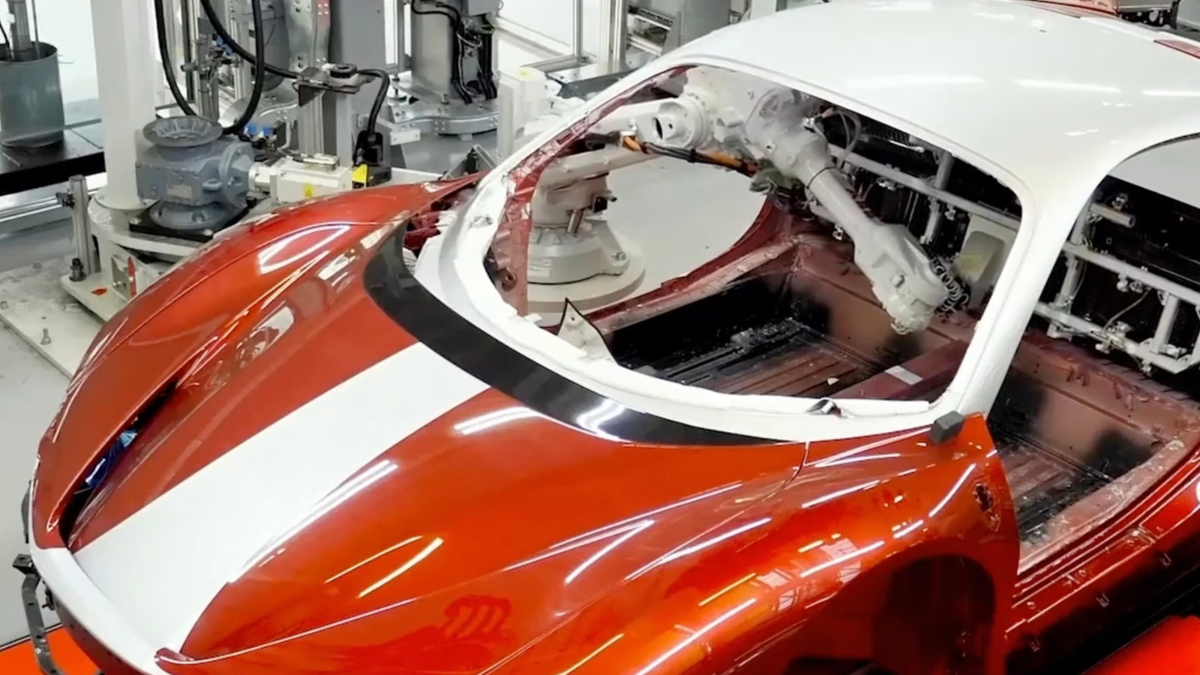
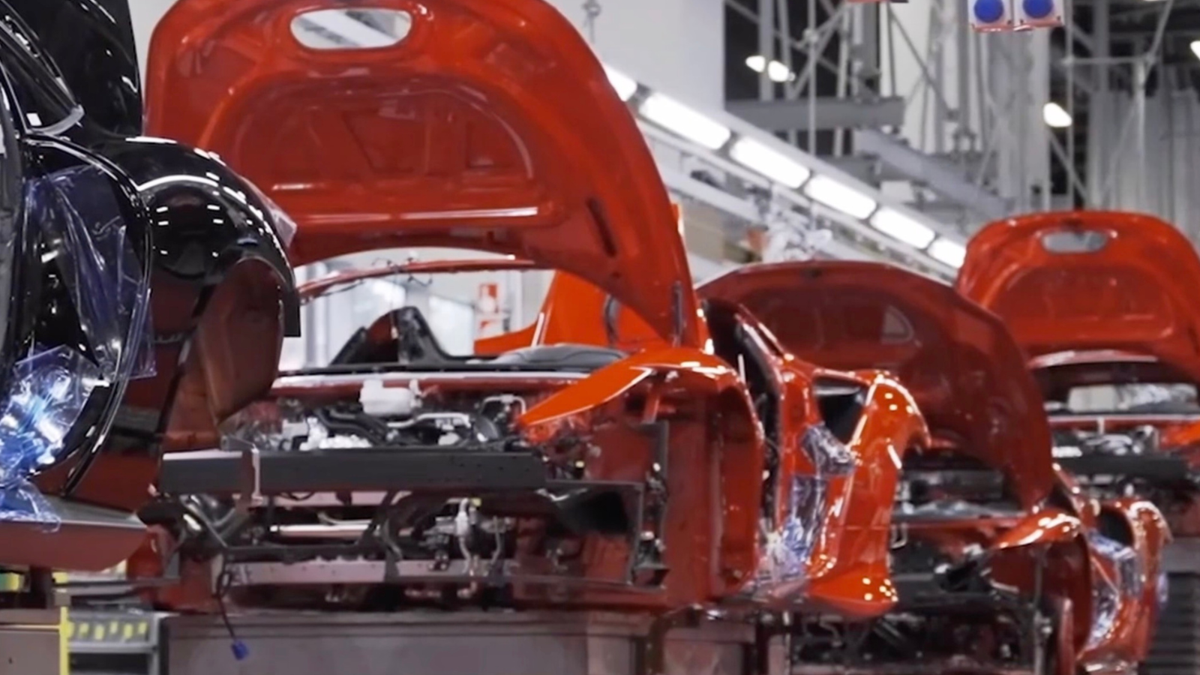
Structural assembly starts at a nearby Modena facility, where robotic systems weld body-in-white components alongside technicians wearing red uniforms modeled after the brand’s racing pit crews. Engines — V8s, V12s and the newer V6 architecture used in the 296 GTB — are manufactured and bench-tested entirely in-house. Automated Guided Vehicles transport heavy components between production stations, according to a factory walkthrough published by FRAME on YouTube.
Electrification infrastructure arrived in 2024 with the opening of the e-building, which produces components for hybrid supercars like the F80. The Luce, the brand’s first all-electric model, joined the lineup this year. Even with the scaled-back EV targets, the Purosangue remains capped at less than 20% of average annual shipments over its lifecycle to prevent the SUV from diluting the broader catalog.
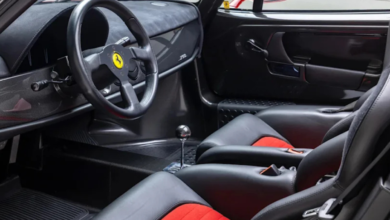
Leather upholstery is also manufactured in-house to enforce consistency, though raw materials are sourced from external suppliers including Poltrona Frau. Concentrating all final assembly under one roof allows engineering departments to coordinate directly, avoiding the fragmentation that plagues competitors relying on multi-country supply chains.