Trump Administration Secretly Subpoenaed Phone Records of New York Times Journalists and Family Members
Unsealed motion exposes a sweeping Justice Department leak investigation targeting reporters' spouses and a parent.
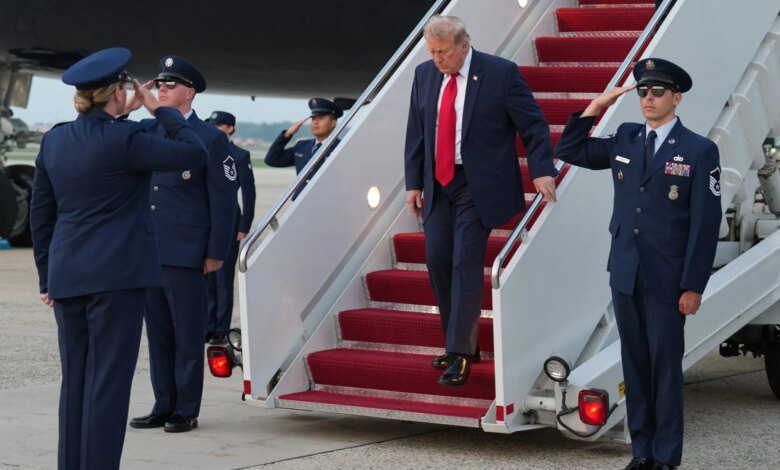
The United States Department of Justice under President Donald Trump secretly sought the phone records of multiple New York Times journalists and their family members, according to newly unsealed court documents. The aggressive legal maneuvers represent a significant escalation in the administration’s crackdown on media leaks, drawing sharp criticism from press freedom advocates and legal experts.
The disclosures, detailed in a motion unsealed on Monday, show that federal prosecutors targeted not only the reporters who broke stories about a controversial Qatari-gifted Air Force One, drawing sharp criticism, but also their spouses and one reporter’s mother. The newspaper has filed a motion to quash the subpoenas, characterizing the government’s actions as an abusive, bad-faith campaign that bypasses established legal protocols.
According to the unsealed letter-motion, the government’s sweep was far broader than previously understood. Two of the subpoenas demanded phone records dating back to January 1, 2026—months before the publication of the articles under investigation. Lawyers representing the newspaper argued this timeline proves the government was not merely investigating a specific leak but was instead “foraging” for broader information about the journalists’ confidential sources.
Among those targeted by the phone records subpoenas were a reporter’s mother, who works as a mental health professional with strict patient-confidentiality obligations, and two spouses, one of whom serves as the general counsel for a law firm.
The leak investigation stems from July 2026 reports concerning a modified Boeing aircraft gifted to the administration by Qatar. The newspaper reported that the Secret Service advised Trump to use an older model of Air Force One to depart a recent NATO summit in Turkey because the newer, $400 million retrofitted Qatari jet lacked critical defensive capabilities, such as antimissile systems. While Trump publicly dismissed these security concerns on social media, the Justice Department quietly launched a grand jury investigation to unmask the administration officials who leaked the details.
The legal battle is set to intensify on Thursday, when a federal judge in Manhattan is scheduled to hear arguments on the newspaper’s challenge to grand jury subpoenas issued to three reporters on July 10. The unsealed documents reveal that the government issued the phone records subpoenas in tandem with the grand jury demands, with additional requests sent even after the newspaper had formally moved to block the initial subpoenas.
The newspaper argues that the Justice Department violated its own internal guidelines, which typically require prosecutors to negotiate with news organizations or provide advance notice before seeking reporter records. Under federal regulations updated in recent years to protect press freedom, such intrusive measures are supposed to be a last resort, utilized only after all other investigative avenues have been exhausted.
The revelations also cast doubt on recent congressional testimony by Jay Clayton, the U.S. Attorney for the Southern District of New York and Trump’s nominee to lead the Office of the Director of National Intelligence. During his confirmation hearing last week, Clayton assured lawmakers that prosecutors had followed all standard protocols and pursued the “least intrusive possible” means to obtain the information.
In response to the unsealed motion, the Justice Department maintained that its actions were fully lawful, asserting that “reporters are not the targets, those leaking classified information are.”
The dispute highlights a long-running tension between national security leak investigations and the First Amendment, which protects the freedom of the press. While the federal government has historically pursued leak investigations under various administrations, the current administration’s methods have drawn intense scrutiny. Earlier this year, federal agents executed a search warrant at the home of a Washington Post reporter, seizing personal electronic devices in a separate leak probe.
Legal experts note that the absence of a federal shield law leaves journalists vulnerable to subpoena pressure, forcing courts to balance the government’s interest in protecting classified information against the public’s right to know under the First Amendment.