14 Charged in Penn State Fraternity Cocaine Ring
State prosecutors charge 13 students in organized campus cocaine network
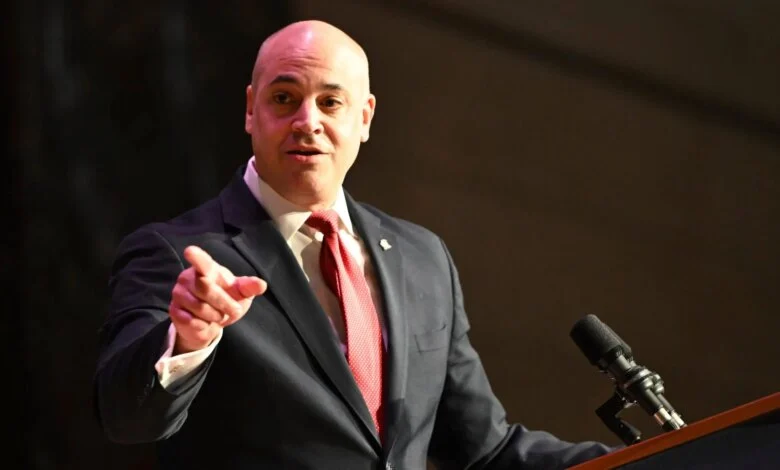
Part of the operation included indoctrinating some pledges who were joining the fraternities by having them cut and bag the cocaine, Pennsylvania Attorney General Dave Sunday said Monday at a news conference.
“This is very serious criminal conduct. There was nothing junior or childlike about this type of conduct,” Pennsylvania Attorney General Dave Sunday said Monday at a news conference. “This was an upper level trafficking organization for this region in Pennsylvania.”
Under Pennsylvania state law, charges brought under the corrupt organizations statute represent some of the most severe felony counts available to state prosecutors, carrying potential prison sentences of up to 20 years per count. The statute, modeled after federal RICO anti-racketeering legislation, requires proof of an ongoing commercial enterprise operated through a systematic pattern of criminal activity, reflecting the state’s determination that the campus network functioned as a formal trafficking enterprise.
Two of them, who were the main suppliers, made routine trips to Philadelphia and New York to get large amounts of cocaine, according to the Pennsylvania Attorney General’s Office. The cocaine was then packaged mainly at the Sigma Chi and Delta Upsilon fraternity houses off-campus and distributed primarily to Penn State students, the office said.
Thirteen former or current Penn State University students were criminally charged Monday on allegations they participated in a cocaine-trafficking ring that involved two fraternities, authorities said.
The Centre County law enforcement apparatus and the Pennsylvania Bureau of Narcotics Investigation have increasingly targeted organized drug distribution networks operating near major university campuses. State College, home to Penn State University Park campus with tens of thousands of undergraduate students, has seen heightened law enforcement scrutiny regarding Greek life organizations following high-profile safety and criminal investigations in recent years.
A total of 14 defendants — 13 of whom were Penn State University students at or around the time of the alleged crimes in 2023 and 2024 — were charged Monday. At least four of the defendants are current students, according to the attorney general’s office.
Four defendants face charges of felony corrupt organizations, conspiracy and other offenses, while a fifth is charged with felony conspiracy and other crimes. Eight other student-aged defendants are charged with misdemeanor counts, like possession. One defendant, who is the father of a student, is accused of tampering with evidence and hindering the investigation.
The majority of defendants facing felony charges were arraigned Monday morning, Sunday said at the news conference.
In addition to state criminal proceedings, university-aged defendants charged with drug offenses face severe administrative consequences, including mandatory suspension or permanent expulsion under institutional student conduct codes, as well as the loss of federal financial aid under federal statutory drug conviction provisions.
Penn State University said in a news release that the university is placing Delta Upsilon on interim suspension while the college investigates the incident.
Sigma Chi is not recognized and operates outside of Penn State’s oversight, according to the university.
Unrecognized Greek organizations—often referred to by law enforcement and university administrators as ghost chapters—present distinct compliance and safety challenges. Because these entities operate without institutional chartering, campus council oversight, or university sanction, they exist outside academic disciplinary jurisdiction, leaving civil law enforcement as the sole authority capable of intervening in their activities.
Delta Upsilon Executive Director Justin Kirk said in a statement that the international fraternity was aware of the allegations and that those involved who had ties to Delta Upsilon were expelled or suspended if they did not resign.
“We will continue to work closely with the university on any investigative efforts,” Kirk added.
The Sigma Chi headquarters in Evanston, Illinois, did not immediately respond to a request for comment.