Microsoft Developing ‘Project Perception’ to Challenge Anthropic’s Claude Mythos in AI Cybersecurity
The tech giant is building a multi-model router system to automate vulnerability patching and lower operational costs.

Microsoft is reportedly developing a new artificial intelligence tool designed to automatically identify and remediate software vulnerabilities. Codenamed Project Perception, the initiative aims to challenge the growing dominance of Claude Mythos, a specialized cybersecurity AI model developed by Anthropic. According to a report by The Information, the tech giant could launch this new tool as early as this month, potentially integrating its capabilities into future updates for Windows 11.
Rather than relying on a single proprietary model, Microsoft is adopting a hybrid approach. Project Perception is built around a model router architecture. This system acts as an intelligent traffic controller: it analyzes each incoming security task—whether it involves scanning source code, identifying active exploits, or generating software patches—and dynamically assigns the workload to the most suitable AI model. The platform can seamlessly alternate between Microsoft’s in-house models and external technologies from OpenAI and Anthropic, depending on the complexity and nature of the security threat.
This multi-model strategy is primarily driven by economic considerations. Operating specialized cybersecurity AI at scale is notoriously expensive. Currently, the restricted version of Claude Mythos 5, accessed via Project Glasswing, is priced at $25 per million input tokens and $125 per million output tokens. Industry analyst Michael Parekh recently noted that Mythos is roughly six times more expensive per token than Anthropic’s flagship Claude Opus model. While cybersecurity experts often justify these high operational costs—given that a single unpatched vulnerability can lead to data breaches costing enterprises hundreds of millions of dollars in regulatory fines and reputational damage—Microsoft hopes to offer a significantly more cost-effective alternative.
The development of Project Perception is a major milestone for Hayete Gallot, who took over as Microsoft’s security chief in February. Since her appointment, Gallot has restructured the division to prioritize AI-driven defense mechanisms. While Microsoft remains the world’s largest provider of enterprise security software, the rapid adoption of specialized models like Claude Mythos and OpenAI Sol has forced the Redmond-based company to aggressively defend its market share.
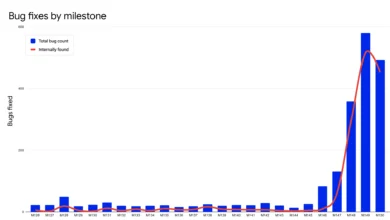
There are indications that Microsoft is already testing these automated capabilities in real-world scenarios. In a recent Windows 11 update, the company successfully patched over 570 vulnerabilities using AI-assisted automation. Microsoft attributed a significant portion of this effort to an internal system known as MDASH, which is designed to detect and fix flaws within the Windows ecosystem. Industry observers believe MDASH is closely linked to, or serves as a foundational component of, the broader Project Perception initiative.
While Microsoft has not officially announced the tool, its impending release highlights the intensifying race among tech giants to dominate the AI-powered cybersecurity market.