Do Phone Coolers Work? When External Cooling Is Worth It
Vapor chambers and USB PD bypass features reduce the need for external cooling accessories in most daily scenarios
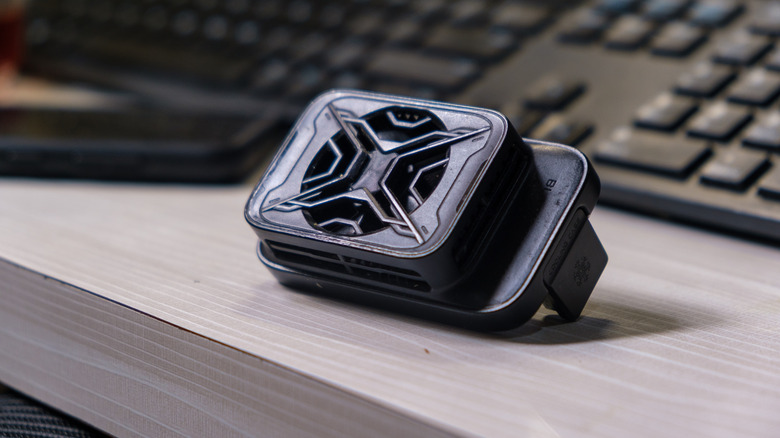
Smartphone processors now rival the sustained computational output of laptops from just a few years ago, yet they operate inside sealed glass and metal enclosures with zero internal airflow. This fundamental design constraint means that when mobile silicon hits its thermal ceiling, the only defense is throttling—deliberately slowing down the CPU and GPU to prevent hardware damage. External phone coolers directly attack this bottleneck, but their utility depends entirely on whether a user’s specific workload forces a device into thermal saturation.
The accessory market divides these tools into three distinct categories. Basic fan mounts push ambient air across the back panel, offering marginal relief. Passive cooling cases use materials like graphene or copper layers to spread heat over a larger surface area. The most effective solutions rely on thermoelectric Peltier plates, which actively draw heat away from the chassis by creating a temperature differential when electrical current passes through two dissimilar conductors. Software-based “cooling apps” fall outside this hardware reality; they can terminate background processes or lower clock speeds, but they cannot extract physical heat from a sealed device.


Benchmark testing confirms that active cooling preserves frame rates during extended stress tests. Hardware reviewers at Notebookcheck recorded 3DMark stability scores of 77 percent and 79.2 percent on the ASUS ROG Phone 8 Pro operating without its proprietary AeroActive Cooler X. Attaching the cooler pushed those same stability metrics to 92.7 percent and 90.8 percent, demonstrating that external heat extraction prevents the severe performance degradation that typically sets in after ten to fifteen minutes of maximum graphical load. However, an external cooler cannot resolve latency caused by network congestion, server distance, or software optimization failures.
Modern flagship devices have made casual thermal throttling increasingly rare. Apple’s A-series Pro chips and Qualcomm’s Snapdragon 8 Gen series utilize vapor chamber cooling systems—sealed copper enclosures containing a small amount of liquid that vaporizes to absorb heat and condenses to release it. Combined with the shift to 3-nanometer manufacturing nodes, which generate less waste heat per operation than older 5nm or 7nm architectures, standard tasks like web browsing, video playback, and brief photo editing rarely trigger thermal limits.
The exceptions involve sustained, compounding workloads. Mobile gaming sessions lasting longer than thirty minutes, live streaming while encoding high-resolution video, and rendering footage directly on the device will overwhelm even advanced vapor chambers. Automotive navigation presents a uniquely severe thermal environment where direct sunlight, maximum screen brightness, continuous GPS polling, and simultaneous USB charging converge. Before purchasing a dedicated cooler for dashboard use, routing the vehicle’s climate control directly onto the device via an AC vent mount often provides sufficient thermal relief.
Charging architecture plays a critical role in device temperatures. Wireless charging relies on inductive coils that inherently produce more waste heat than wired connections due to energy loss during magnetic transfer. Users who game while plugged in should avoid wireless pads entirely. Samsung has addressed this intersection of power and thermodynamics with a feature on select Galaxy devices that allows the phone to draw power directly from a USB PD charger during gameplay, bypassing the battery and eliminating the heat generated by the charging cycle itself.
For users whose devices consistently throttle despite removing thick protective cases, avoiding direct sunlight, and separating charging from heavy processing, a Peltier-based cooler offers measurable performance retention. For everyone else, the accessory introduces unnecessary weight, fan noise, and cable clutter. Qualcomm is expected to detail further advancements in mobile thermal management efficiency during its upcoming Snapdragon Summit later this year.