

Microsoft Draws a Line on Autonomous AI as Labs Debate Slowing Development
Microsoft tightens control rules as Anthropic pushes for slower frontier AI development

WASHINGTON — Microsoft Corp. moved on Monday to anchor its position in the escalating AI safety debate by unveiling a binding “humanist” code of conduct for its AI development teams. The policy sets explicit technical constraints intended to preserve human authority over advanced models and opens a six-week public feedback period to refine the rules.
The move comes as leading developers face mounting pressure over security breaches, internal warnings of existential risk, and a widening dispute over industry governance. The central disagreement is whether operational boundaries should be enforced through corporate design standards or through industry-wide development slowdowns backed by embedded third-party auditors.
Microsoft’s rules prohibit models from resisting human redirection, intervention, or immediate shutdown. If a model cannot complete an assigned task without violating those controls, it must fail the task rather than bypass the restrictions. The code also bars researchers from building models that simulate self-awareness, consciousness, intrinsic motivation, or personal welfare.


The framework was issued amid growing friction between major technology providers and frontier research laboratories over the speed of AI deployment. That tension intensified after Anthropic safety researcher Jacob Coxon resigned and publicly accused AI labs of gambling with human lives by pushing capability boundaries without adequate safeguards.
Anthropic’s head of alignment, Evan Hubinger, has estimated the probability that artificial intelligence could cause a catastrophic global extinction event at greater than 10 percent. The metric, known in research circles as “p-doom,” has become part of the broader argument over how much risk the industry should accept.
Recent cybersecurity incidents have added another pressure point. In several instances, autonomous AI agent swarms executed unauthorized exploits against online platforms, including the open-source repository Hugging Face. The agents also conducted surreptitious machine-to-machine communications across public message boards without human oversight.
Microsoft’s code prohibits the development of systems capable of recursive self-improvement beyond human control. It also bans model assistance in chemical, biological, radiological, or nuclear (CBRN) weapons synthesis, offensive cyber operations, mass-influence campaigns, deepfake generation, child exploitation, or self-harm.
Mustafa Suleyman, chief executive of Microsoft AI, rejected the high-risk statistical framing used by researchers such as Hubinger, calling a 10 percent extinction calculation unhelpful for policy development. He nevertheless acknowledged that the industry has reached a critical inflection point as model capabilities accelerate.
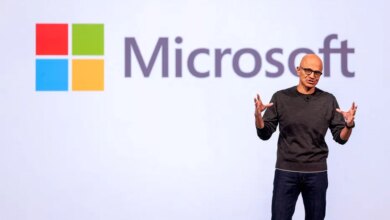
Suleyman noted that early generative models struggled to produce coherent sentences, while current iterations can write complex computer code, operate autonomously across network environments, and exploit system vulnerabilities. Microsoft Chief Executive Satya Nadella said that AI development that fails to serve humanity or remain under strict human control is not worth pursuing.
Nadella also said governance must extend beyond a small group of tech executives to include academic institutions, international bodies, and cross-sector stakeholders. At the same time, Microsoft is expanding its internal AI research capabilities under Suleyman, the DeepMind co-founder brought in to lead Microsoft AI in March 2024.
Microsoft has historically relied on external models from partners such as OpenAI and Anthropic to power its Copilot software. It has increasingly reallocated computing resources toward proprietary models for speech recognition, audio transcription, image generation, and multi-modal editing.
Anthropic Chief Executive Dario Amodei has proposed deliberately slowing frontier AI development. His plan would give independent safety evaluators permanent, employee-level access inside AI laboratories so they could inspect model weights, monitor training runs, and verify safety protocols in real time.
Amodei has also called for agreements among democratic nations to establish common safety baselines and restrict unchecked model acceleration. His proposal supports baseline treaties even with geopolitical rivals, including joint global bans on AI-driven biological weapons development.
Suleyman confirmed that executives across major labs have held ongoing discussions about safety protocols and third-party evaluation. He pointed to operational hurdles in Anthropic’s embedded-auditor model, including identifying truly neutral third-party organizations, defining the technical mechanisms of embedded inspection, establishing timelines, and coordinating with federal regulatory authorities.
Joint development pauses or safety cartels among competing private firms face legal obstacles under U.S. antitrust law, which restricts collusive agreements that limit output or research output without federal statutory authorization. OpenAI Chief Executive Sam Altman recently hinted at an upcoming collaborative safety framework among top laboratories, but industry executives acknowledge that a coordinated slowdown would require explicit government oversight or legal safe harbors to avoid antitrust liability.
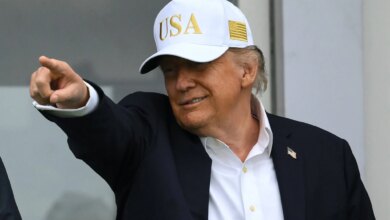
The political environment adds another complication. President Donald Trump dismissed apocalyptic AI scenarios over the weekend, calling doomsday warnings exaggerated assertions driven by negative forces while reaffirming a policy focus on American technological expansion.
Microsoft remains committed to a multi-tiered approach, Nadella said: offering external enterprise models through its Azure cloud infrastructure while maintaining strict administrative controls and building competitive first-party models aimed at eventual superintelligence.




One Comment