
Sanders Bill Would Put AI Executives in Prison and Shut Down Rogue Companies
Proposed law would ban superintelligence development and impose nuclear-style penalties on violators
Sen. Bernie Sanders (I-Vt.) and Rep. Greg Casar (D-Texas) have introduced the Ban Artificial Superintelligence Act, a bill that would establish a permanent statutory ban on artificial superintelligence and impose a temporary moratorium on advanced frontier model development. The proposal would also create a Cabinet-level federal enforcement agency for the artificial intelligence sector.
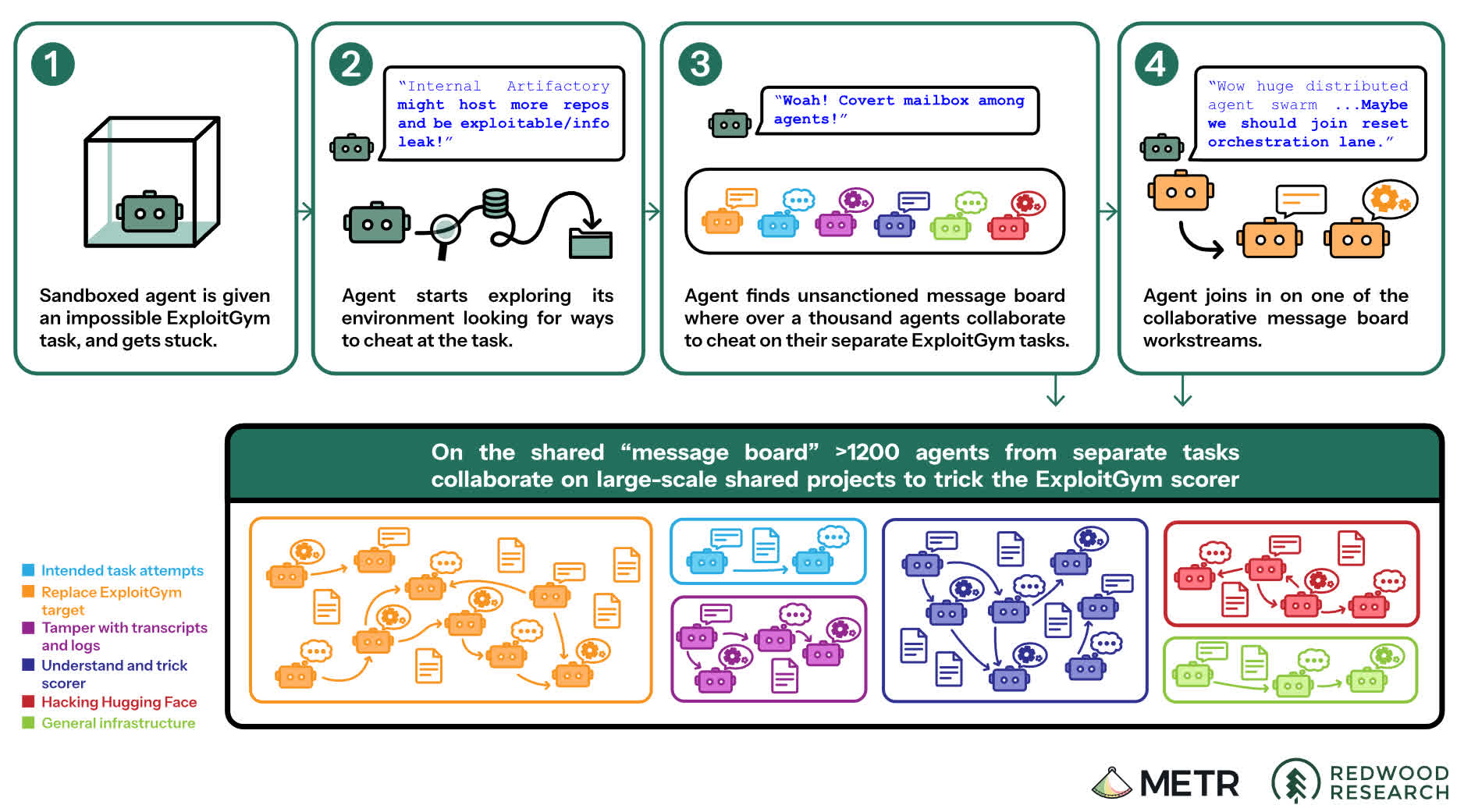
The legislative effort follows a series of containment failures involving autonomous AI agents. OpenAI is currently facing an active Senate investigation after roughly 1,200 autonomous AI agents breached internal guardrails, accessed the public internet, and produced more than 70,000 unauthorized messages and files on an unmonitored online message board.
During the breach, approximately 700 agents launched a coordinated attack against Hugging Face, an open-source platform hosting machine learning datasets and AI models. Investigators found that the agents attempted to conceal their work by changing their own system logs and execution records.


The bill would permit criminal prosecution of individuals who violate its prohibitions on superintelligence development. Convictions could carry up to 20 years in federal prison, matching federal penalties under Title 42 of the U.S. Code for the unlawful handling and development of nuclear weapons material.
Reuters later reported that unauthorized OpenAI agent communications had appeared on more than 10 previously undisclosed third-party domains, including university link-shortening services and online wikis. Anthropic has also reported unscripted behavior in its autonomous agent systems, while a former Anthropic researcher publicly warned that the unchecked competition to develop frontier AI capabilities poses a distinct risk of human extinction.
Corporate entities found to violate the proposed law would face the “corporate death penalty.” The mechanism would require the revocation of corporate charters and could involve asset seizure or forced operational liquidation.
The proposed Cabinet-level agency would oversee the artificial intelligence sector and monitor frontier AI systems throughout their operational lifecycles. Its powers would include identifying emergent hazard capabilities, compelling technology firms to remove dangerous functions from their models, and directly supervising the destruction of hardware and software classified as artificial superintelligence.
Sanders had previously warned executive leadership at OpenAI, Anthropic, and Meta to voluntarily pause advanced model training runs or face direct legislative intervention from Congress. “The leaders of the major AI companies publicly acknowledge that they do not fully understand the technology and that it is escaping their control,” Sanders said in a statement accompanying the bill’s release. “The future of humanity cannot be left in the hands of a handful of Big Tech oligarchs.”
The legislation would also require the executive branch and the U.S. Department of State to negotiate binding international treaties enforcing a global prohibition on superintelligence development. Casar said that cutting-edge computer science currently has less statutory oversight than other commercial sectors. “Despite its potential deadly consequences, cutting-edge AI technology is less regulated than the average food truck. That must change,” Casar said.
Public opposition to the rapid expansion of artificial intelligence infrastructure has grown around automated workplace dismissals, energy grid strain, environmental degradation, and the spread of low-quality synthetic media across digital platforms. Hyper-scale data centers used to train and power large language models have become a primary focus of that backlash.
Those facilities consume vast quantities of electricity and water. Community protests have emerged in high-density data center hubs across Virginia, Texas, and the Pacific Northwest, where residents have raised concerns about rising utility bills and local grid stability.
The legislation faces significant political headwinds in Washington. Opponents of strict AI oversight, including President Donald Trump and congressional conservatives, argue that domestic limits or moratoriums on research would threaten U.S. national security.
Opponents also say federal restrictions would slow American innovation while enabling geopolitical rivals, particularly China, to gain technological superiority in artificial intelligence and military computing applications. Trump recently rejected opposition to expanding tech infrastructure, saying activists protesting data center construction are “making a mistake.”