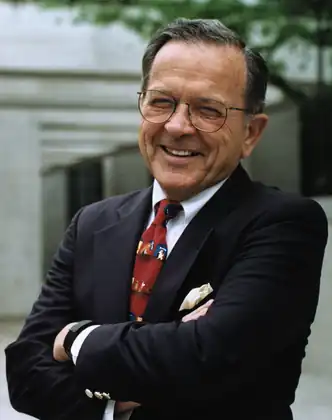
On October 27, 2008, a federal jury convicted Senator Ted Stevens of Alaska on seven felony counts. Eight days later, he lost his seat by 3,953 votes.
The conviction did not survive. On April 1, 2009, Attorney General Eric Holder moved to dismiss the case. Six days later, Judge Emmet Sullivan vacated the conviction, dismissed it with prejudice, and appointed the lawyer Henry Schuelke III to investigate the prosecution. “In nearly 25 years on the bench, I’ve never seen anything approaching the mishandling and misconduct that I’ve seen in this case,” Sullivan said. Schuelke’s 525-page report, delivered in March 2012, found the “systematic concealment of significant exculpatory evidence,” and that the government’s star witness had testified falsely.
Stevens was the longest-serving Republican senator in history, forty years in the seat. He conceded on November 19, 2008, and died in a plane crash near Dillingham on August 9, 2010, before the report was published. “Their conduct had consequences for me that they will never realize and can never be reversed,” he said on the day his conviction was thrown out.


Eighteen years later, the Justice Department is back in Alaska. On Thursday, the department asked the Ninth Circuit to dismiss its own lawsuit against the state as moot, and to vacate the order of the judge who threw it out. The suit, filed on October 22 at President Donald Trump’s direction, sought to block certification of the Senate race if Mary Peltola won, on the ground that a second candidate named Daniel J. Sullivan was on the ballot. Judge Sharon Gleason dismissed it on November 1, finding the United States had no standing and that segregating ballots would likely violate the secret ballot. Peltola won with 50.13 percent of the vote.
She has said she knew nothing about any other candidate on the ballot and was “not interested in tricking voters.” Senator Dan Sullivan, the incumbent she defeated, calls it a secret project: “This was a secret project that they had. And then they worked on it for over a year. And then she consistently lied about it.”
The department is not defending the lawsuit’s merits. It is asking the court to erase the dismissal. And the lawyers who brought the suit are themselves facing sanction motions. On Monday, the Alaska attorney David R. Weber asked Judge Gleason to sanction three department lawyers, including the U.S. Attorney in Alaska, Michael Heyman, for using the suit to interfere in the election for political purposes. Common Cause and the League of Women Voters of Alaska have asked the Ninth Circuit to affirm the dismissal and sanction the department’s lawyers, calling the continued pursuit of the case “an embarrassing and sanctionable violation of professional norms.” The court has yet to rule on either request.
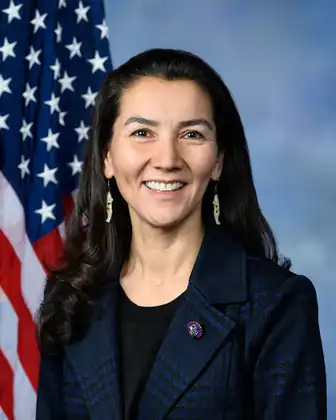
The cases are not the same, and the differences matter. Stevens was the one charged; Peltola has not been charged with anything. The 2008 case was a prosecution that reached a jury; the 2026 case, so far, is an investigation and a lawsuit the department itself is abandoning. What matches is the pattern around the case, not the case itself: a dismissed court action, sanctions sought against the department’s lawyers, and an investigation that keeps growing after the ballots have answered its central question.
The state expects to certify the results by November 25. Senator Sullivan then has ten days to contest the result in Alaska court, and the governor signs the certificate. A new governor, a Democrat, takes office on December 7. Peltola is due to be seated on January 3, and any Senate contest would play out while she sits provisionally.
The ballot question has already been litigated twice, in state court, before the Justice Department took it up. On June 15, the Alaska Division of Elections removed Daniel J. Sullivan Jr. from the ballot, ruling that his declaration was “not properly filed” and had been submitted “with the purpose to confuse or mislead” — “utterly unprecedented,” the division wrote. Sullivan Jr., a retired teacher from Petersburg, had asked to be listed as “Dan Sullivan” and even “Dan S. Sullivan,” though S is not his middle initial, and had switched his registration to Republican just before filing. On July 18 he told the New York Times he had voted for Democrats in the last three presidential elections, and for Peltola for Congress. A superior court judge ruled on June 26 that the division had erred. The Alaska Supreme Court affirmed three days later.
Three federal tracks now run on the same race. The civil suit is ending. The criminal probe continues.
A third track has drawn almost no attention. On October 29, Senator Ron Johnson, chairman of the Senate Permanent Subcommittee on Investigations, wrote to Jerid Kurtz — the operative the Times reported traveled Alaska under the false name “Zane” — demanding documents by November 12 from five others named in the letter, McParland, Piatt, Lopez, Rios and Dantic, under a resolution authorizing the subcommittee to investigate efforts to undermine the integrity of the 2026 Alaska election.
The probe itself grew out of a New York Times report in late October describing a “ballot composition project” run by people aligned with the Peltola campaign and aides to the Democratic Senatorial Campaign Committee, who the paper said recruited Daniel J. Sullivan and paid a firm about $87,000 through a political action committee. Peltola and the committee deny any involvement. The report’s key source, Elisa Rios, a former Peltola campaign manager, was fired in August and later tried to retract her account.
The department’s own rules warn against what happened in October. Justice Department guidelines typically advise prosecutors against taking investigative steps before an election that could be seen as a sign of political bias, the Washington Post reported. In the days before the election, the department sent dozens of target letters, subpoenas and document preservation requests. On October 30, Heyman held a press conference in Anchorage announcing a “significant surge of law enforcement assets to Alaska.” The civil suit was filed on October 22, while early voting was already under way. Governor Mike Dunleavy, who directed a state investigation the day before Heyman’s press conference, said there was “enough smoke to indicate that there may be a fire.”
The scale of the Mary Peltola DOJ probe only became public this week. More than fifty FBI agents and more than a dozen Justice Department lawyers are working on it, across five field offices, according to Fox News. The department has issued more than 200 subpoenas and sent nearly 100 letters telling people to preserve their records. A federal grand jury meets in Alaska once a month to review evidence. Marc Elias, the lawyer whose firm represents the Peltola campaign and the Democratic Senatorial Campaign Committee, has received a criminal target letter. Attorney General Todd Blanche, an ally told Fox, “sees the Peltola fraud as so egregious, he is putting a lot of resources into the criminal investigation.” The man at the center of it all won 4,765 votes, raised $35,556, and barely campaigned: neighbors in Petersburg never saw his campaign material, and he left town the week before Election Day. Peltola’s margin over the incumbent, 12,521 votes, is more than two and a half times his entire vote.
FairVote, working from the cast-vote record, found that 34 percent of Daniel J. Sullivan’s voters ranked Peltola above the senator, against 23 percent who ranked the senator above her. On the ballots themselves, the supposed decoy took more votes from Peltola than from the incumbent he was said to be confusing voters about. On r/alaska, u/cloudcottage made the same point in blunter arithmetic: “Point one if someone wins with over 50% of the vote that means no matter how you add up the remaining candidates, they can’t equal or surpass the total number of votes of the winner.”
In Alaska, the reaction has been less about the law than about the vote. “I’d get it if it was a really tight race, but it wasn’t,” wrote u/BumblebeeDapper223 on r/alaska. “She won by more than 4 percentage points. She got more votes than all three other candidates combined.” Another Alaskan, u/laserpewpewAK, put the question as one of principle: “Regardless of where you fall on the political spectrum, do you really want politicians to decide who is eligible to run? We have a constitution for a reason.” “It is not illegal to have two folks with the same name on the ballot. Stay out of our election,” wrote u/Headoutdaplane on the same forum.
Not everyone agrees: u/grumpyfishcritic, the one voice backing the probe in the threads read for this article, wrote, “It’s the fraud and the coverup that will take the tricksters down. Which is already illegal.” Peltola is Yup’ik, and will be the first Alaska Native to sit in the Senate. In the thread marking the win, u/OkSpare3037 wrote, “We have a Yupik woman representing us!! – a happy Yupik woman :)”
There is one Alaska race where voters really were confused, and it is not the Senate race. In the House race, Eric Hafner, listed as the only Democrat, won 22,715 first-choice votes — 8 percent — while serving a 20-year federal prison sentence in New York, having reportedly never set foot in Alaska. When he was eliminated, 11,465 of his voters’ ballots were exhausted: they had ranked neither of the two candidates left. Nick Begich, the Republican, won the final round with 51.35 percent. “It was abundantly clear which Dan Sullivan was which,” Laura Norton-Cruz, an Anchorage voter, told Democracy Docket. State Senator Bill Wielechowski, a Democrat, said: “Hopefully, there’s going to be an investigation into that. I don’t know why the Trump administration or [Gov. Mike] Dunleavy’s administration are not investigating that because that’s equally as bad as they claim what’s happening in the Senate race.”
The Alaska Bureau of Investigation is running its own inquiry into the Senate race, alongside the federal one. Its communications director, Austin McDaniel, said the agency was unable to provide additional details.