The McRib lawsuit turns on the 1981 choice to shape pork like a rack of ribs
Judge April Perry refused to rule that no reasonable consumer could expect rib meat from a sandwich named McRib, shaped like ribs and sold at a premium — and the evidence she weighed came from McDonald's own history.
In November 2014, inside a packing plant in Oklahoma City, a McDonald’s supplier executive held up a slab of pork for the cameras and said what it was. Kevin Nanke, a vice-president at Lopez Foods, called the meat a boneless pork picnic and recited the recipe on camera: pork, water, salt, dextrose and preservatives. Grant Imahara, the former MythBusters host McDonald’s had hired to ask its awkward questions, had brought a skeptic along for the tour, and the question hanging over the visit was the one printed in the campaign’s own materials: where are the bones in a McRib?
Twelve years later, on 30 October 2026, a federal judge in Chicago declined to treat that question as already answered. Judge April Perry of the United States District Court for the Northern District of Illinois refused McDonald’s bid to dismiss a proposed class action over the McRib in its entirety, letting claims of consumer deception, fraud and unjust enrichment proceed while dismissing five other claims without prejudice. The plaintiffs — Peter Le of California, Charles Lynch of New York, Dorien Baker of Illinois and Darrick Wilson of Washington, D.C. — say McDonald’s shaped the patty with ridges to resemble pork ribs and charged a premium for a sandwich built from lower-grade pork products, including shoulder, heart, tripe and stomach. McDonald’s disputes the contents claim and says the sandwich is made with pork sourced from American farmers and suppliers.
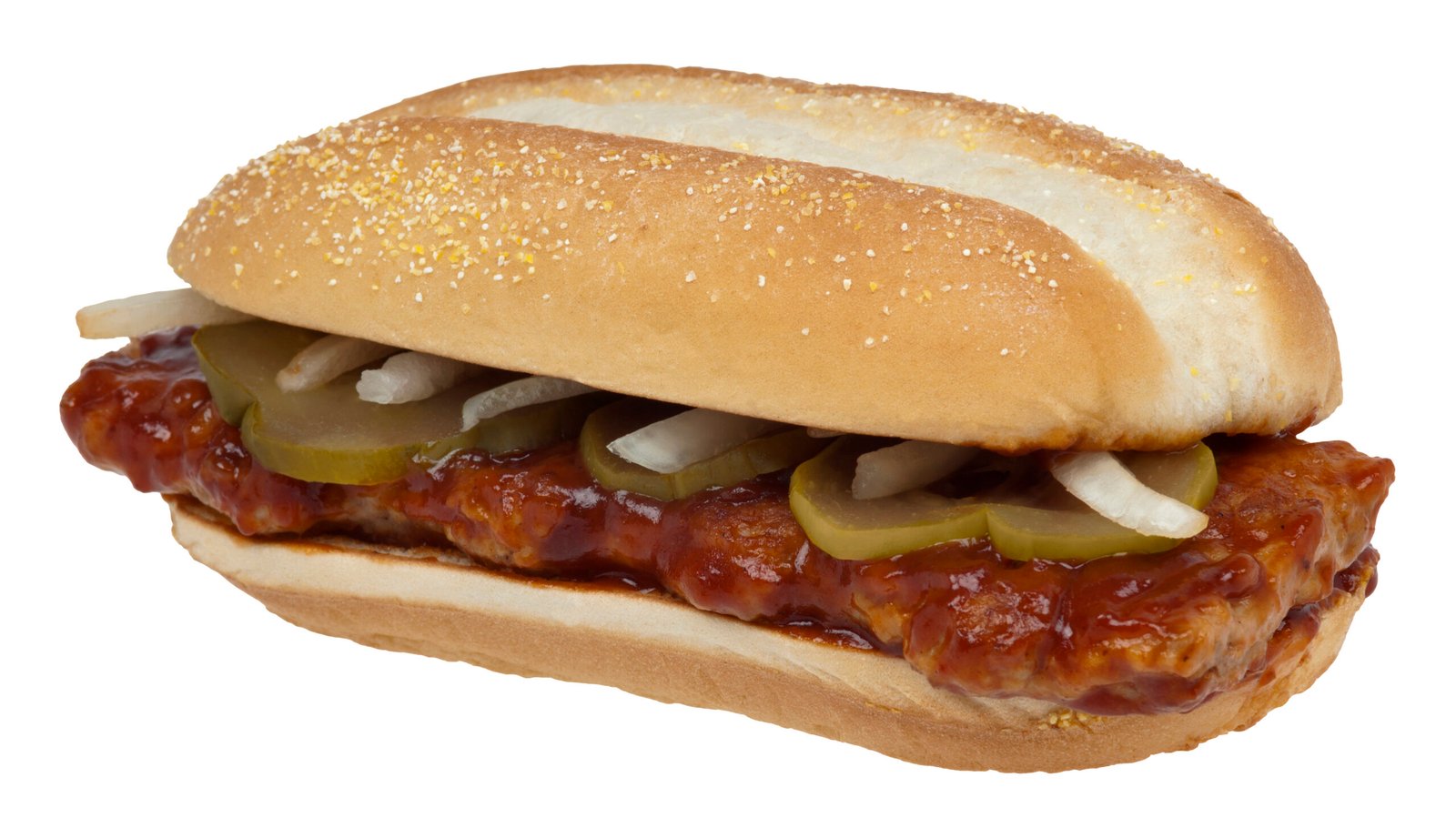
Perry started from what a buyer meets at the counter, and from how little of it answers the question. McDonald’s own website describes the sandwich only as containing pork, she noted, and a reasonable consumer need not conduct research before buying a seven-dollar fast-food sandwich. Advertising that highlights the meat’s rib-like shape could support a claim of intent to defraud, she added, although further proof would be needed. “Plaintiffs’ proffered understanding of ‘McRib’ is not unreasonable or fanciful,” Perry wrote.

McDonald’s had argued that distinctive product names do not fool reasonable consumers, and that a preference for a certain cut of pork does not turn truthful marketing into consumer fraud. Perry answered with the company’s own menu, noting that other McDonald’s names describe their ingredients: the McChicken contains chicken, and the Egg McMuffin contains egg. The company said in a statement that the lawsuit distorts the facts and that many of the claims are inaccurate. Thiago M. Coelho of Wilshire Law Firm, speaking for the plaintiffs, said his clients would continue seeking accountability for what he called deceptive marketing.
Perry read the four elements together: the name, the shape, the scarcity and the price. The name promises ribs, the patty wears the shape of ribs, the sandwich arrives for a few weeks and vanishes, and the price sits above the ordinary burger. Scarcity has been the product’s engine since the first farewell tour in 2005, and the company credited a six-week national return in late 2010 with lifting its November sales by 4.8 percent. An informal study published in 2011, “A Conspiracy of Hogs: The McRib as Arbitrage,” found that all five American McRib offerings between 2005 and 2011 landed at low points in the price of bulk pork, and McDonald’s sold 30 million of the sandwiches in 2007 alone.
René Arend made the choice that started the record. McDonald’s first executive chef, the Luxembourg-born inventor of the Chicken McNugget, developed the McRib in 1981 after demand for McNuggets outran the chicken supply, and first tested it around Kansas City. Arend said in a 2009 interview that shaping the patty like a slab of ribs was his own inspiration, adopted although a round patty would have been cheaper to manufacture and to serve on standard hamburger buns, and the company paid the extra cost anyway. The meat itself came from a restructuring process developed by the United States Army to deliver low-cost meat to troops, refined by Natick Army Labs meat scientist Roger Mandigo into what he described as a patty of pork made from small flakes of meat taken from the shoulders of a pig.
A buyer reading the product page today learns the patty is seasoned boneless pork with tangy barbecue sauce, slivered onions and pickles on a toasted homestyle bun, and the ingredient list behind it reads pork, water, salt, dextrose and rosemary extract. No cut is named anywhere on the page. The gap between what the page says and what the name and shape say is the dispute, and Nanke had already named the cut on camera in 2014, in a campaign built to answer the public’s questions. The sandwich kept its name and its ridges for another twelve years after that.
The complaint priced what that gap cost buyers from data collected by the fan-run McRib Locator site. It put the national average price in December 2024 at $5.63, with a high of $7.89 before tax, above the average Big Mac price in the same period. The government’s own market sheet shows the wholesale distance behind the claim. The United States Department of Agriculture’s daily pork report for 27 October 2026 priced the rib primal at $141.10 per hundred pounds, against $97.62 for the butt primal and $61.77 for the picnic. Trimmed sparerib stood at $155.04, against $103.62 for quarter-trim butt. Rib ran about 45 percent above butt on the day, and sparerib about 50 percent above trim butt. Those are wholesale primal prices, not the cost of a formed patty. A New Jersey restaurant was selling the sandwich at $5.99 on the first day of the 2026 return, $11.09 as a meal, through the McDonald’s app.
Survey evidence cited in the complaint put the expectation in numbers. Of 215 respondents, 155, about 72 percent, said they expected the McRib to contain rib meat, and 118 of 174, about 68 percent, said rib meat was important or very important to the decision to buy. The surveys are the plaintiffs’ evidence, not findings, and their methods and sampling were not described in the coverage of the case. Two hundred and fifteen people is a small base for a nationwide class, and the margin on a sample that size runs to roughly six points either way. Perry read the surveys alongside the name, the shape and the price, rather than alone. McDonald’s will get to test every one of those numbers.
J Stuart Powley, writing on Facebook on 31 October, said he had taken one bite of the sandwich when it came out in 1981 and could only answer the lawsuit with one word: “Duh.” Ritch Dotson, also on Facebook, called the plaintiffs idiots and asked what would come next, suing a wing chain because its wings do not come from buffalo. Will Salao, commenting on a KTLA news post, put McDonald’s own argument in plainer words: “It’s not a rib sandwich. It’s a ‘McRib’ sandwich.” Matt Martinez, on the same post, wrote that anyone ordering a McRib should not be allowed to question what is inside it. The chorus of obviousness runs against the survey majority, and the two describe different buyers. Martinez added that he loves the sandwich.
The plaintiffs in the McRib lawsuit must now earn the class they have proposed. The complaint runs to 45 pages and 16 claims, filed in December 2025 with a first amended complaint in March 2026, and seeks a nationwide class of buyers from the four years before filing plus subclasses in California, New York, Illinois and the District of Columbia, with damages, restitution and an injunction. No class has been certified, no settlement exists, and no buyer is owed anything yet. McDonald’s must answer the surviving claims, the surveys and the disclosure record will be tested as evidence rather than asserted in pleadings, and the intent question Perry flagged will need proof beyond the shape of the patty. The sandwich, meanwhile, came back on 27 October 2026 in Los Angeles, Chicago, Miami, Dallas, Atlanta and Philadelphia.
McDonald’s withdrew the McRib from German menus effective 27 October 2026, after 37 years as a permanent item there. German business reporting attributed the decision to the European Union ban on smoke flavourings, the labour-intensive preparation the sandwich requires, and below-average sales. The withdrawal landed three days before Perry’s order in Chicago.