Kirby’s 100% Inheritance Tax Idea Runs Into Constitutional Wall, Estate Planning Reality
Wealth tax faces apportionment clause; inheritance tax would require new federal framework; step-up basis remains untouched
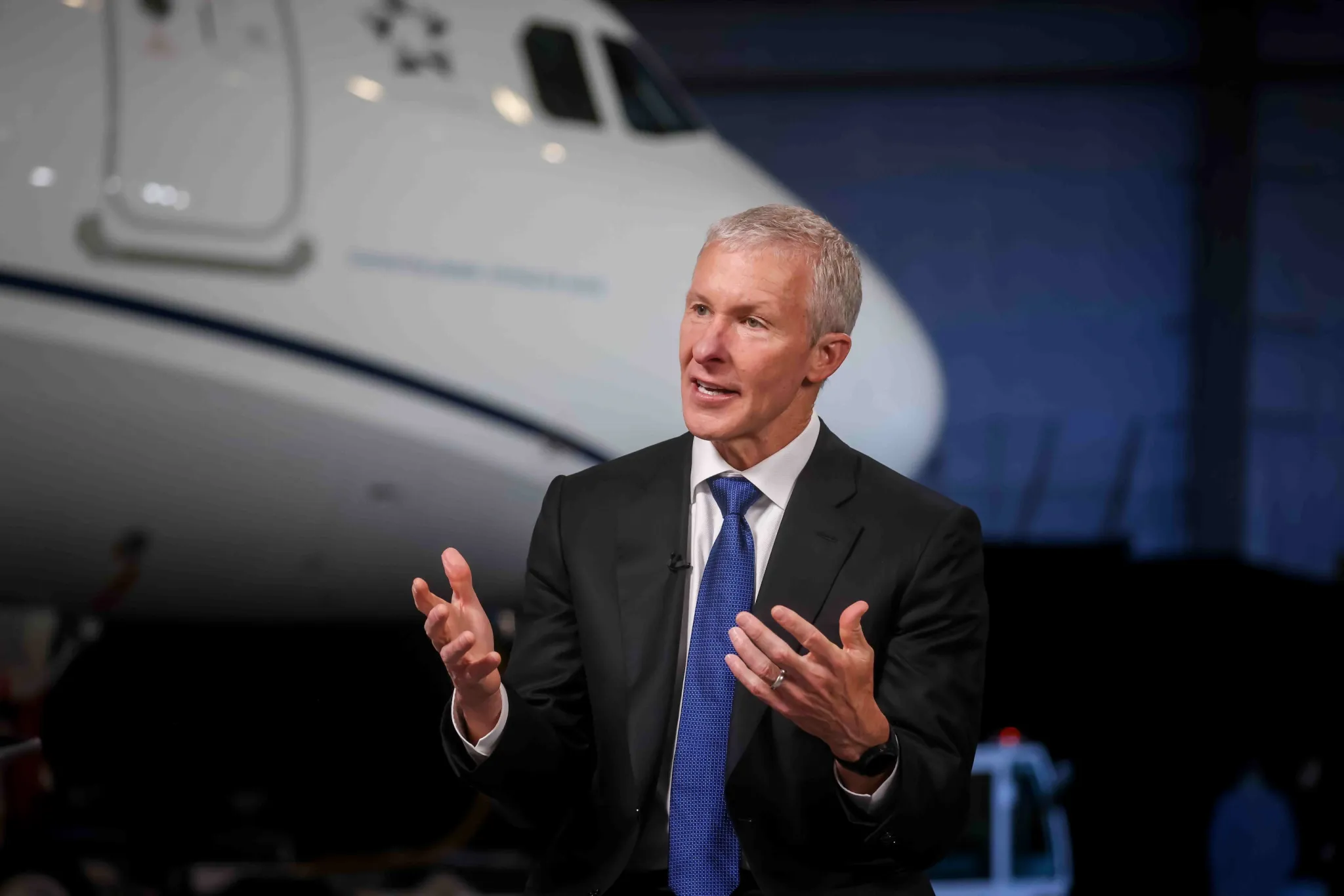
United Airlines CEO Scott Kirby‘s call for a national wealth tax and inheritance rates approaching 100% landed in a policy vacuum. The U.S. Constitution, decades of Supreme Court precedent, and an entire industry built on estate avoidance stand in the way.
Kirby told The New York Times Sunday that “we should have inheritance taxes that get close to 100 percent at some level” and a federal wealth tax because state-level versions fail when “people will just move.” He did not define the threshold, the rate structure, or how either would survive legal challenge.
A federal wealth tax on unrealized gains faces immediate constitutional scrutiny. Article I, Section 9 requires direct taxes to be apportioned among states by population. The Supreme Court struck down an income tax on that basis in 1895 (Pollock v. Farmers’ Loan & Trust Co.), prompting the 16th Amendment — which covers income, not wealth. Legal scholars including Harvard’s Noah Feldman have argued a wealth tax would likely require a new amendment.

The inheritance tax proposal collides with a different obstacle: the U.S. has no federal inheritance tax. Six states — Iowa, Kentucky, Maryland, Nebraska, New Jersey, and Pennsylvania — levy one, with top rates ranging from 15% to 18% and exemptions for spouses and lineal heirs. Iowa is phasing its out by 2025. Kirby’s “close to 100 percent” would represent a 500% increase over the highest existing state rate.
What the U.S. does have is a federal estate tax, paid by the estate before distribution. The 2026 exemption is $13.99 million per individual, $27.98 million per married couple, with a 40% top marginal rate. But the effective rate is far lower. The Tax Policy Center estimates only 0.14% of estates owe any tax, and those that do pay an average 16.5% after deductions, valuation discounts, and planning techniques like grantor retained annuity trusts (GRATs) and family limited partnerships.
Kirby’s own $32.3 million 2025 compensation package — 334 times United’s median employee pay of $96,670 — illustrates the wealth concentration he decries. But his proposal skips the mechanism that actually moves money across generations: the step-up in basis at death, which erases capital gains on appreciated assets. Eliminating step-up would raise more revenue than raising the estate tax rate, according to the Congressional Budget Office, and avoids the apportionment problem.
States have become laboratories. Washington enacted a 7% capital gains tax on annual gains above $250,000 in 2021; the state supreme court upheld it as an excise tax, not a property tax. Massachusetts voters approved a 4% surtax on income above $1 million in 2022. California’s proposed wealth tax (AB 259) stalled over valuation and migration concerns — exactly the “people will just move” problem Kirby cited.
Historical precedent exists. The 1935 Revenue Act raised the top estate tax rate to 70% on estates above $50 million (roughly $1.1 billion today). The 1941 rate hit 77%. But the base was narrow, avoidance was rampant, and the 1976 reform unified estate and gift taxes at a lower rate with a higher exemption. The 2001 Bush tax cuts phased the estate tax to zero in 2010 before it returned in 2011.
Louisiana Gov. Jeff Landry responded on X that Kirby “could simply cut a check” to the Treasury’s gift fund, which received $2.7 million in voluntary contributions in fiscal 2023 — roughly 0.000008% of federal revenue. Kirby has not disclosed whether he structures his own estate to minimize tax exposure.
United did not respond to questions about whether Kirby believes CEO-worker pay gaps drive inequality, what specific thresholds he would set, or whether he has engaged with policymakers on legislative language. The airline’s proxy statement shows his package was approved by the compensation committee and ratified by shareholders in a non-binding say-on-pay vote.