Apple’s $1,999 iPhone Duo Opens the Door to Foldable iPhones and iPads
The iPhone Duo could be the first step toward Apple’s clamshell iPhone and folding iPad lineup
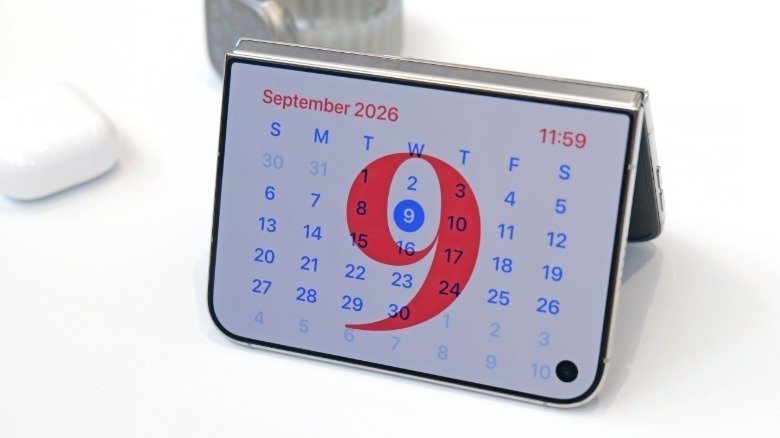
CUPERTINO, Calif. — Apple Inc.’s $1,999 iPhone Duo places the company in a premium foldable market that Samsung Electronics and other Android manufacturers have spent years developing. The ultra-thin, hinge-connected device arrives under Chief Executive Officer John Ternus, who previously directed Apple’s hardware engineering division.
Samsung entered the commercial segment with the original Galaxy Fold in 2019, but early durability and display failures forced a complete recall and redesign. Successive generations of the book-style Galaxy Z Fold and clamshell Galaxy Z Flip have since helped Samsung establish a dominant global market share.
Apple remained on the sidelines for nearly seven years before introducing the iPhone Duo. The delay followed Apple’s traditional product playbook of allowing competitors to navigate the early, experimental phases of a technology before launching a refined, premium consumer product.


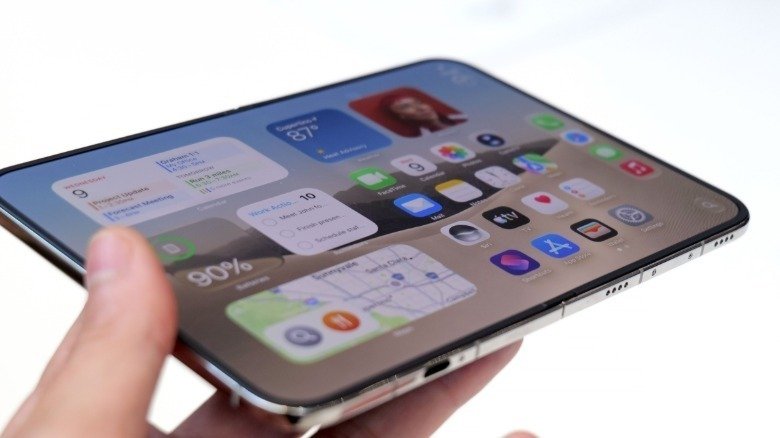
The iPhone Duo’s release indicates that Apple has addressed key mechanical and material challenges. Those advances lay the technological groundwork for a broader expansion into clamshell smartphones and larger folding tablet form factors.
Book-style foldables such as the iPhone Duo and Samsung’s Galaxy Z Fold function as high-end productivity tools, while the mass consumer market has increasingly favored smaller clamshell designs. Samsung’s Galaxy Z Flip series and Motorola’s revived Razr have gained broader mainstream adoption through highly portable designs and lower prices, often retailing for half the cost of larger horizontal-folding devices.
A potential clamshell “iPhone Flip” could address a portfolio challenge created after Apple discontinued the iPhone Mini line because of soft sales. The design would give consumers a compact, pocketable device that unfolds into a full-sized display.
Like competing Android models, an iPhone Flip would require a small external cover screen for basic notifications, widget interactions, and camera framing while the phone is closed. The form factor could also become a major hardware differentiator as Apple approaches the iPhone’s 20th anniversary, when structural innovation will be key to driving upgrade cycles.

The foldable paradigm is also moving into larger-format devices. Lenovo Group Ltd. introduced the industry’s first foldable PC, the ThinkPad X1 Fold, in 2020 and later updated it to a 16.3-inch model. ASUSTeK Computer Inc. followed in late 2022 with the Zenbook 17 Fold OLED, a premium 17.3-inch foldable tablet.
Those Windows-based devices have struggled to achieve mainstream traction because of high prices, bulkier profiles, and the limitations of the Windows operating system when navigating touch-based, folding interfaces. Microsoft Corp. faced a related challenge with its Android-based Surface Duo and the larger, dual-screen Surface Neo running Windows 10X. The Surface Neo was canceled before commercial release, while the Surface Duo line was discontinued after failing to capture market share.
A foldable iPad could provide Apple with an entry point through custom silicon and iPadOS, potentially delivering a more seamless user experience than Windows-based competitors. Possible configurations include 11-inch or 13-inch models.
In one configuration, a folding iPad could open fully as a standard tablet. It could also fold vertically into a dual-window multitasking workstation or fold horizontally into a laptop. In laptop mode, the bottom screen could display a virtual keyboard with precise haptic feedback that mimics the tactile experience of a physical keyboard.
iPadOS already includes ecosystem features such as Stage Manager and robust split-screen multitasking, which are optimized for shifting window sizes. These tools would allow users to run applications such as Slack, YouTube, and hand-written note-taking apps simultaneously across a folded screen.
Apple’s hardware roadmap under Ternus must balance structural durability with pricing. The iPhone Duo’s $1,999 price positions it as an ultra-premium niche product, while an iPhone Flip or foldable iPad would require significant supply chain optimization to lower manufacturing costs and reach a broader consumer base.