Psychologists Link Vintage Decor to Place Authenticity
University of Florida researchers found that environments rich in history and local craftsmanship trigger measurable psychological stability.
Hearst Magazines and Yahoo may earn commission or revenue on some items through these links.
A University of Florida psychology study has identified a measurable link between environments filled with aged, culturally specific objects and deeper emotional stability — a finding that reframes the recent consumer rush toward antiques and estate sales as a psychological coping mechanism rather than a passing design trend.
The concept, termed place authenticity, describes how settings carrying historical weight or distinct cultural markers trigger stronger feelings of personal identity and continuity. Ashley Krause, M.S., a doctoral student in the Department of Psychology at the University of Florida and co-author of the research, said participants who recalled feeling deeply connected to a specific location consistently pointed to its unique essence, history, or community ties. The findings suggest that people are not just decorating when they seek out old furniture or historic house museums. They are attempting to anchor their own identities against what Krause described as homogenized spaces that dominate modern life.



Krause noted that place authenticity is entirely subjective. Two people can evaluate the exact same room differently. A neighborhood record store might feel like a cultural touchstone to one person while another views it as an upstart that replaced a beloved mom-and-pop shop. This subjectivity mirrors broader shifts in environmental psychology over the last decade, where researchers have increasingly focused on how built environments affect cognitive load and stress regulation.
The research breaks down the sensory mechanics driving this effect into five categories: aesthetics tied to local architecture rather than mass production, sensory richness including smells and textures, personal connections forged in gathering places, visible history and tradition, and an atmosphere shaped by the values of the people who frequent the space.

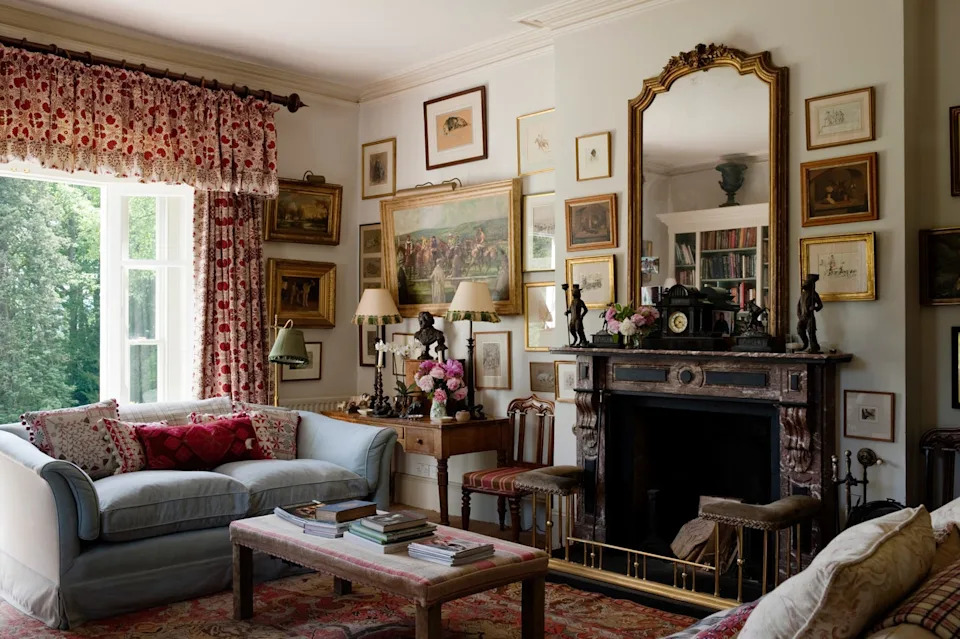
Applying these metrics to residential real estate presents a challenge for new construction. Krause warned that authenticity cannot be replicated by simply mimicking aesthetic elements. Buying reproduction vintage hardware does not produce the same psychological outcome as integrating actual heirlooms or antique furniture that carries cultural significance.
The study points to three practical applications for homeowners trying to build this resonance from scratch. Incorporating items with verifiable history ranks first. Second, prioritizing decor sourced from local artisans or reflecting specific cultural heritage over generalized home decor trends. Third, structuring floor plans around human connection. Krause specifically cited welcoming kitchens and living rooms designed to facilitate social interaction as physical catalysts for the psychological effect.
Follow House Beautiful on Instagram and TikTok.
You Might Also Like