Paris Motor Show 2026: Electric Revivals and Robotaxis Take Center Stage
Automakers merge retro designs with EV platforms as Volkswagen rebrands the ID.4 and Renault previews an electric Espace successor.
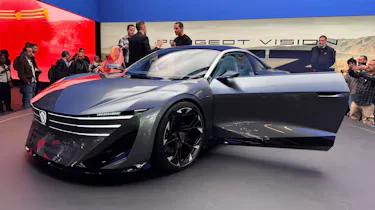
The 2026 Paris Motor Show has cemented its position as the definitive battleground where European automakers are simultaneously mining their heritage archives and accelerating toward an autonomous, fully electric future. Running through October at the Porte de Versailles exhibition center, the biennial event revealed a striking industry consensus: legacy nameplates are being resurrected with battery-electric powertrains, while radical autonomous vehicles transition from private testing grounds to public stages.
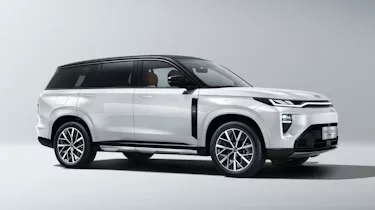
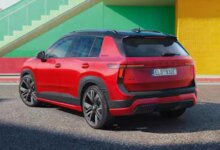
Volkswagen delivered one of the most consequential product pivots of the show by unveiling the ID. Tiguan. Built on the same MEB platform architecture that underpins the outgoing ID.4, the new SUV represents a direct response to years of consumer feedback criticizing the brand’s early electric crossovers for generic styling. By adopting the globally recognized Tiguan badge—historically VW’s highest-volume SUV in Europe—the automaker is attempting to normalize its electric lineup rather than isolating it behind the standalone “ID” sub-brand. The sharper exterior design targets direct competition against the Renault Scenic E-Tech and Skoda Enyaq, both of which have captured significant market share in the compact electric SUV segment since 2024.
Alongside the production-bound ID. Tiguan, Volkswagen displayed its Mission Efficiency concept publicly for the first time after earlier private previews. The ultra-streamlined vehicle explores extreme aerodynamic optimization to maximize range per kilowatt-hour, a critical metric as the industry faces pressure to reduce battery sizes and lower vehicle costs. Executives indicated the concept carries genuine potential for limited production, signaling VW’s intent to compete in the high-efficiency EV space currently explored by vehicles like the Mercedes-Benz EQXX prototype.

French manufacturers used their home turf to aggressively leverage nostalgia. Peugeot confirmed the return of the RCZ as a fully electric 2+2 sports coupe, generating 493 horsepower. The revival retains the signature double-bubble roofline originally inspired by Zagato coachbuilding designs. The original internal combustion RCZ, produced from 2010 to 2015, competed directly with the Audi TT and Volkswagen Scirocco before shifting consumer preferences toward crossovers killed the compact coupe segment. Its electrified resurrection suggests Stellantis believes high-performance electric architectures can now sustain niche body styles that were previously unprofitable.
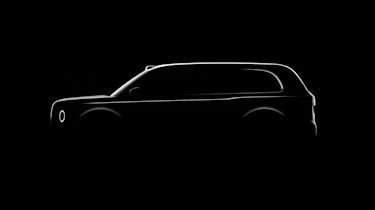
Renault expanded its ongoing retro-revival strategy—which successfully relaunched the R5 and R4—by previewing the E-Space concept. The vehicle signals a potential electric successor to the Espace, pioneering the European MPV segment in 1984 before losing relevance to modern SUVs. The E-Space functions as a technology testbed, showcasing interior interfaces and software architectures destined for upcoming production models across the Renault lineup. For immediate retail updates, the brand introduced a distinctive egg-shaped panoramic glass roof option for the new Twingo city car, scheduled for availability in 2027.
A purely historical exercise arrived via the Renault 8 Gordini concept, a two-door homage to the 1960s performance saloon that predated the modern Alpine and Renaultsport divisions. Like the Alpine A310 Vision displayed alongside it, Renault confirmed no current production plans for the Gordini, though executives acknowledged that public reception at Paris could influence future decisions regarding low-volume heritage projects.
General Motors’ European operations offered the clearest glimpse yet of the next-generation Vauxhall Astra through the STX concept. Standing for Sports Tourer eXperimental, the estate-style vehicle introduces Vauxhall’s entirely new styling language and marks the debut of the brand’s redesigned emblem. While an exact production timeline remains unconfirmed, the concept establishes the visual template for the Astra’s transition into its next lifecycle, moving away from the shared Opel design constraints that defined previous generations.
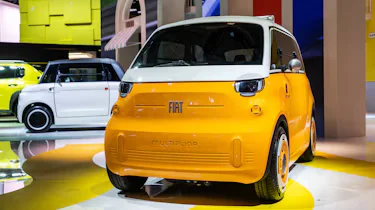
In the affordable urban mobility sector, Smart unveiled the #2, confirming the return of the ultra-compact two-seater format that originally launched the brand. Following Smart’s corporate restructuring into a joint venture between Mercedes-Benz and China’s Geely Holding Group, the #2 adopts the company’s new numerical naming convention. It will be exclusively battery-electric, aiming to reclaim the micro-car footprint abandoned when the original ForTwo ceased production.
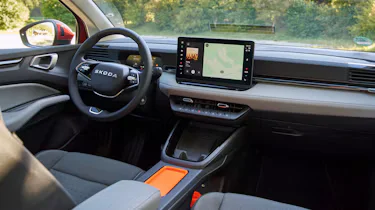
Skoda utilized the show to detail the SportLine trim for its Epiq electric SUV. Positioned as a practical family vehicle, the upgraded variant introduces microsuede upholstery, heated seating, and Matrix LED lighting. Performance specifications confirm a 0-62 mph acceleration time of 7.1 seconds, placing it competitively within the mainstream electric crossover bracket.
Tesla bypassed traditional drivable reveals to display the Cybercab robotaxi on the Paris floor. The purpose-built autonomous vehicle lacks a steering wheel and pedals entirely, designed exclusively for ride-hailing networks. While recent legislative shifts in the United Kingdom have begun permitting self-driving vehicles on public roads, the regulatory framework across continental Europe remains fragmented. Tesla has not provided a specific deployment timeline for European markets, leaving the golden two-seater as a technological statement rather than an imminent commercial product for attendees.