Gaza Peace Plan: $18B Pledged as UNRWA Faces Total Exclusion
A technocratic committee replaces UNRWA as $2.45 billion in initial recovery projects moves into procurement.
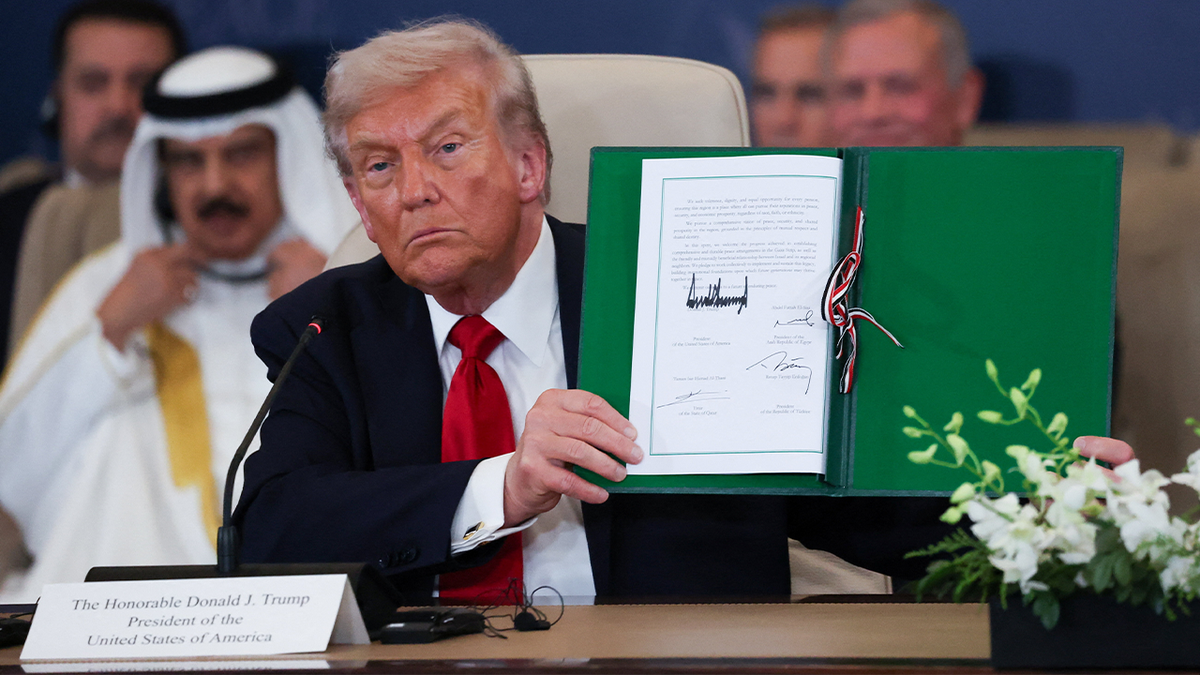
One year after President Donald Trump brokered a ceasefire between Israel and Hamas in Sharm el-Sheikh, the U.S.-backed Board of Peace has secured approximately $18 billion in reconstruction pledges for Gaza while permanently barring the United Nations Relief and Works Agency (UNRWA) from any role in the territory’s future.
The financial commitments mark the largest coordinated international funding effort for Gaza since the conflict escalated following the Oct. 7, 2023, attacks. A six-month recovery program encompassing 66 initiatives is now underway, targeting rubble clearance, unexploded ordnance removal, temporary housing construction, and the destruction of tunnel infrastructure. Tenders for several projects have already been submitted, with the initial phase budgeted at $2.45 billion.
Central to the Board of Peace’s operational framework is the total exclusion of UNRWA, the agency that historically administered education, healthcare, and social services across the Palestinian territories. The decision reflects mounting scrutiny of the organization. The USAID Office of the Inspector General is currently investigating more than 1,500 UNRWA employees over alleged ties to militant groups. The Board of Peace stated it will partner only with organizations capable of delivering services while contributing to a “deradicalized Strip,” concluding that UNRWA fails those criteria.

To replace UNRWA’s administrative footprint, the plan relies on the National Committee for the Administration of Gaza (NCAG), a technocratic body tasked with civil governance. Unlike previous political administrations in the territory, NCAG members are drawn from civil service backgrounds. Their immediate mandate includes vetting educators and civic officials to dismantle radicalized curricula—a systemic issue long documented by independent monitors within UNRWA-run schools.
Security architecture in Gaza is shifting toward an International Stabilization Force designed to train a new local police force and oversee demilitarization. Kazakhstan, Morocco, Albania, and Kosovo have formally committed personnel, with additional nations negotiating entry. This multinational policing model departs sharply from historical reliance on internal Palestinian security factions, which frequently fractured under political pressure or lacked the capacity to enforce order against armed groups.
The broader diplomatic framework rests on Trump’s 20-point peace plan, which mandates the complete disarmament of Hamas and other militant factions as a prerequisite for Israeli military withdrawal. U.S. Special Envoy to the Middle East Steve Witkoff, Special Envoy for Peace Jared Kushner, and Secretary of State Marco Rubio spent months cultivating regional consensus, presenting Hamas with what senior advisor Josh Gruenbaum described as a choice between a negotiated off-ramp or severe consequences. Kushner previously issued a stark ultimatum demanding disarmament, warning that failure would result in U.S. backing for Israel to “finish the job.”
International institutional backing solidified in November 2025 when the United Nations endorsed the Board of Peace through Resolution 2803. The European Union subsequently aligned its financial mechanisms with the board’s priorities. EU Commissioner Dubravka Šuica confirmed in September that Brussels had mobilized roughly $1 billion specifically for early recovery, directing funds through the UNDP and UNICEF rather than traditional channels tied to UNRWA.
The initiative has drawn pragmatic support from unexpected political quarters. Former Secretary of State Hillary Clinton acknowledged in a Financial Times editorial that while the plan diverged from conventional Democratic approaches, it represented the only framework backed by sufficient leverage and resources to force implementation.
Retired Four-Star Gen. Jack Keane assessed the agreement as a historic pivot point, noting that the structural requirement for Hamas to surrender its arsenal fundamentally alters decades of failed negotiation paradigms that previously allowed militant groups to retain weapons during transitional periods.
Israeli Prime Minister Benjamin Netanyahu formally signed onto the Board of Peace membership in the presence of Secretary of State Rubio prior to a White House meeting. However, Israeli officials maintain that military action remains on the table if Hamas violates compliance terms. Iran’s ongoing regional conflicts have simultaneously reduced Tehran’s ability to finance or direct proxy operations in Gaza, altering the strategic calculus for militant factions weighing whether to accept amnesty provisions offered under the 20-point plan.
The BBC reported the $18 billion pledge total earlier this month as tenders for the first wave of infrastructure projects moved into the procurement phase.