LA May Revoke Oil Drilling Permit at Murphy Site
Decades of air quality violations and USC health studies drive unprecedented push to revoke urban oil permit in Jefferson Park

Los Angeles zoning officials are preparing to decide whether to revoke the operating permit for the Murphy drill site, a move that would mark the first time the city has forcibly shut down an active urban oil extraction facility. The potential closure centers on a 32-well operation in the Jefferson Park neighborhood, where more than a decade of documented air quality violations and mounting scientific evidence of health harms have collided with a broader municipal push to phase out fossil fuel production inside city limits.
The decision rests with the city’s zoning administrator, who is evaluating whether operations run by Bakersfield-based E&B Natural Resources constitute a legal public nuisance. A four-hour public hearing took place in July. Individual public comments closed Sept. 25, neighborhood councils have until Oct. 5 to submit their positions, and E&B has until Oct. 19 to file a formal response before the city begins deliberations that could stretch into next year.
If the permit is revoked, it would represent a significant escalation in how California municipalities handle legacy oil infrastructure embedded within residential zones. Unlike rural oil fields governed primarily by state regulators, urban drilling sites operate under local conditional use permits. Revoking one requires proving that the operator has violated the specific terms of that land-use agreement, a higher legal threshold than simply citing environmental infractions.


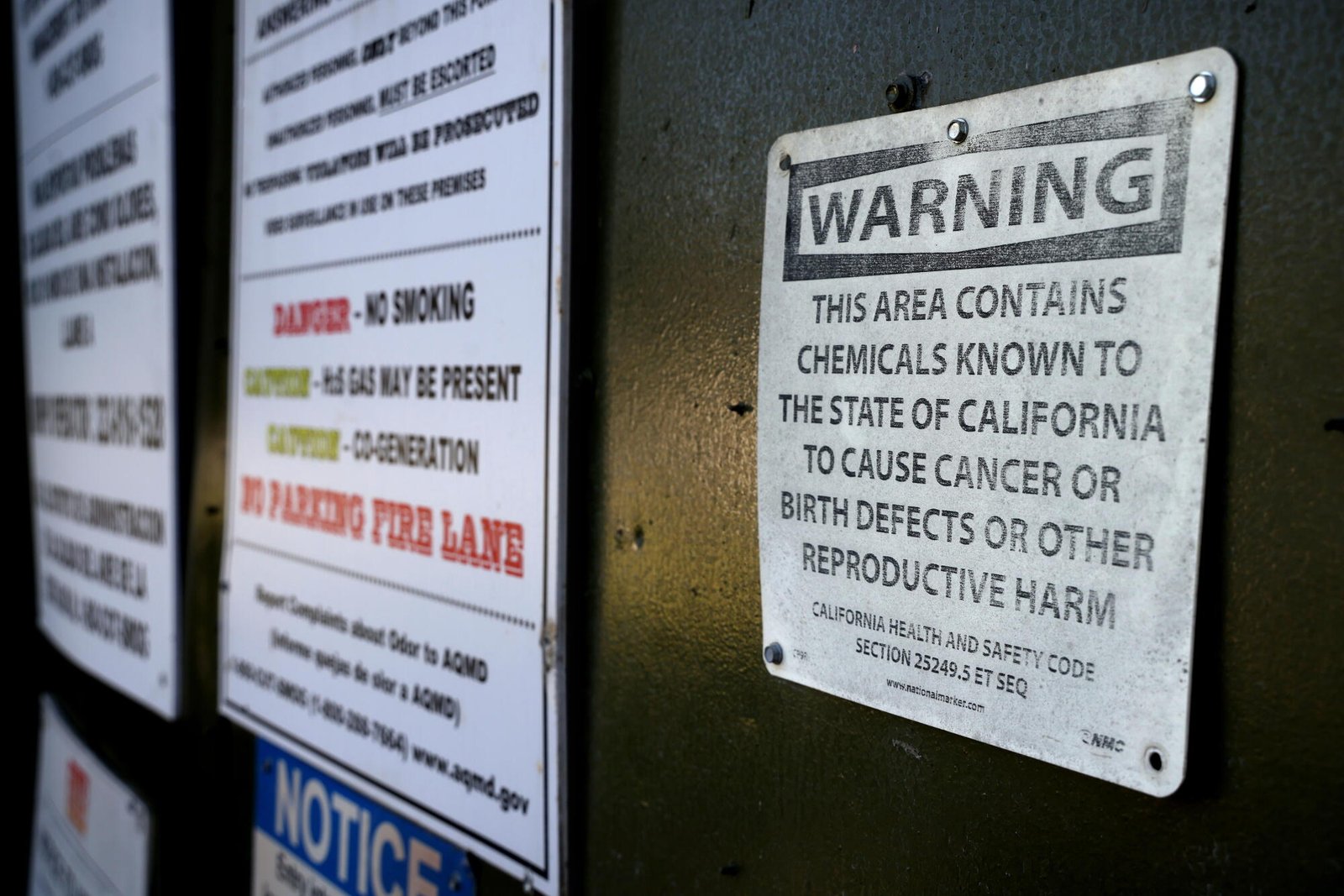
E&B acquired the lease from Sentinel Peak Resources in 2019. Since then, the Redeemer Community Partnership, a local nonprofit, has cataloged 54 violation notices and 19 additional regulatory actions issued by the South Coast Air Quality Management District, the California Division of Occupational Safety and Health, the state’s Geologic Energy Management Division (CalGEM), and the Los Angeles Fire Department. Infractions include uncontrolled methane releases, gas leaks, the use of prohibited equipment during pipeline pressure testing near schools, and the application of chemical masking agents to cover noxious fumes.
The company maintains the citations reflect routine regulatory oversight rather than a pattern of endangerment. Spokesperson Ted Cordova stated that the administrative record does not support findings that the site jeopardizes public health or safety. E&B commissioned an independent review from consulting firm Roux Associates, which concluded there was no evidence in the city’s record demonstrating adverse public health effects. The operator also disputes that 27 odor complaints logged since 2024 and 67 instances of work conducted outside permitted hours amount to actual violations of municipal noise and operational rules.
Independent academic research contradicts the industry assessment. Two studies led by researchers at the University of Southern California found measurable physical impacts on the surrounding population. A 2021 analysis demonstrated that residents living closer to the Murphy wells, or directly downwind, suffered significantly diminished lung function compared to those further away. A subsequent 2022 study detected elevated concentrations of toxic metals associated with crude oil extraction in the nail clippings of nearby residents.
The site sits in a densely populated area of South Los Angeles, immediately adjacent to three schools, a convent, a multi-building affordable housing complex, a preschool for children with hearing loss, and an AIDS Healthcare Foundation clinic. Residents report that inspectors rarely arrive in time to verify complaints about odors or overnight truck deliveries. E&B is currently nearly a year behind schedule in complying with city orders to construct a 30-foot enclosure around its operations.
Rev. Eddie Anderson, senior pastor at the nearby McCarty Memorial Christian Church, moved to Jefferson Park in 2020. He reported that his previously mild asthma became acute, his dog developed cancer, and his wife experienced two miscarriages before the couple relocated to Mid City in 2024. Anderson framed the proximity of industrial extraction to historically Black and Latino neighborhoods as a civil rights issue, noting that oil extraction processes frequently utilize volatile organic compounds and hydrogen sulfide, both linked to reproductive harm and respiratory illness.
The land beneath the Murphy drill site is owned by the Roman Catholic Archdiocese of Los Angeles. It was donated by the family of railroad and oil tycoon Daniel Murphy following his death, and the Church began leasing it to developers in the 1960s. Production peaked in the 1970s at approximately 1,600 barrels per day. Output has since fallen to roughly 240 barrels daily, generating approximately $24,000 per day at current market prices. E&B argues the site provides locally sourced energy under strict regulations and pays royalties to over 3,000 mineral rights holders while employing local contractors.
Los Angeles contains over 2,000 active oil wells, a legacy of early 20th-century development when the region was one of the world’s most prolific oil-producing areas. Municipal efforts to unwind this history have faced legal hurdles. Both the city and Los Angeles County passed ordinances in 2022 to ban new drilling and phase out existing wells over 20 years, but an L.A. County Superior Court judge struck down the measures following legal challenges from the petroleum industry. Lawmakers are currently drafting revised frameworks to survive judicial scrutiny.
Meanwhile, new state laws are altering the regulatory landscape. California legislation now mandates 3,200-foot health and safety buffer zones between active extraction sites and sensitive receptors like homes and schools, and requires operators to plug idle wells rather than leaving them dormant indefinitely.
Other urban sites in the region have already ceased operations under similar pressures. The Allenco multiple well site, located near the Murphy operation, halted production in 2013 amid protests and was later ordered to fully decommission by the state. The nearby Jefferson drill site voluntarily shut down in 2018 after the city mandated stricter health protections. In Culver City, officials secured an agreement to close the portion of the massive Inglewood Oil Field within its borders by 2029.
City Councilmember Heather Hutt, who represents Jefferson Park, formally requested the revocation of the Murphy permit, stating that tighter state regulations and shifting municipal priorities have fundamentally reset the relationship between residential communities and drilling operators.
The Murphy site is not the only active permit facing direct municipal scrutiny. Downtown Los Angeles, city officials are separately considering revoking the permit for the Broadway drill site, where residents have awaited a final administrative decision for nearly three years. Neighborhood council feedback for the Murphy site remains open through Oct. 5.