Flock Safety Surveillance: Crime Solver or Privacy Threat?
Officer stalking cases and 5-year data retention deals fuel backlash against $8B surveillance firm
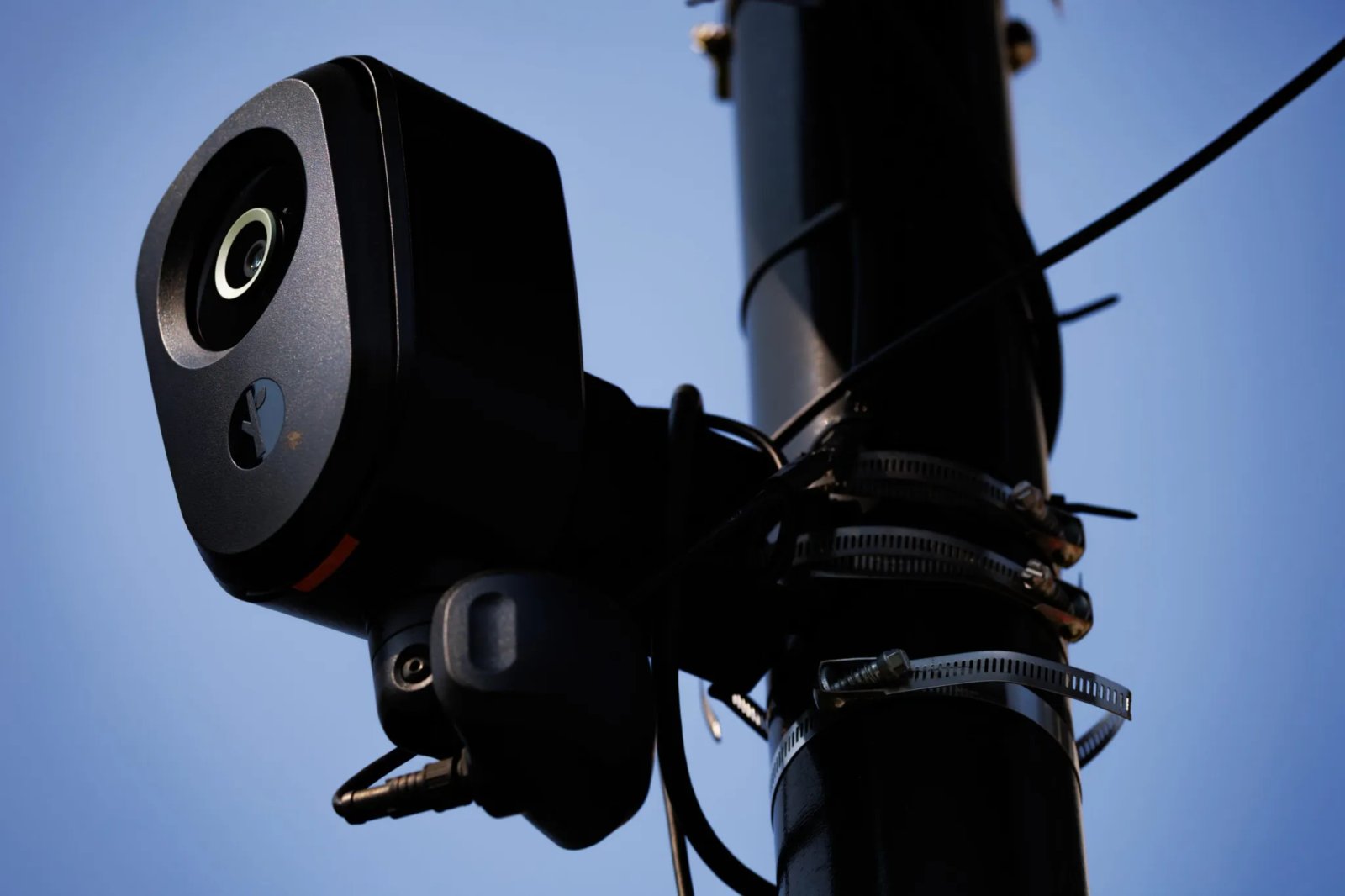
A Florida police officer was arrested last week after allegedly using his department’s Flock Safety license plate reader access to track his estranged wife more than 700 times over nearly two years. The case highlights a growing crisis for the $8.3 billion surveillance company: while its automated license plate recognition (ALPR) network has become an indispensable tool for solving violent crimes, it is simultaneously facing intensifying scrutiny over data misuse, contractual loopholes, and the creation of what critics call a warrant-proof national tracking system.
The technology’s investigative utility remains undeniable. In Providence, Rhode Island, detectives used Flock’s historical search capabilities to identify a rental car linked to the December 2024 Brown University shooting within days, despite having only a vague description and no suspect name. The system allowed investigators to reconstruct the vehicle’s movements across 14 separate camera captures dating back weeks before the attack. This capability—searching by vehicle color, make, model, or even bumper stickers rather than just plate numbers—has made Flock the dominant player in ALPR, with contracts in over 5,000 communities across 49 states.
Yet the very features that make the system effective have also fueled a backlash that is now materially impacting municipal adoption. Since August 2021, at least 82 law enforcement agencies have terminated their Flock contracts, with 39 cancellations occurring in the first five months of 2026 alone. Cities including Boston, Flagstaff, and Santa Clara suspended agreements following public outcry, often amplified by high-profile vendor controversies such as Amazon Ring’s decision to end its Flock integration. Physical resistance has also escalated; cameras have been vandalized, painted over, or destroyed in at least 36 states as residents express frustration through direct action when legislative avenues stall.


Central to the controversy is the gap between Flock’s public privacy messaging and the actual terms governing data retention. While the company promotes a standard 30-day deletion policy and recently recommended a seven-day default, government audits reveal significant exceptions. A July audit by the Los Angeles Police Department inspector general found that at least one active contract permitted Flock to retain city data for five years—60 times longer than the stated standard—and granted the company discretion to use that information “for any purpose.” Separate agreements explicitly allowed anonymized footage to be used for training machine learning algorithms, contradicting the notion that customer data remains solely under agency control. LAPD officials are now drafting new contract language to prohibit vendors from using municipal data for AI development.
This contractual variability creates a fragmented regulatory landscape where privacy protections depend entirely on local negotiation capacity rather than uniform standards. More concerning to legal scholars is the cross-jurisdictional sharing feature, which allows participating agencies to search each other’s datasets. Privacy advocates argue this effectively creates an unregulated national database where a retention limit imposed by one city does not prevent another jurisdiction from accessing and retaining the same records indefinitely. Documented cases include a Texas deputy conducting a nationwide search related to abortion travel and Wisconsin officers targeting drivers based on frequent trips to states with legal marijuana.
The legal framework has struggled to keep pace with the technology’s scale. Courts have traditionally held that drivers lack a reasonable expectation of privacy on public roads, but recent rulings suggest this doctrine may be obsolete when applied to persistent surveillance networks capable of reconstructing months of movement patterns. The Fourth Circuit’s 2026 decision in Chatrie v. United States held that accessing precise location history constitutes a search requiring a warrant, a precedent that could extend to ALPR systems operating at national scale. Federal legislation like the Fourth Amendment Is Not For Sale Act aims to close the loophole allowing law enforcement to purchase location data without judicial oversight, though the bill has repeatedly stalled in Congress.
Despite mounting opposition, Flock continues to expand beyond license plate readers into video analytics, gunshot detection, drones, and AI-powered search tools. Non-ALPR products now account for more than half of new revenue as the company diversifies its portfolio. Annual recurring revenue surpassed $500 million in the first half of 2026, and investor confidence remains strong with backing from Andreessen Horowitz, Tiger Global, and Founders Fund. CEO Garrett Langley maintains that customer growth outpaces churn by a factor of ten, arguing that communities ultimately value the technology’s public safety benefits despite vocal opposition.
West Hollywood exemplifies the complex dynamics at play. Despite intense public opposition at city council meetings, the city renewed its Flock contract unchanged because policing falls under Los Angeles County Sheriff’s Department jurisdiction, limiting local authority to unilaterally terminate the agreement. This structural reality means that in many jurisdictions, resident opposition cannot directly translate into policy change when law enforcement agencies operate independently of municipal governance.
Flock recently introduced “Evidence Mode,” allowing detectives to preserve specific records beyond standard retention windows for active investigations, and claims that over 90% of non-plate searches occur within seven days of capture. However, these measures remain recommendations rather than binding requirements, leaving actual data practices subject to individual contract negotiations that vary widely in transparency and protective strength.