Senate Republicans Block Temporary Replacement for Dianne Feinstein, Freezing Biden Judicial Nominees
The procedural standoff freezes at least 12 federal judicial nominees and exposes the fragility of the Democrats' one-vote majority on the powerful committee.
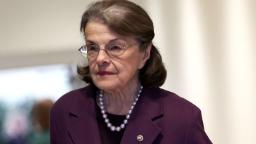
At least 12 federal judicial nominees are now frozen in procedural limbo after Senate Republicans refused to allow a temporary substitute for Sen. Dianne Feinstein on the Judiciary Committee, effectively halting President Joe Biden’s confirmation pipeline through one of the chamber’s most powerful panels.
The blockade, formalized Tuesday when Sen. Lindsey Graham objected to a motion by Majority Leader Chuck Schumer, exploits the committee’s razor-thin partisan margin. Democrats hold an 11-10 advantage on the panel, meaning Feinstein’s prolonged absence recovering from shingles eliminates their ability to move nominations out of committee and onto the Senate floor.
Schumer sought to install Sen. Ben Cardin of Maryland as a placeholder until Feinstein could return. Graham rejected the maneuver, framing it not as a medical accommodation but as a tactical play to advance nominees who lack bipartisan support.


“With all due respect, my colleague, Senator Schumer, this is about a handful of judges that you can’t get the votes for,” Graham said during the exchange.
Sen. John Cornyn of Texas, a senior Republican on the committee, reinforced the strategy. “I don’t think Republicans can or should help President Biden’s most controversial nominees,” Cornyn said, adding that the GOP expects no cooperation on the effort.
Democrats retain a procedural mechanism to force the issue: filing a resolution to change the committee roster, which would require 60 votes to overcome a filibuster. Party leaders have signaled they are unlikely to spend scarce floor time on a vote destined to fail without at least 10 Republican defections.
The standoff underscores the fragility of the Senate’s committee structure under unified Democratic control. Unlike the full Senate, where Vice President Kamala Harris can break ties, committees operate strictly on their assigned rosters. When the Judiciary Committee deadlocked 11-11 in 2021 over appellate nominee Jennifer Sung, Democrats had to use a rare discharge petition requiring only a simple majority on the floor to bypass the panel. That precedent remains available, but discharging every stalled nominee individually would consume weeks of legislative time the majority needs for spending bills and other priorities.
Feinstein, 89, initially projected she would return to Washington by the end of March but later cited complications related to her shingles diagnosis. She stated last week she would travel back “as soon as possible once my medical team advises that it’s safe.”
Cardin confirmed he had discussed the temporary assignment with Schumer but had not spoken directly with Feinstein since her hospitalization. “I recognize the importance of the numbers on the committee, and this way we can be able to conduct business,” Cardin said.
The paralysis extends beyond lifetime judicial appointments. The Judiciary Committee also holds jurisdiction over immigration policy, antitrust enforcement, intellectual property law, and oversight of the Department of Justice. Without a functioning majority, subpoenas, markup sessions, and legislative referrals tied to those areas face similar delays.
Judiciary Chairman Dick Durbin acknowledged the bottleneck has slowed the party’s broader agenda. “Yes, of course it does” carry longer ramifications, the Illinois Democrat said regarding the backlog created by consuming limited floor time to schedule delayed votes.
Feinstein announced in February she would not seek reelection in 2024, triggering a crowded California primary that already includes several sitting House Democrats. While most of her Senate colleagues have publicly supported her decision to retain her seat during recovery, two House Democrats have called for her resignation — pressure that could intensify if the committee deadlock persists into May.
Schumer declined to address whether Feinstein should step down if her recovery extends further, stating only that he spoke with her recently and remains “hopeful that she will return very soon.”
As of Tuesday afternoon, no revised timeline for Feinstein’s return to the Capitol had been provided by her office.