$15 Billion Iowa Steel Mill to Become Largest U.S. Plant as Domestic Production Surges
The Mesabi Metallics plant will produce 10 million tons annually using Minnesota iron ore, exceeding the current largest U.S. mill by 2 million tons.
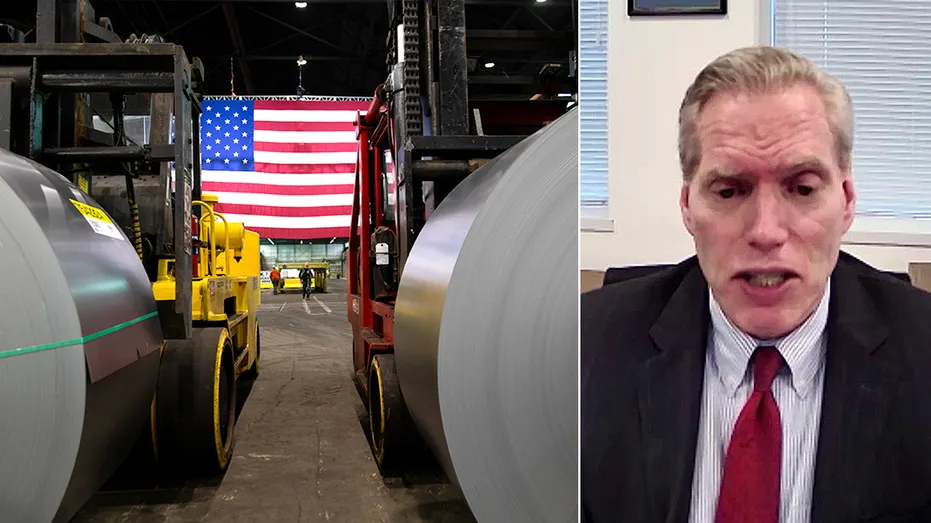
A $15 billion steel mill planned for Iowa is set to become the largest production facility in the United States, capable of turning out 10 million tons of steel annually and anchoring a fully domestic supply chain fed by iron ore from Minnesota.
The Mesabi Metallics project, announced Monday alongside President Donald Trump, represents the most significant single expansion of American primary steelmaking capacity in decades. The plant is expected to support more than 1,700 manufacturing jobs and will exceed the output of the current largest U.S. steel mill by roughly 2 million tons per year.
For an industry that has spent the last decade restructuring around smaller electric arc furnaces that melt scrap metal, the Iowa project signals a return to large-scale integrated steelmaking. Integrated mills process raw iron ore into finished steel, a method essential for producing the highest-grade materials required by automotive manufacturers, energy infrastructure developers, and the defense sector. Mesabi Metallics intends to feed the Iowa plant directly with ore extracted from its recently opened mine in Minnesota, eliminating reliance on foreign raw materials for the entire production cycle.


American Iron and Steel Institute CEO Kevin Dempsey framed the investment as a direct response to tightening domestic supply constraints. U.S. steel consumption has climbed steadily as federal infrastructure spending accelerates and manufacturers reshore operations across multiple sectors.
“We want to have advanced steelmaking in the U.S. for domestic industry, for automotive, for construction, for national defense,” Dempsey said. “As we continue to grow, we can export more of that steel to other countries.”
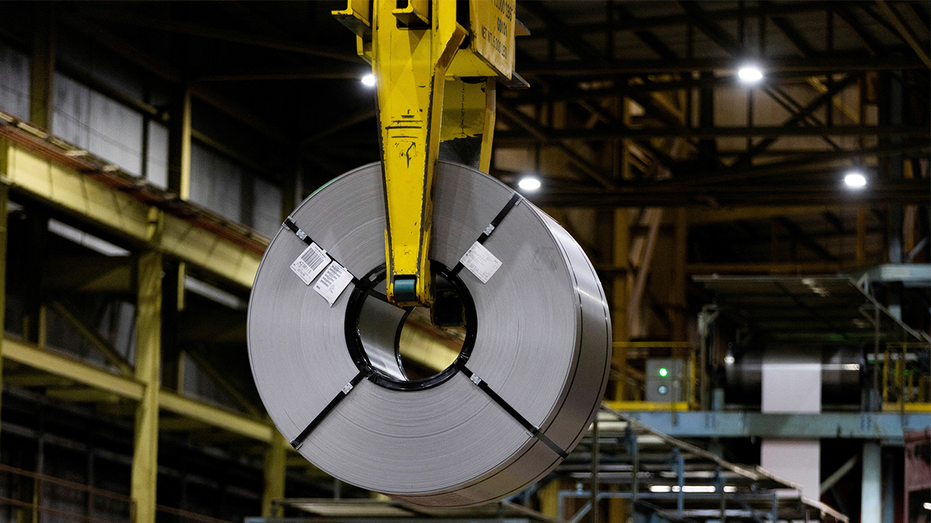
The push for expanded capacity arrives as the United States solidifies its position as the world’s third-largest steel producer. The country surpassed Japan in total output last year, trailing only China and India. Despite that climb, American mills account for just 4% of global production, leaving substantial room for growth if domestic demand continues its current trajectory.
Federal trade policy has fundamentally altered the economics of American steelmaking over the past several years. Tariffs initially deployed during Trump’s first term drove foreign steel imports down from 44 million tons in 2014 to 25 million tons last year, according to Dempsey. That reduction in cheaper overseas material gave domestic producers the pricing power necessary to justify massive capital expenditures without the risk of being undercut by state-subsidized foreign competitors.
“That’s given businesses the confidence to invest their own private money in new steel mills in the United States,” Dempsey said, noting that the tariff framework initiated in the first term is now yielding physical infrastructure.
While U.S. mills scale up, neighboring Canada faces mounting pressure from the same global market dynamics. Canadian steelmakers remain heavily exposed to imported material because Ottawa has not implemented tariff protections comparable to Washington’s Section 232 measures. Canada recently imposed 20% tariffs on various U.S. goods, escalating cross-border trade friction, but Dempsey argued that Canadian policymakers are targeting the wrong threat.
“Right now, the problem is they don’t have that same strong tariff in Canada, and so Canadian steel producers are being largely hurt by steel being imported from outside the region,” he said, urging Canada to adopt a protectionist framework aligned with the U.S. approach to stabilize the broader North American market.
The integration of the Mesabi Metallics mine and the Iowa mill establishes a rare closed-loop industrial corridor in the upper Midwest. Unlike recent U.S. steel investments concentrated in the South near automotive assembly plants, this project leverages established Great Lakes freight routes and proximity to heavy manufacturing centers. Federal officials confirmed the project’s scope Monday, marking the latest major capital deployment in a sector that has seen sustained reinvestment driven entirely by shifting trade barriers rather than direct government subsidies.