

Trump Launches Super Intelligence Force to Lead US AI Policy
New task force consolidates AI oversight under DNI Clayton with 120-day risk assessment mandate
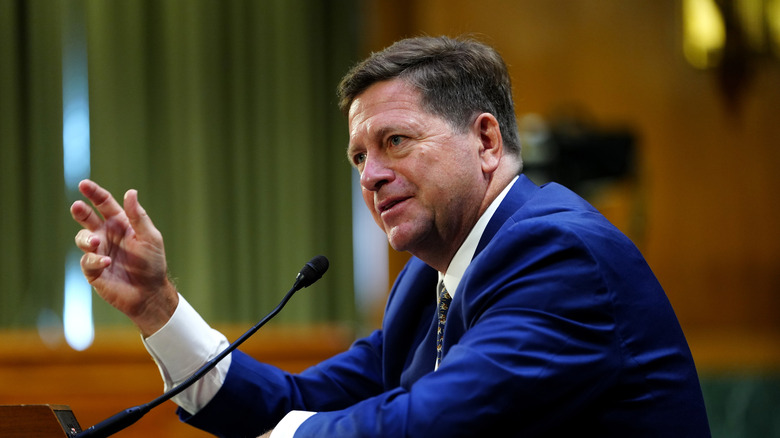
President Donald Trump has established the Super Intelligence Force, a new federal task force designed to centralize U.S. artificial intelligence strategy and secure American dominance in next-generation computing. The initiative marks a significant shift from previous decentralized regulatory approaches, consolidating oversight under a dedicated body that reports directly to the White House rather than operating through independent agencies.
Jay Clayton, Director of National Intelligence, will lead the force with a mandate to coordinate government efforts across defense, commerce, and intelligence sectors. The appointment signals an emphasis on treating advanced AI as a national security asset comparable to nuclear or aerospace capabilities. Clayton is joined by Federal Trade Commission Chair Andrew Ferguson, Department of Defense Under Secretary for Research and Engineering Emil Michael, and Office of Personnel Management Director Scott Kupor. This composition blends regulatory enforcement, military research, and federal workforce management, suggesting the administration views AI leadership as a multidisciplinary challenge requiring synchronized policy execution.
The task force must deliver a comprehensive assessment of AI risks and opportunities within 120 days. Unlike prior executive orders that focused primarily on safety guardrails and bias mitigation, this review is expected to prioritize industrial competitiveness, critical infrastructure resilience, and geopolitical positioning. The directive explicitly includes engagement with religious organizations and public interest groups alongside technology firms, indicating an attempt to build broader societal consensus around rapid technological deployment at a time when some industry leaders have advocated for development pauses.


This restructuring replaces the more fragmented oversight model inherited from previous administrations, which distributed AI responsibilities among the National Institute of Standards and Technology, the National Science Foundation, and various departmental offices. By creating a single coordinating entity with direct presidential access, the administration aims to accelerate decision-making and reduce interagency friction that has historically slowed federal technology adoption. The rebranding from “artificial intelligence” to “super intelligence” reflects a deliberate rhetorical strategy to distinguish U.S. policy objectives from international competitors and frame the technology as a distinct strategic domain.
The force’s recommendations will shape forthcoming federal procurement standards, export controls, and research funding allocations. Industry stakeholders are watching closely for signals on whether the 120-day report will endorse voluntary compliance frameworks or propose new statutory authorities. The inclusion of FTC Chair Ferguson suggests antitrust and competition policy will be integrated into national AI strategy, potentially addressing concerns about market concentration even as the administration pushes for accelerated development.
Susie Wiles, the president’s chief of staff, will serve as the primary White House liaison, ensuring the task force’s work aligns with broader executive priorities. The first deliverable is due approximately four months from the announcement date.




