UWGB’s Lovejoy returns as Kentucky injunction upends NCAA eligibility
Kentucky injunction reinstates UWGB stars after Court of Appeals ruling
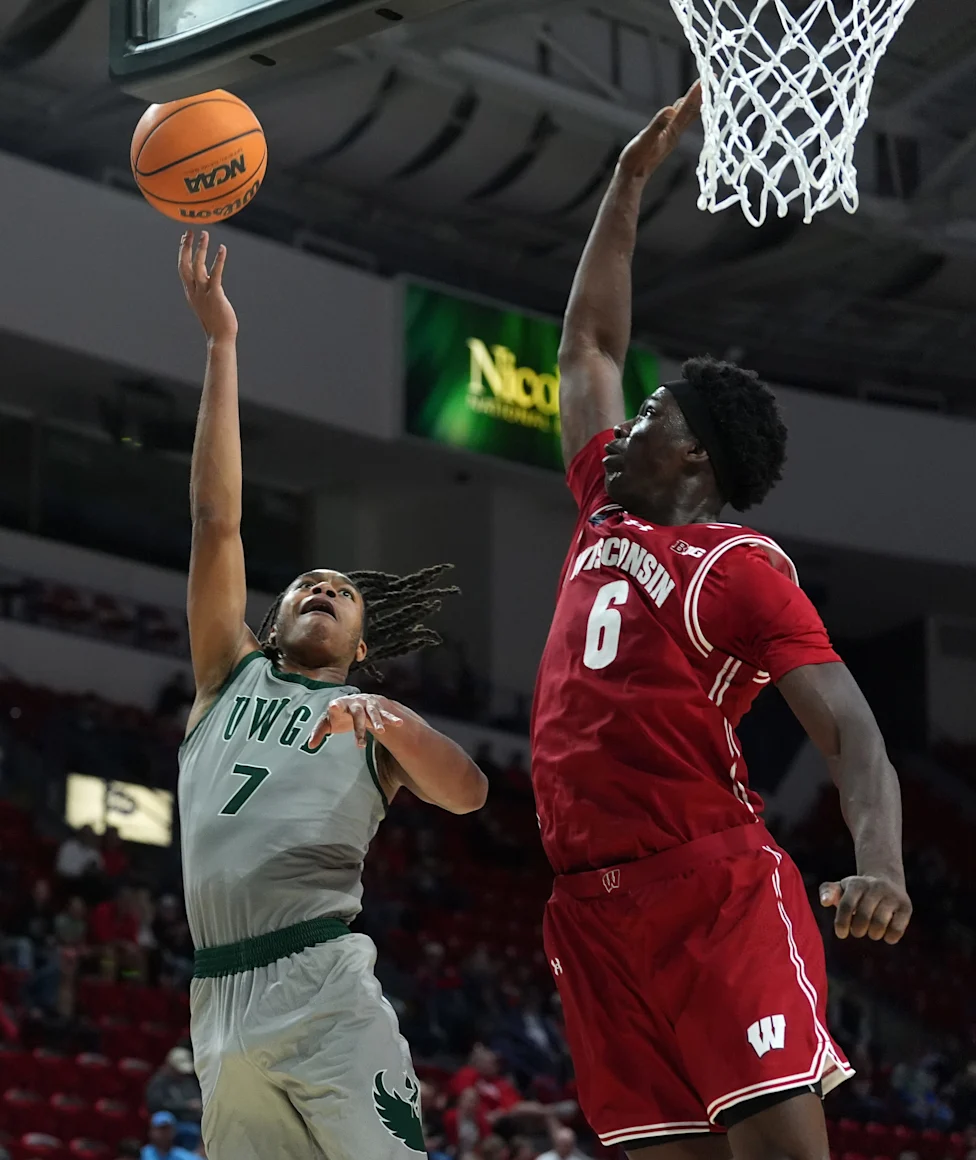
Orlando Lovejoy is back on the court at the Resch Center. The University of Wisconsin-Green Bay men’s basketball program has two of its most impactful players reinstated after a Kentucky judge issued a fresh temporary injunction on Oct. 16 blocking the NCAA from enforcing its refusal to grant the 2022 recruiting class an extra season of eligibility.
The injunction covers Lovejoy, Aidan Hadaway and roughly 40 other student-athletes from that class. It reverses, in effect, the Kentucky Court of Appeals decision issued 14 days earlier that had ruled against the group and cleared the way for their eligibility to expire.
The legal flip-flop arrives just as the Phoenix open their season. Lovejoy, a 6-foot-3 guard who led Detroit Mercy as a Horizon League first-team selection, is scheduled to make his UWGB debut in an exhibition against Marquette on Oct. 19. Hadaway, a 6-8 forward who averaged 14.4 points and 7.4 rebounds as a senior at Ohio, remains limited by a foot injury and awaits a CT scan on Oct. 20. If the imaging comes back clean, he is expected to be cleared to practice and could be ready for the regular season opener against Lawrence on Nov. 2, followed by road games at Cincinnati on Nov. 5 and at St. Thomas on Nov. 8.


The timing is the story, not just the relief. A Circuit Court judge had already granted a temporary restraining order in September that let Lovejoy and Hadaway suit up in the preseason exhibition against Wisconsin on Oct. 15. They played that day. The Court of Appeals then pulled the eligibility win away from the players, and now the injunction has restored their status again.
Lovejoy averaged 15.8 points, 3.7 assists and 1.6 steals for the Titans last season. His on-court role is immediate. Coach Doug Gottlieb said Lovejoy has been informally guiding transfer junior guard Ahmere Carson on veteran habits. “Orlando kind of organically understands what a point guard is supposed to do,” Gottlieb said. “He’s like an older guy, even though he doesn’t really exactly know what we want to do offensively.”
Gottlieb also described Lovejoy and senior guard LeBron Thomas as translators for his system. He noted the Marquette exhibition would pit those two against Marquette sophomore Nigel James, a top-ranked point guard nationally. “You get a chance to see [James] go against LeBron Thomas, Ahmere Carson and, now, Orlando Lovejoy,” Gottlieb said.

The injunction is temporary, not final. The NCAA retains two paths: appeal for appellate review again, or ask a higher court to stay the injunction while the case proceeds. The players’ attorney told Gottlieb he believes the athletes can play the full season if the NCAA does not secure another stay. “Over the next month or so, the NCAA, they believe, will try to get another stay. If that doesn’t happen and they set a trial date, we feel really good about it,” Gottlieb said.
What a temporary injunction actually buys matters for how the Phoenix can use Lovejoy and Hadaway. It pauses the NCAA’s enforcement of the eligibility denial; it does not resolve the underlying dispute over whether the 2022 class qualifies for an additional year. A later court ruling, or a stayed injunction, could still remove both players from the roster midseason.
The 2022 class is not alone in this fight. Their lawsuit challenges the NCAA’s treatment of players who exhausted their five-year eligibility windows under the organization’s prior rules. If the courts ultimately side with the players, the decision could force the NCAA to reopen eligibility questions for hundreds of athletes across multiple classes. If the courts reject the claim, schools that already built rosters around reinstated players could face roster churn and scholarship imbalances.
For UWGB, the immediate calculus is whether Lovejoy and Hadaway can stay healthy and consistent through a schedule that includes Marquette, Lawrence, Cincinnati and St. Thomas. Their availability has already shifted three times in three weeks. Gottlieb has called this legal uncertainty a case he cannot predict. “I have zero true feel for it,” he said.