Michael Bloomberg Rejects Donald Trump’s Proposal for Government Stakes in AI Companies
The media mogul warns that federal equity in tech firms would lead to cronyism and undermine free-market innovation.

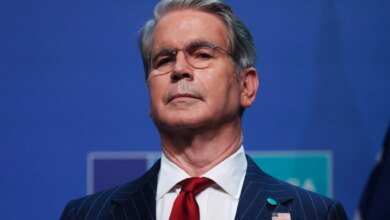
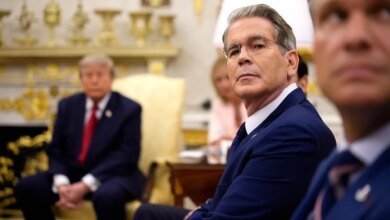
Donald Trump’s tentative proposal to acquire government equity in American artificial intelligence companies has drawn sharp criticism from billionaire businessman and former New York City Mayor Michael Bloomberg, who warned that federal ownership would breed corruption and undermine the free-market principles that fueled the U.S. tech boom.
The debate comes as Washington increasingly views artificial intelligence not merely as a commercial sector, but as a critical pillar of national security. With the cost of developing frontier AI models soaring into the tens of billions of dollars and Chinese competitors making rapid advancements, the Trump administration is reportedly considering direct state intervention to secure America’s technological edge.
However, writing in a column for Bloomberg Opinion, the media mogul argued that turning the federal government into an active investor would compromise its role as an impartial regulator. Bloomberg warned that state ownership would inevitably lead to “cronyism” and transform the technology market into a “smoke-filled backroom” driven by political influence rather than innovation.
“Somewhere, Karl Marx is smiling,” Bloomberg wrote, criticizing the shift toward a centrally planned economic model. He added that the potential for state-driven propaganda through government-owned AI systems would “make George Orwell blush.”
A Shift in the American Tech Model
For decades, the Silicon Valley playbook has relied on a distinct division of labor: private venture capitalists and tech giants absorb the financial risks of early-stage development, while the federal government steps in later to regulate safety, privacy, and antitrust concerns. This model has allowed American firms to dominate the global tech landscape, producing trillion-dollar enterprises without direct state equity.
This model contrasts sharply with China’s state-directed approach. In Beijing’s ecosystem, the government actively guides the sector, often providing state-backed computing power and infrastructure while forcing private firms to compete for market share under strict regulatory oversight. The Chinese government has also established massive “guidance funds” to direct state capital into strategic sectors like semiconductors and AI.
The proposal for U.S. government stakes in AI startups represents a fundamental departure from traditional American capitalism. While some populist factions on both the political left and right, alongside certain AI executives seeking stable capital, have welcomed the idea of state backing, critics argue it risks nationalizing a highly competitive industry.
Taxation Over Ownership
Bloomberg countered the argument that public ownership is necessary for ordinary Americans to benefit from the AI revolution. He pointed out that the public already reaps the rewards of AI integration through practical everyday applications, such as advanced fraud detection in banking, breakthroughs in medical research, and automated bookkeeping. Furthermore, once these private AI firms eventually launch initial public offerings (IPOs), individual citizens will have the opportunity to buy shares directly on public stock exchanges.
If policymakers believe that tech conglomerates are not contributing a fair share to the public treasury, Bloomberg suggested that the solution lies in tax reform rather than state equity. He argued that Washington should adjust the federal tax code to ensure the broader public benefits from the economic growth generated by AI, rather than having the government pick winners and losers in the private sector.
The escalating costs of training next-generation large language models have already forced many AI startups to seek massive capital injections from tech giants like Microsoft, Alphabet, and Amazon. As the financial demands of the AI race grow, the debate over whether Washington should step in as a financial backer or remain a strict regulator is likely to intensify.