OKX Europe Launches Migration Tool for USDT Holders Navigating MiCA Restrictions
The exchange offers a voluntary conversion path to USDC as MiCA regulations squeeze Tether out of the European market.
As the European Union’s landmark regulatory regime begins to reshape the digital asset landscape, OKX Europe has introduced a strategic one-way conversion feature designed to help users navigate the tightening restrictions on non-compliant stablecoins. The new tool allows customers to deposit Tether’s USDT and convert it directly into USDC, providing a regulated migration path as the Markets in Crypto-Assets (MiCA) rules fundamentally alter which dollar-pegged assets can be legally supported within the bloc.
The move by OKX Europe addresses a growing friction point for European crypto participants. Under the MiCA framework, which saw its stablecoin-related provisions take full effect on July 1, issuers of asset-referenced tokens and e-money tokens must obtain specific authorization to operate within the European Union. While Circle, the issuer of USDC, secured its Electronic Money Institution (EMI) license to become MiCA-compliant, Tether has notably not obtained authorization for USDt, the world’s largest stablecoin by market capitalization.
According to a company announcement shared with Cointelegraph, the feature is specifically tailored for customers whose existing platforms may no longer accept USDt or those who are facing automated balance migrations elsewhere. Unlike some competitors that have imposed rigid timelines for asset conversion, OKX Europe noted that these conversions can be completed at the customer’s discretion, offering a degree of flexibility in a rapidly shifting regulatory environment.
The regulatory pressure has already forced several major players to adjust their offerings. Digital banking giant Revolut recently announced it would cease support for USDt for customers across the European Economic Area and Switzerland. Revolut users have until Aug. 31 to manually sell or withdraw their holdings before the platform automatically converts remaining balances into their respective base fiat currencies. By offering a voluntary conversion to USDC, OKX is positioning itself as a bridge for users who wish to remain in a dollar-denominated digital asset rather than being forced back into fiat.
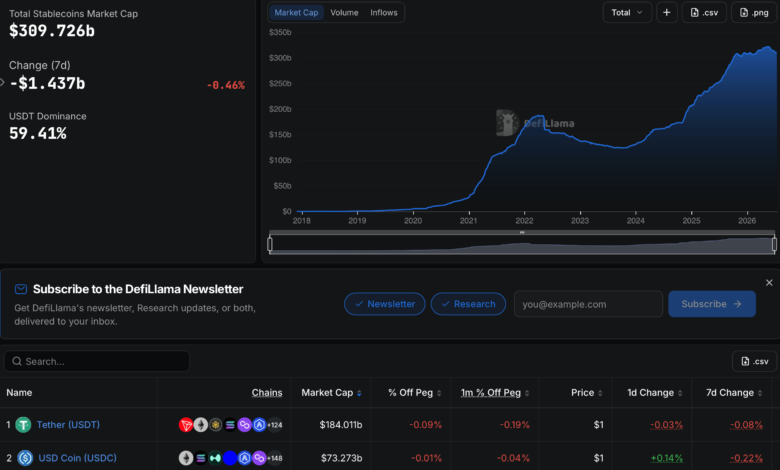
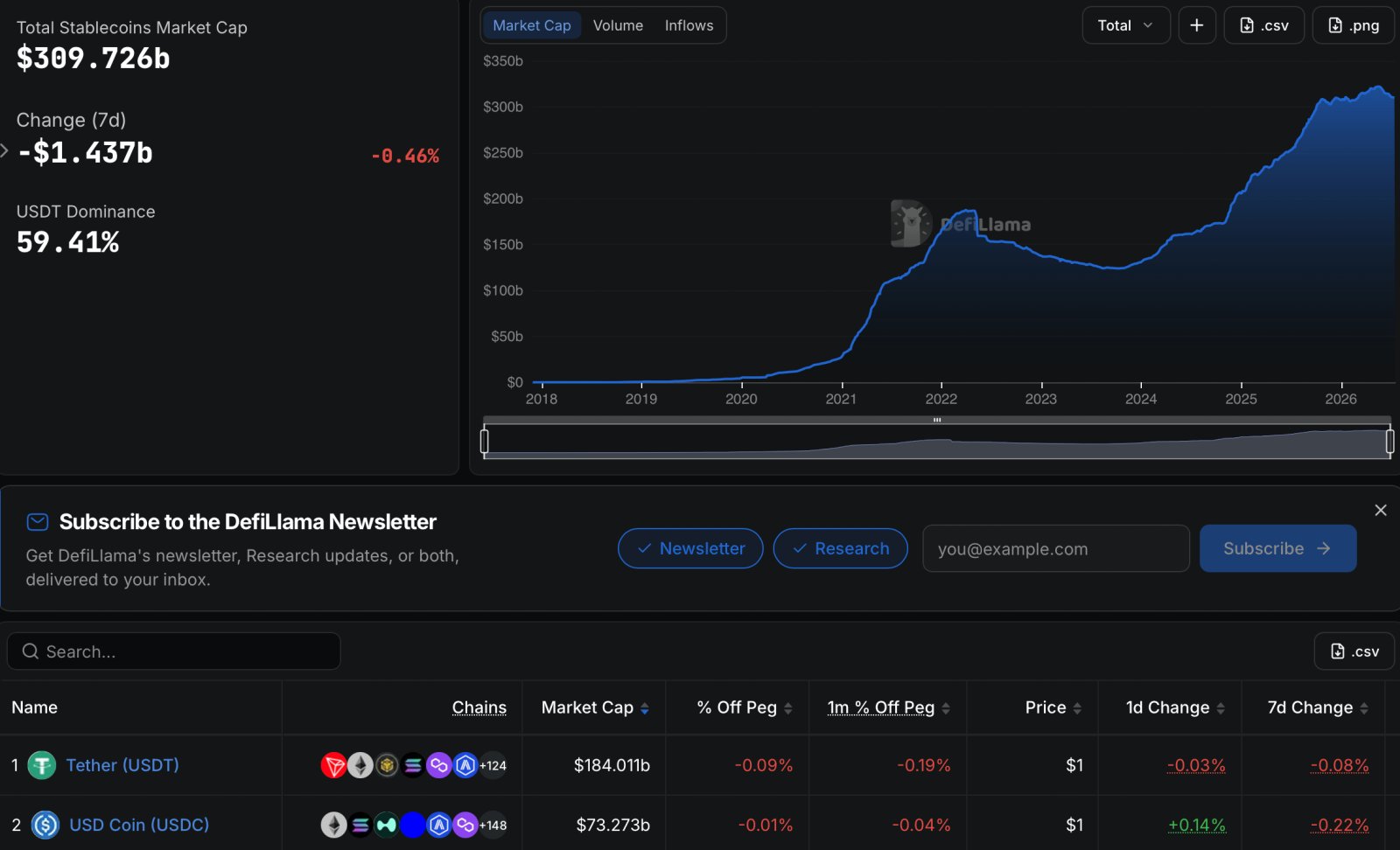
Despite the regulatory hurdles in Europe, Tether remains the undisputed heavyweight of the global stablecoin market. Data from DefiLlama indicates that Tether accounts for approximately 59% of the nearly $310 billion stablecoin market. With a market capitalization of roughly $184 billion, USDt dwarfs Circle’s USDC, which sits at approximately $73 billion.
Source: DefiLlama
The standoff between Tether and EU regulators centers on MiCA’s stringent reserve requirements. The framework mandates that stablecoin issuers hold at least 60% of their reserves in European credit institutions (banks). Tether CEO Paolo Ardoino has been a vocal critic of this requirement, arguing that it introduces systemic risk by forcing stablecoin issuers to rely on the health of traditional banks rather than more liquid and secure assets like U.S. Treasury bills.
In a May 2025 interview with Cointelegraph, Paolo Ardoino described the framework as “very dangerous when it comes to stablecoins,” signaling that Tether was prepared to lose support on European exchanges rather than compromise its reserve management strategy. He has maintained this stance, stating in a July 2025 post on X that the company would only reconsider seeking MiCA authorization “when MiCA becomes safer for consumers and stablecoin issuers.”

Source: Paolo Ardoino
OKX Europe currently serves customers across 30 EU and European Economic Area countries under its MiCA license. By facilitating the transition to USDC, the exchange is helping users comply with the new reality of the European market without sacrificing the liquidity and utility that stablecoins provide to the broader blockchain ecosystem. As other platforms continue to delist trading pairs or restrict deposits of non-compliant tokens, the industry is watching closely to see if Tether’s dominance can withstand a prolonged exclusion from one of the world’s most significant economic zones.