
Institutional Investors Drive Bitcoin Accumulation Amid Price Volatility
Major capital continues to strengthen positions, transforming market fluctuations into strategic consolidation opportunities.

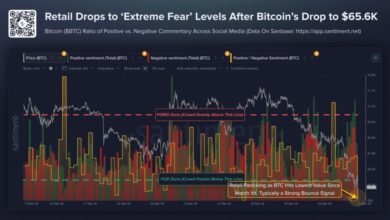
Bitcoin (BTC) has recently experienced price fluctuations, dipping below the $91,000 mark amid U.S. tariff announcements. Yet, institutional investors appear unfazed, using these corrections as an opportunity to strengthen their positions and reinforce long-term holdings.
According to Ki Young Ju, CEO of on-chain analytics firm CryptoQuant, institutional demand for Bitcoin remains robust. “By tracking wallets holding between 100 and 1,000 BTC—excluding exchanges and miners—we can observe a reliable approximation of institutional activity, including ETFs,” he explained.
Over the past year, nearly 577,000 BTC have moved into long-term holdings, highlighting a trend in which major capital allocators absorb supply without triggering immediate price spikes. This pattern reflects a shift from speculative trading toward strategic accumulation.
Spot ETFs Fueling Institutional Adoption
The launch of Bitcoin spot ETFs in early 2024 significantly accelerated institutional participation. Since then, holdings by institutional wallets have grown from roughly 4 million BTC to over 5 million BTC, a 33% increase in two years. Early 2026 shows continued momentum, with net flows through ETFs already surpassing 3,800 BTC—higher than the same period in 2025.
This growing institutional base suggests that Bitcoin is increasingly viewed not merely as a speculative asset but as a store of value suitable for treasury management.
Corporate Treasuries Bolster Market Stability
Public companies with Bitcoin treasuries are playing a key role in supporting the market. MicroStrategy, led by Michael Saylor, recently acquired 22,305 BTC for $2.13 billion, bringing its total holdings to 709,715 BTC. Collectively, corporate treasuries now control over 1.13 million BTC, creating a stabilizing effect amid geopolitical and macroeconomic pressures.
These purchases coincide with heightened volatility linked to U.S. tariff announcements affecting European exports. Despite short-term price declines from $95,500 to $90,700 earlier this week, institutional accumulation has remained steady.
Outlook: A Maturing Market
Analysts suggest that the divergence between institutional holdings and price movements signals a more mature Bitcoin market. Even amid price corrections, the consistent accumulation by ETFs and corporate treasuries establishes higher support levels and prepares the market for potential bullish trends once retail demand picks up.
As Bitcoin transitions from a primarily speculative instrument to a strategic asset within corporate treasuries, 2026 could mark a period of consolidation where volatility serves as an opportunity for long-term growth rather than panic selling.