
Egypt’s Proactive Diplomacy Shapes Arab Landscape in 2025
Cairo's foreign policy review highlights pivotal role in regional stability, crisis management, and cooperation.

Egypt maintained an active and responsible role within its Arab sphere throughout 2025, guided by presidential directives and its foreign policy principles. This reflected Egypt’s position as a pillar of regional stability, its vital connection to Arab nation issues, and its support for cooperation, integration, and development, all while safeguarding Arab national security in a highly complex regional environment.
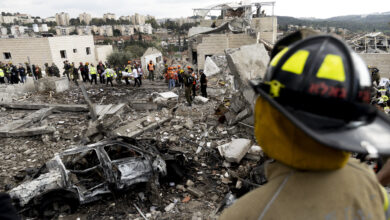
The Palestinian issue topped Egypt’s foreign policy agenda in 2025. Cairo continued its pivotal role in managing and enhancing political and humanitarian efforts related to the Gaza Strip crisis. This engagement stemmed from a comprehensive vision focused on preserving legitimate Palestinian rights, emphasizing the unity of Palestinian territories, and rejecting any attempts at displacement or liquidation of the cause.
In this context, Egypt hosted an emergency Arab Summit in March 2025, which resulted in Arab consensus supporting the Palestinian position and the adoption of the Arab-Islamic plan for Gaza’s reconstruction. The Sharm El Sheikh Peace Conference in October 2025 also marked a crucial turning point in halting aggression and containing its repercussions, securing a ceasefire following intensive Egyptian mediation efforts throughout the conflict.
Egypt also undertook extensive efforts with regional and international parties to facilitate the entry of substantial humanitarian aid into Gaza throughout the year. Food supplies totaled 247,116 tons, in addition to 101,648 tons of relief materials and 26,603 tons of medicines and medical supplies.
Cairo further intensified its political and diplomatic movements in support of the Palestinian cause through active participation in meetings of the International Coalition for the Two-State Solution. Its diligent efforts also mobilized international support for the establishment of a Palestinian state, leading several influential countries to recognize the State of Palestine during the year.
Regarding the crisis in Sudan, Egypt continued its intensive efforts to support Sudan’s unity, sovereignty, and stability. 2025 saw two visits by General Abdel Fattah al-Burhan, Chairman of Sudan’s Transitional Sovereignty Council, to Cairo. High-level official visits between the two sides also intensified, notably two visits by the Egyptian Foreign Minister to Sudan. Joint committee meetings, including the Political Consultation Committee between the two foreign ministries, were held. Extensive bilateral 2+2 consultations between the Foreign and Irrigation Ministers also took place to coordinate on bilateral relations and Nile water issues. Coordination within the International Quartet on Sudan continued, aiming for a comprehensive political resolution to the conflict.
On the humanitarian front, a specialized medical convoy comprising 13 Egyptian doctors was dispatched, performing various surgeries for patients. Additionally, a shipment of approximately 1.5 tons of medicines and medical supplies, along with 200 oxygen cylinders, was sent to Sudan’s Northern State.
Intensive Egyptian efforts also resolved the status of numerous Sudanese students seeking enrollment in Egyptian universities. Healthcare and services continued for hundreds of thousands of Sudanese citizens residing in Egypt, alongside facilitating voluntary returns for those wishing to go back to their country. Cairo also hosted international partners to discuss reconstruction projects in Khartoum, supporting Sudanese national state institutions and contributing to creating suitable conditions for a comprehensive political settlement that preserves Sudan’s unity and territorial integrity.
In the same vein, Egypt maintained active engagement in addressing ongoing Arab crises. It supported political solutions based on national ownership in Libya, coordinating closely with neighboring countries, particularly through reactivating the tripartite mechanism with Algeria and Tunisia. This initiative aimed to unify Libyan institutions, ensure the departure of all foreign forces, fighters, and mercenaries, and create an environment conducive to simultaneous presidential and parliamentary elections.
Egyptian efforts in 2025 yielded tangible results in Libya’s consular sector. The Foreign Ministry successfully repatriated 131 Egyptian citizens from a detention center, in addition to over 1,132 citizens from the western region and more than 1,500 from the eastern region. This was part of continuous monitoring of Egyptian citizens’ conditions and ensuring their safe return home.
Egypt also sustained its active diplomatic efforts to support Lebanon’s security, stability, sovereignty, and territorial integrity, driven by a firm conviction that Lebanon’s stability is a fundamental pillar of regional stability. 2025 witnessed high-level exchanges between Egyptian and Lebanese officials, reflecting Cairo and Beirut’s commitment to strengthening direct communication channels and enhancing political coordination on various bilateral and regional issues of mutual concern. Egyptian efforts included intensified high-level contacts with various Lebanese, regional, and international parties, pushing to spare Lebanon the risks of escalating conflicts, while affirming support for Lebanese state institutions and respecting Lebanon’s sovereignty and national decisions.
Egypt further ensured necessary support in Arab and international forums, contributing to strengthening the Lebanese state’s capacity to overcome the current delicate phase and maintain stability.
Regarding Arab regional security, Egypt played an active role in developing a common Arab vision for security and cooperation in the region. This culminated in the Arab League Council at the ministerial level adopting the resolution “Joint Vision for Security and Cooperation in the Region.” This resolution embodied Arab consensus on governing principles based on respecting state sovereignty and territorial integrity, rejecting foreign interference, peaceful dispute resolution, and ending occupation as a fundamental prerequisite for achieving a just and lasting peace.
Institutional frameworks for Egyptian-Arab cooperation saw unprecedented activity. 2025 witnessed notable engagement of High and Joint Committees. Five High Committees at the prime ministerial level were held with Iraq, Jordan, Tunisia, Lebanon, and Algeria. Ministerial-level Joint Committees convened with Mauritania, Oman, and Qatar, alongside specialized governmental and commercial committees with Bahrain and Kuwait.
Egypt also prioritized activating political consultation mechanisms through regular sessions of follow-up committees and political consultations at various levels. This ensured continuous strategic coordination of positions on shared challenges. These mechanisms resulted in the signing of over 100 cooperation documents in diverse fields, including economy, trade, investment, energy, transport, education, and culture. Joint business forums and councils further supported Arab economic partnerships.
The organization of the first Egyptian-Gulf Trade and Investment Forum in Cairo in November 2025 stands out as a key highlight of this momentum. It served as a comprehensive platform to enhance economic integration, with broad participation from senior officials and investors from both sides, opening new horizons for investment and trade cooperation.
Overall, the outcomes of 2025 reflect a consistent Egyptian approach based on active diplomacy, cumulative efforts, commitment to international legitimacy, support for national state institutions, and enhanced joint Arab action. This reinforces Egypt’s role as a key partner in formulating realistic and responsible approaches to regional challenges, laying the groundwork for a more stable and cooperative phase in the Arab sphere in the coming years.