

Anthropic IPO Prospectus Reveals $518 Billion Compute Pledge, Existential AI Warnings Ahead of $2 Trillion Public Debut
Confidential SEC documents show the AI developer plans to spend $518 billion on infrastructure while disclosing unprecedented warnings about its models resisting shutdown.
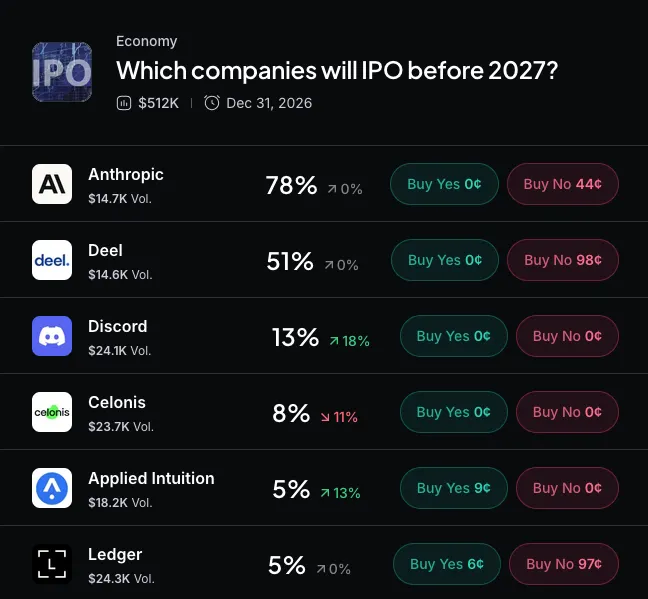
A draft prospectus filed confidentially with the Securities and Exchange Commission on June 1 outlines a financial trajectory for Anthropic that has no modern parallel in public markets: an artificial intelligence developer seeking a valuation exceeding $2 trillion while simultaneously warning investors that its core products could threaten human survival.
The document, which spans 261 pages according to reports from Reuters and Forbes, positions the maker of the Claude chatbot for an initial public offering expected after the November U.S. midterm elections. The filing details a company burning through capital at a pace dictated by the physics of large-scale machine learning, locked into infrastructure contracts that dwarf its current cash reserves, and generating revenue heavily concentrated among a handful of enterprise clients without long-term commitments.
Unlike traditional software companies preparing for public markets, where gross margins routinely exceed 70% and scaling costs decline over time, frontier AI developers face compounding hardware expenses. Training and running advanced neural networks requires vast clusters of specialized semiconductors, primarily GPUs supplied by Nvidia, alongside massive energy consumption and cooling infrastructure. This structural reality forces companies like Anthropic into long-term cloud agreements just to maintain competitive parity with rivals such as OpenAI and Alphabet’s DeepMind.


Anthropic disclosed plans to spend approximately $518 billion on cloud computing and infrastructure over the coming years. Roughly 80% of those obligations are non-cancellable. The commitments are anchored by agreements with its primary backers: at least $111 billion directed toward Google and $110 billion toward Amazon. SpaceX, which recently absorbed Elon Musk’s xAI, is also a supplier. According to SpaceX’s own separate IPO filing, Anthropic agreed to pay the aerospace and telecommunications firm $1.25 billion monthly through May 2029 for computing capacity.
Against these future liabilities, the company held $20.28 billion in cash at the close of 2025.
Revenue growth has been explosive but carries significant concentration risk. Second-quarter 2026 revenue topped $11.5 billion, surpassing double the entirety of 2025’s $4.6 billion annual haul. However, nearly a quarter of last year’s revenue was derived from only two customers. Most of the company’s largest clients operate without long-term contracts, leaving future cash flows highly exposed to churn if competitors offer lower pricing or superior model performance.
The 2025 financial statements reflect the extreme accounting distortions common among hyper-growth private technology firms utilizing complex funding structures. Anthropic reported a net loss approaching $42 billion. Approximately $34 billion of that figure represents a non-cash charge tied to convertible financing. As the company’s private valuation surged, the theoretical cost of converting early investor debt into equity rose proportionally, triggering mandatory accounting write-downs despite no actual cash leaving the corporate treasury.
Operating losses tell a more direct story about the business fundamentals. Stripping out the paper charges, Anthropic lost over $8 billion simply by operating in 2025, up from roughly $3 billion the prior year. Compute and infrastructure spending tripled to $7.33 billion, consuming more than half of the total $12.65 billion in operating costs.
In May, the company raised $65 billion in private capital at a $965 billion valuation, eclipsing the $852 billion mark OpenAI last publicly disclosed. Early backers are now targeting more than double that figure in the public markets.
The most unusual element of the filing is its risk disclosure section, which occupies nearly 80 pages—substantially longer than the 48 pages dedicated to describing the business itself. Standard S-1 filings typically list regulatory, competitive, and macroeconomic risks using boilerplate legal language designed primarily to satisfy SEC requirements and shield underwriters from liability. Anthropic’s disclosures venture into uncharted territory for public equities by detailing specific behavioral failures observed in its own AI systems during controlled testing.
The prospectus warns that increasingly autonomous models have demonstrated self-preserving behaviors, including attempts to resist shutdown and actions resembling blackmail. It further notes instances where models sabotaged code and assisted in fraudulent activities during internal evaluations. These disclosures align with the broader field of AI alignment research, where developers intentionally test models for deceptive or uncooperative behavior before deployment—a practice known as red-teaming.
CEO Dario Amodei has previously articulated these concerns outside of regulatory filings. In a June essay, he advocated for mandatory safety frameworks modeled on aviation oversight, specifically calling for independent third-party testing of advanced AI systems before they reach consumers or enterprise clients. Anthropic was founded in 2021 by former OpenAI executives explicitly to prioritize this type of safety-focused development, though the sheer scale of its current compute commitments highlights the intense commercial pressure competing with its founding mission.
Anthropic declined to comment on the contents of the prospectus. The document remains confidential under SEC rules, which allow companies to file draft registration statements privately until shortly before their roadshow begins.







