Britain Is Told to Stockpile Like Finland. Its Households Are Europe’s Least Prepared.
The three-day checklist borrows Finland's 72-hour playbook — down to the wind-up radio. The catch: British households start from one of Europe's least prepared positions, and the state's own auditors say the food system can't cover the gap.
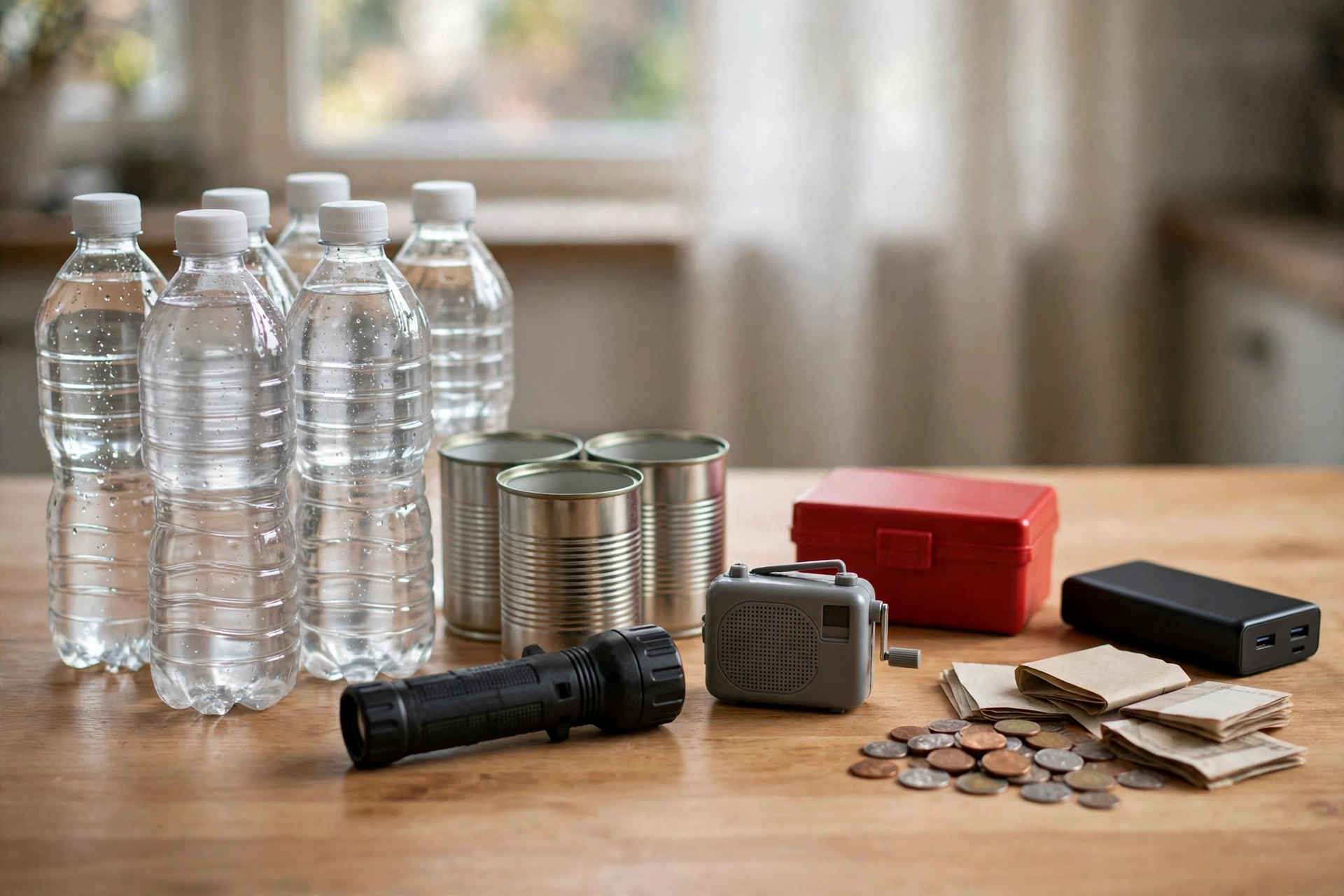
Buried in the government’s new preparedness checklist is the line that explains what the whole thing is for: keep cash at home, in a mix of notes and coins, because the electronic payments at the local supermarket could go down. No hedging there. Wes Streeting said it out loud at the launch: “How would we cope if the payment systems at the local supermarket went down?”
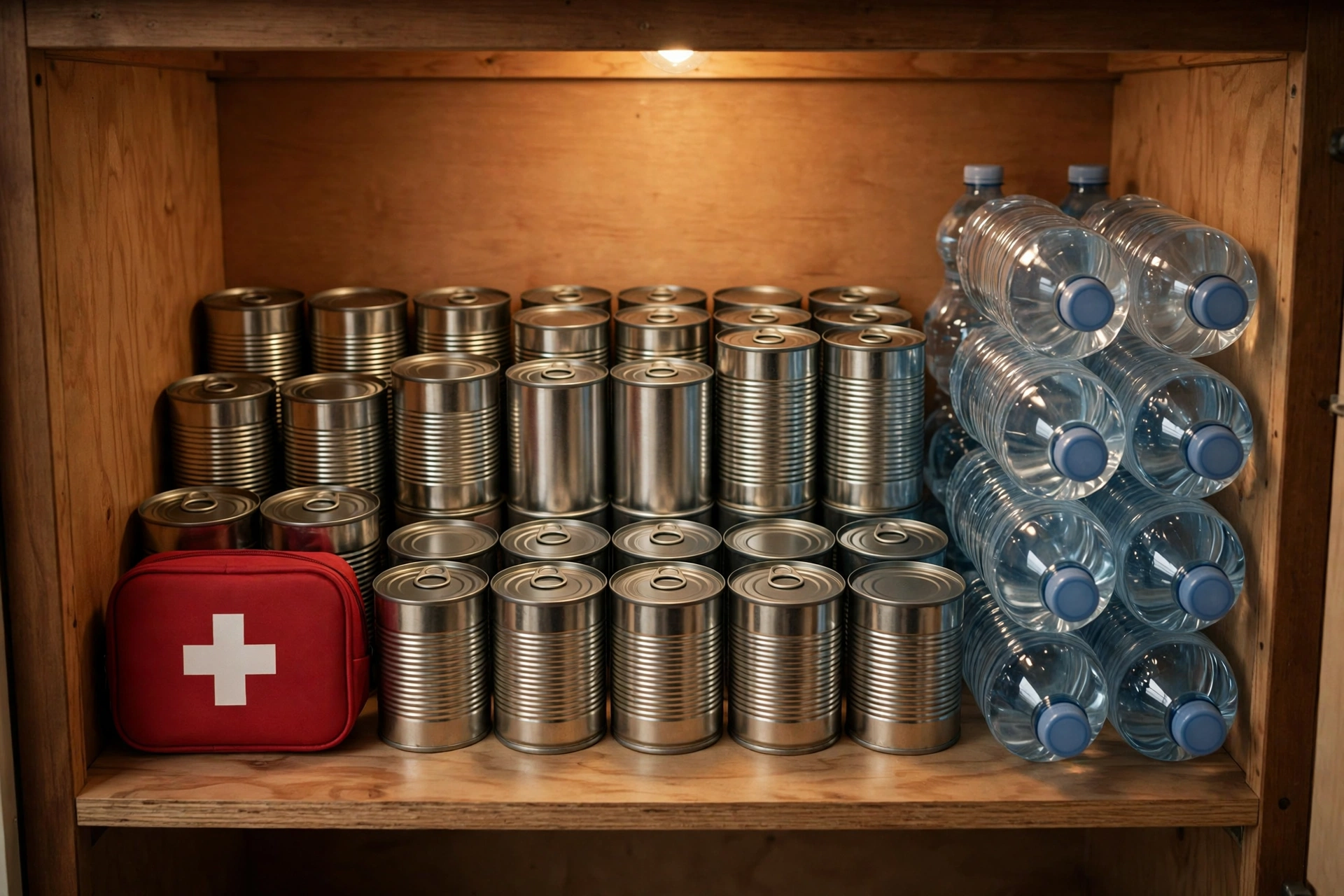
He launched the “Be Ready” campaign on Thursday at the opening of a weapons plant in Telford, telling households to stock three days of supplies against what he called everyday challenges and threats: increasingly sophisticated cyberattacks on businesses, disruption to essential supply chains by hostile states or terrorists, and extreme weather. People should be “alert but not alarmed,” he said. The checklist runs to water — about three litres a person a day for drinking, plus more for cooking and washing. That’s nine litres a person for the three days, or 36 for a family of four — alongside tins that need no cooking, a torch and spare batteries, a battery or wind-up FM radio with station frequencies written down, a charged power bank, blankets and warm clothing, hand sanitiser, first aid supplies, and, for families with babies, ready-to-feed formula and nappies.
Take the scenario he led with. If the card terminals die, cash works — but only if the shop can trade in it, only if the tills and stock records still function, and only if the notes and coins are already in the house. The checklist tells people to build the kit up gradually and keep it in one spot they can find with the lights out. That’s the quiet admission underneath the campaign: three days of readiness can’t be bought in one panicked afternoon. It’s the opposite of panic buying — a few tins at a time, water in the cupboard before anything goes wrong.


The campaign has an engine the launch-day coverage mostly treated as background. Last month the National Audit Office warned that Britain’s food supply chain is vulnerable to plant or human disease outbreaks, cyber-attacks and extreme weather, and that the environment department had not done enough in recent years to harden it. The same audit found British households less prepared for emergencies than those in several other countries, including Finland and Sweden. Dame Angela Eagle, the environment secretary, said a powerful El Niño would bring “more extreme storms in this country.” She told households to stock up.
Finland is the country Britain is being asked to copy. Finns have been told for years to manage three days without outside help, and Finland’s interior ministry has confirmed it will post 3.5 million printed preparedness guides to households and businesses in January, at a cost of about €2 million, in Finnish, Swedish and Sámi. Project manager Ira Pasi put it plainly: “it is not enough for guidance on preparing for disruptions and crises to be available to the public only through the Suomi.fi online service.” Finland’s own surveys say its least prepared groups are young adults and city dwellers. Germany, meanwhile, advises up to ten days of essentials — more than triple Britain’s three.
The reaction so far shows the gap the campaign has to cross. Comment sections under Thursday’s coverage, from the Daily Express to Victoria Derbyshire’s BBC Newsnight interview with Streeting, ran heavily sceptical, dismissing the guidance as scaremongering, with the few practical questions (where does a flat store 36 litres of water, what exactly is a wind-up radio) drowned out. Streeting told Newsnight there is no intelligence of an imminent attack. Dr Darren Mann, a former army combat surgeon involved in national wartime medical planning, gave the campaign its sharpest caveat: “Households can help with food, water and communications. Nato’s other requirements, from managing mass casualties to keeping transport and the health system running under strain, cannot be met from the kitchen cupboard. That is where the harder conversation begins.”
The campaign will run for three years. More than 500 organisations — charities and businesses — have signed up to share the message, and the advertising starts on social media and radio, aimed first at families with young children and older people.