Texas Voucher Funds Now Cover 17% of Some Private School Budgets
One academy expects $3.5 million in state payouts this year as a conservative coalition targets 5,000 new religious campuses nationwide.
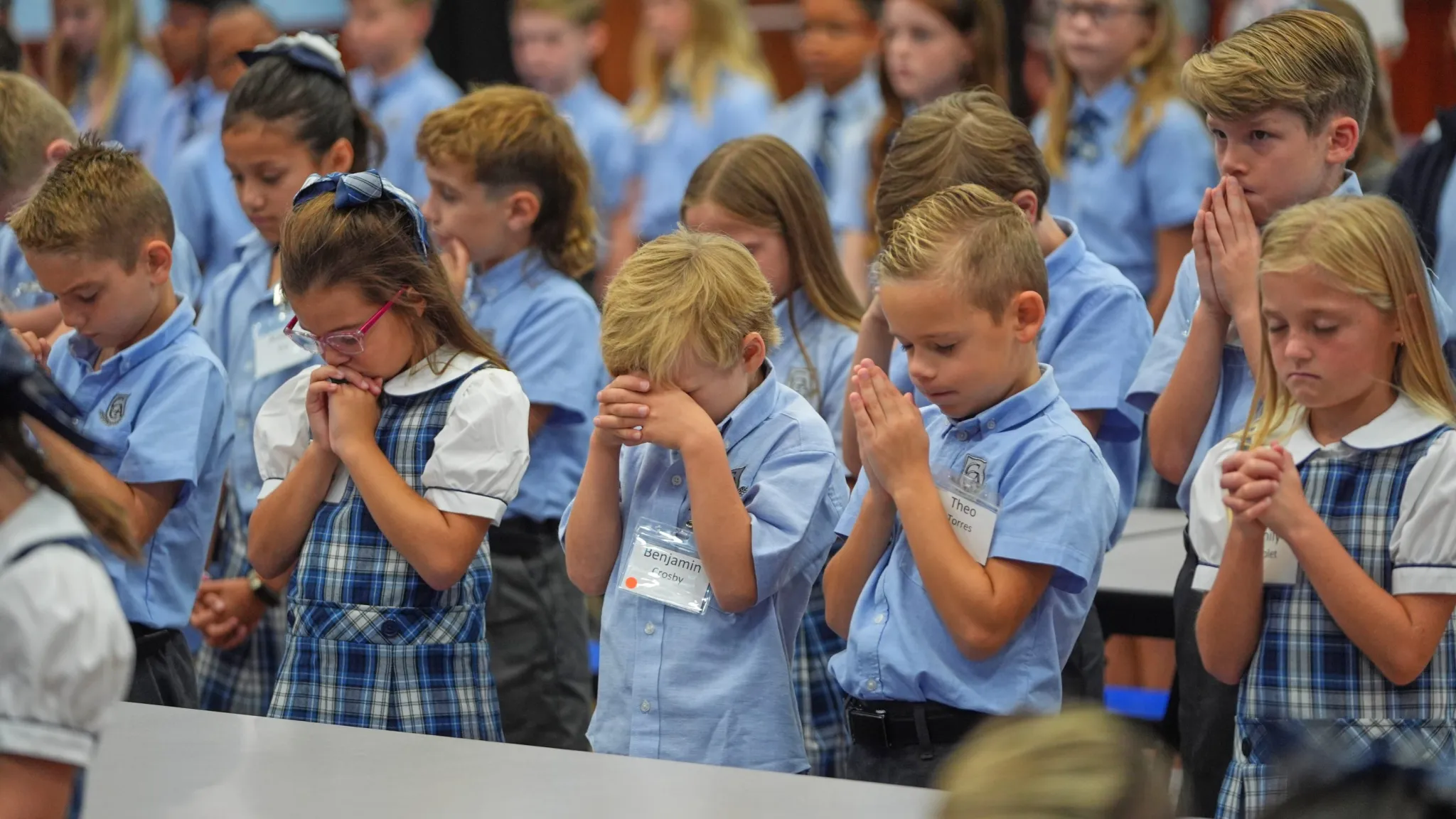
Coram Deo Academy stands to collect $3.5 million in Texas taxpayer funds this academic year. That figure, confirmed by the school’s chief financial officer Scott Head, represents nearly 17% of the institution’s total operating budget and covers half of its financial aid expenditures.
More than 360 of the academy’s 2,000 students qualified for Texas Education Freedom Accounts, or TEFA, according to Head. The payouts illustrate how quickly a single state policy shift is altering the balance sheets of private religious institutions that spent decades relying entirely on tuition and private donations.
Texas began distributing money from a $1 billion education savings account program this summer. Eligible families can receive at least $10,474 per student to spend on private schooling. The income ceiling reaches $165,000 for a family of four this year, pulling middle-income households into a subsidy bracket previously reserved for lower earners or students with disabilities.

Half of all school-age children in the United States are now eligible to apply for state money to attend private schools, following a six-year wave of legislative approvals in Republican-controlled states. Because most private schools in the country are religious, the capital flow is landing directly in church-affiliated institutions.
The Association of Classical Christian Schools, an accrediting body with roughly 500 member institutions, formed a coalition last year with Turning Point Education and the Heritage Foundation. ACCS President David Goodwin stated the coalition intends to create or convert 5,000 classical Christian schools over the next decade, enrolling 1.5 million students nationwide.
“What we’re trying to do is take enough of the public school share that we can change the country’s direction with powerful leadership coming out of these classical Christian schools,” Goodwin said in a promotional video.
The network was founded in 1994 by Doug Wilson, an Idaho pastor who helped start the Logos School in Moscow, Idaho, in 1981. Wilson told The Associated Press his schools focus on training leaders to “analyze” and “take arguments apart.” He has previously advocated criminalizing homosexuality and criticized Muslim immigration. Three mothers withdrew their children from a San Diego-area Christian school this year after it pursued an ACCS affiliation, citing concerns over humanities coursework written by Wilson that called Islam and Hinduism “false religions.”
Defense Secretary Pete Hegseth co-wrote a 2022 book with Goodwin promoting classical education before joining President Donald Trump’s cabinet. The Pentagon recently introduced classical education methods into government-run schools on military bases.
For startup operators, the TEFA rules present specific hurdles. Vendor schools must be operational for two years before accessing the funds. Keith Castello, a former Coram Deo vice president of operations, bypassed that requirement because he ran a microschool for seven years at a tennis club. His Kyrie Christian Academy organization is now using that history as a conduit to channel state money into three new locations opening this fall. At one of those startups, 22 of the 25 enrolled students are using TEFA.
The Rev. Victor Shahat, head of St. Clement Orthodox Christian Academy, said he could not have opened his school this year without the state accounts.
Economists tracking the rollout warn about the structural damage to districts outside major suburbs. “They were worried, I think rightfully, about what it would do to public schools in rural areas,” said Douglas Harris, an economist at Tulane University who studies school choice. When a student leaves a public district, the per-pupil state allocation leaves with them, while fixed costs like building maintenance and transportation routes remain.
Rachel Laser, head of Americans United for Separation of Church and State, called the diversion of tax revenue to religious instruction “an abject violation of religious freedom.”
Castello predicts Texas lawmakers will increase funding for the education savings accounts, an outcome tied to the November governor’s race. He also pointed to a new federal tax credit directing additional money toward private schools. He plans to lobby legislators to make it easier for private operators to purchase shuttered public school buildings.
At Covenant Christian Academy in the Dallas-Fort Worth area, where tuition runs around $20,000, at least 78 students qualified for the program this year. Gwen Albaugh, whose children attend the school, said the subsidies allowed her to maintain their enrollment after her husband died of cancer three years ago.