A $1.2M Stadium That Shaped MLB’s Billion-Dollar Future
The temporary ballpark built for $1.2 million tested the concepts behind the Astrodome and synthetic turf, altering stadium economics permanently.
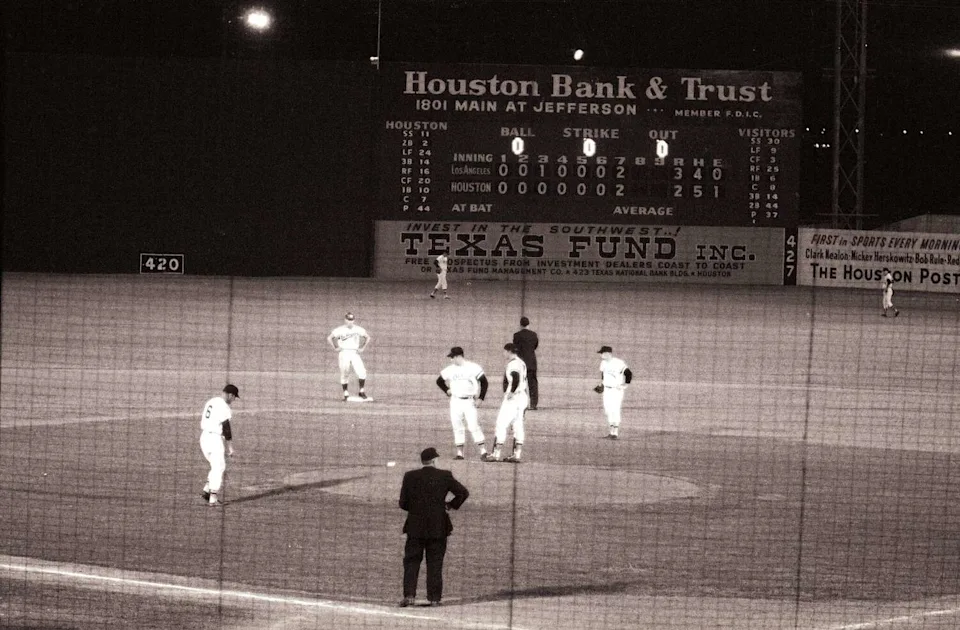
The first Major League Baseball game ever played in Texas generated a blueprint that would eventually transform stadium economics across North America. Built for just $1.2 million and operational for only three seasons, Houston’s Colt Stadium served as the unlikely laboratory for two of professional sports’ most consequential innovations: climate-controlled arenas and synthetic playing surfaces.
A Texas Historical Marker unveiled Tuesday at the site, located roughly 80 yards north of the Astrodome near Reliant Center, formalizes the legacy of a facility designed to be temporary. Contractor D.M. “Red” Dozier constructed the single-tier, unshaded ballpark after ground was broken in August 1961, delivering it eight months later for the April 10, 1962, opener against the Chicago Cubs, according to the text written by Houston historian Mike Vance for the new plaque.
That rapid construction timeline solved an immediate logistical problem for the Houston Sports Association. When the National League awarded expansion franchises to Houston and New York on Oct. 17, 1960, local leaders R.E. “Bob” Smith, George Kirksey, Craig Cullinan and Judge Roy Hofheinz faced a gap of several years before their planned domed stadium could open. The makeshift 33,000-seat venue bridged that financial chasm, drawing 925,000 fans during its inaugural season — good enough for seventh out of 10 National League teams.


Without that stopgap revenue stream, the economic model for the $35 million Astrodome — an estimated $390 million in today’s dollars — might have collapsed before completion. “If it hadn’t been for Colt Stadium, you wouldn’t have had that,” longtime Colt .45s and Astros executive Tal Smith said, pointing toward the adjacent dome.
The extreme conditions inside the open-air park directly accelerated the push for enclosed stadiums. A mid-summer Sunday doubleheader required medical aid for more than 100 fans suffering from heat exhaustion. Grounds crews sprayed mosquito repellant across the field between innings and sold the chemical at concession stands. The insect infestation worsened because excavation for the Astrodome’s lower bowl created what Vance described as “the world’s largest mosquito breeding pond every time it rained.”
Visiting managers attempted to suppress complaints about the environment. Chicago Cubs manager Charlie Metro threatened a $100 fine for any player who mentioned the heat during that first season. Future Hall of Famer Ernie Banks slammed his bat down in the visitors’ dugout and declared, “Good Lord, it’s hot out there,” before noticing Metro glaring at him and adding, “But that’s just the way I like it.”
Once the franchise moved indoors and rebranded as the Astros in 1965, the abandoned structure became a testing facility for Monsanto Engineers. They used the empty field to evaluate the durability of a new artificial surface that would be branded Astroturf, a product that subsequently altered the capital expenditure models for dozens of professional and collegiate venues nationwide.
Hofheinz ordered workers to paint the multi-colored seats gray so the old park would not visually compete with the new dome, telling them to “color it vanish,” according to a 1965 Houston Chronicle report. Pitchers were forced to run paths cut through waist-high grass in the neglected outfield to acclimate to outdoor temperatures before road trips, recalled Larry Dierker, who made his major league debut at the stadium on his 18th birthday in 1964.
The physical infrastructure did not remain in Texas. The bleachers were dismantled and sold in 1970, then reassembled for baseball stadiums in Torreón and Tampico, Mexico. During its brief existence, the 360-foot foul lines and 420-foot center field dimensions hosted two no-hitters thrown by Don Nottebart in 1963 and Ken Johnson in 1964, along with appearances by Willie Mays, Stan Musial, Roberto Clemente, Sandy Koufax and Bob Gibson.
The final game at the site took place Sept. 27, 1964, a 12-inning, 1-0 victory over the Los Angeles Dodgers that also marked the final appearance of the Colt .45s name.