Singapore Targets 10 Indonesian Firms Over Haze Crisis
Notices order firms to halt burning and deploy firefighters as burned area estimates near 9,000 square kilometers.
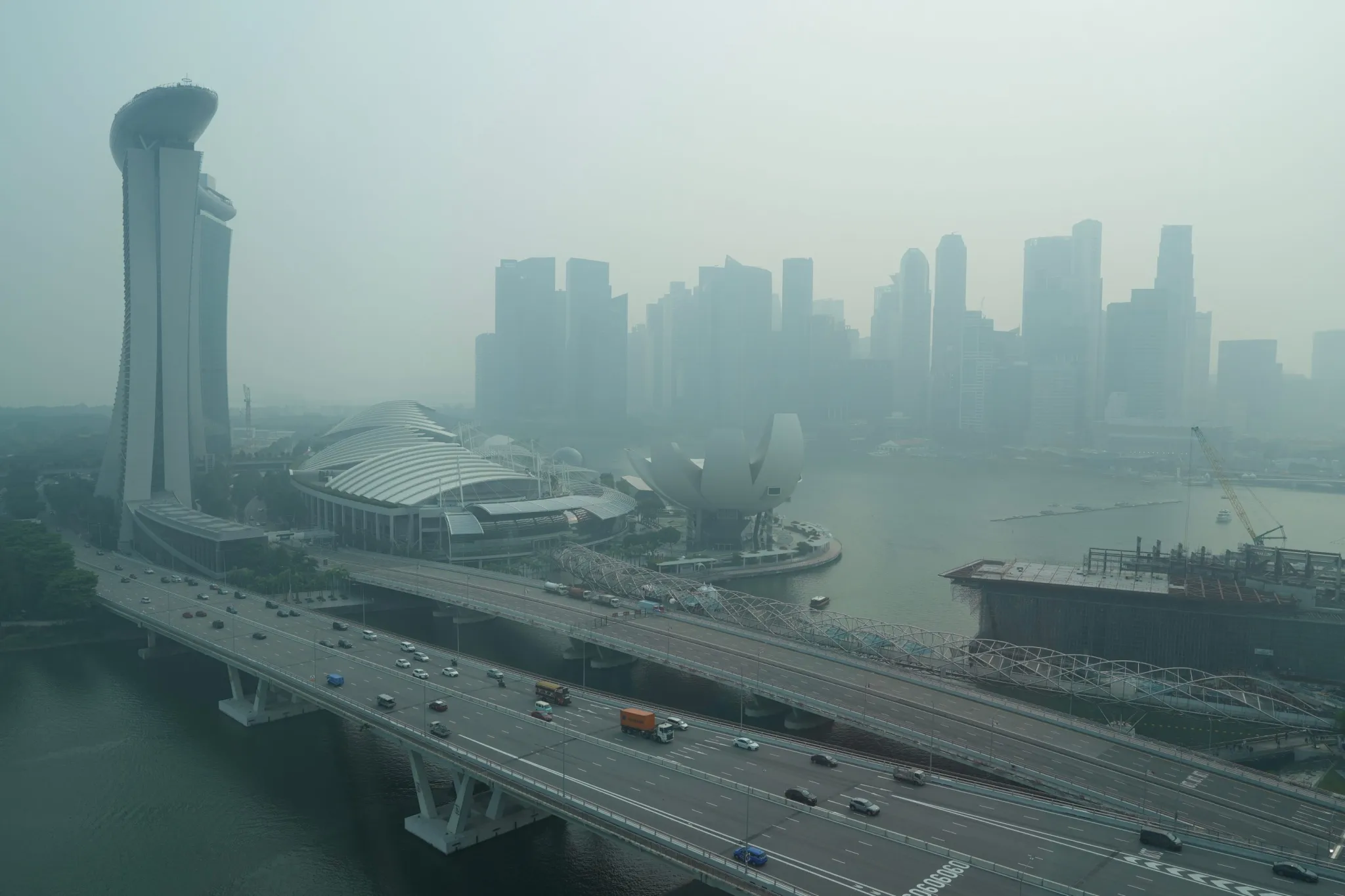
Singapore expanded its enforcement campaign against Indonesian land-clearing fires on Monday, issuing preventive notices to three agroforestry companies operating in Kalimantan. The move brings the total number of firms targeted under the Transboundary Haze Pollution Act to 10 as smoke from burning concessions continues to push air pollution across Southeast Asia to hazardous levels.
The National Environment Agency identified the three new targets as PT Buana Megatama Jaya, PT Mananjung Hayak and PT Baratama Putra Perkasa. Officials said evidence indicated smoke from fires on concession lands held by those companies had drifted into Singapore. The agency issued similar notices last Friday to seven companies linked to blazes in Sumatra province: PT Bumi Andalas Permai, PT Bumi Mekar Hijau, PT Paramitra Mulia Langgeng, PT Sumatera Alam Anugerah, PT SBA Wood Industries, PT Hutan Lestari Raya and PT Bangkanesia.
Each notice orders the recipient to deploy firefighting personnel, extinguish active blazes, halt any ongoing burning activities and submit detailed action plans to prevent recurrence. While the directives do not constitute a legal finding of responsibility, they establish the groundwork for prosecution and financial penalties if investigators determine an offense has been committed.

Enacted in 2014 following years of seasonal smog that choked the city-state, the Transboundary Haze Pollution Act allows Singapore to pursue civil and criminal action against entities responsible for fires outside its borders if the resulting haze affects its air quality. Fines can reach 2 million Singapore dollars (approximately $1.5 million) or 100,000 Singapore dollars for each day the pollution persists.
The scale of this year’s burn is vast. Indonesia’s Forestry Ministry recorded more than 2,020 square kilometers (780 square miles) of burned land between January and July. The Nusantara Atlas project, an independent monitoring initiative, estimated that nearly 8,960 square kilometers (3,460 square miles) had burned by the end of August. Thick smoke has turned skies orange in parts of Kalimantan, disrupted daily life, forced school closures and triggered public health warnings in neighboring Malaysia and Singapore.
Singapore Coordinating Minister for National Security K. Shanmugam said the Singapore Exchange has separately sought information from seven Singapore-listed agricultural companies regarding their operations and potential links to the fires. He warned that non-cooperative firms would face pressure on their bottom lines, access to financing and standing with investors.
“They may think that it is hard to get evidence, and that they may think that they can escape scrutiny. But they should not underestimate the Singapore government’s determination to act,” Shanmugam said, according to remarks carried by Singapore broadcaster CNA. He called the crisis “entirely preventable” and driven by corporate profit rather than natural causes.
Shanmugam also criticized comments from an Indonesian official who suggested Singapore benefits from oxygen produced by Indonesian forests free of haze, calling the remark inappropriate given the regional suffering caused by regulatory breaches. He did, however, welcome steps taken by Indonesian President Prabowo Subianto, including accepting foreign firefighting assistance, replacing the head of the disaster relief agency, banning slash-and-burn practices on peatland and prioritizing long-term fire prevention.
Indonesia’s top security minister, Dudung Abdurachman, said Monday the government will not declare the forest fires a national disaster, maintaining that the country remains capable of handling the crisis despite mounting concerns from neighbors.