Warren Seeks Answers on Commerce Department’s Removal of Scientific Integrity Safeguard
Her inquiry also asks whether OMB was involved and how the Federal Reserve will protect the accuracy and independence of economic data.
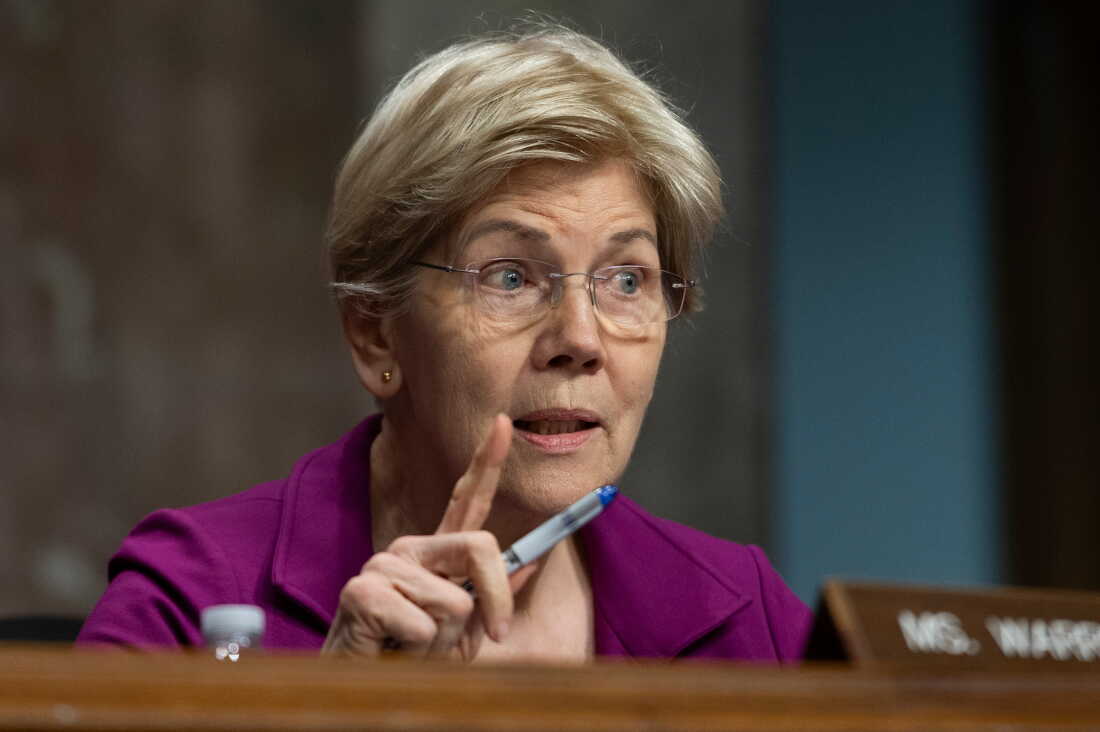
Sen. Elizabeth Warren (D-Mass.) is seeking a full account of the Commerce Department’s decision to remove language protecting federal science from inappropriate influence. In letters to Commerce Secretary Howard Lutnick and other top officials, Warren also asked whether the White House Office of Management and Budget (OMB) was involved and pressed the Federal Reserve on the accuracy and independence of the data it uses to steer the U.S. economy.
The department’s Aug. 19 update, issued without announcement, deleted language calling “protection from inappropriate influence” a “hallmark of scientific integrity.” The policy applies to Commerce’s parent agency and governs major statistical bodies, including the Census Bureau and the Bureau of Economic Analysis (BEA).
The change came one day after the Census Bureau released a controversial document questioning the integrity of non-U.S. citizen voting. The document was produced by a team with direct ties to the America First Policy Institute (AFPI), a think tank founded by former Trump administration officials. Demographers, data scientists and election experts criticized its methodology and conclusions, saying they fell far below standard federal scientific benchmarks.



Warren linked the policy revision to other high-stakes Trump administration proposals affecting federal statistics and representation, including excluding non-citizens from congressional apportionment and ending the collection of racial and ethnic data in the national census. Critics warn the changes are part of a broader effort to alter the statistical foundation of the U.S. economy and the balance of constitutional representation.
The administration has proposed excluding certain non-U.S. citizen residents from the decennial census count used to calculate congressional apportionment and the distribution of Electoral College votes. The proposal challenges long-standing interpretations of the 14th Amendment, which requires apportionment to be based on the “whole number of persons in each State.” Historically, the count has included all residents, regardless of citizenship status.
In June, the administration also banned “differential privacy,” a mathematical data-protection technique introduced during the 2020 census to prevent census responses from being reverse-engineered to identify individuals. Some critics said the technique made data about highly specific rural populations less precise. The abrupt ban forced the Census Bureau to delay key survey releases and raised concerns about the future availability of data for smaller communities.

Alongside the apportionment proposal, the administration has called for an end to all race and ethnicity data collection in the census. Civil rights organizations and legal experts warn that eliminating the data would effectively dismantle enforcement of the Voting Rights Act of 1965, which relies on precise demographic tracking to identify and remedy discriminatory voting practices and legislative gerrymandering.
The disputed data policies also matter to financial markets and monetary policy. The Federal Reserve relies extensively on Census Bureau and BEA data, including the Personal Consumption Expenditures (PCE) price index and labor market surveys, to make decisions on interest rates and monetary policy. Economists warn that perceived or actual political manipulation of those data could undermine market confidence and lead the central bank to make policy errors.

The OMB oversees and coordinates federal statistical standards. Warren asked whether it took part in the decision to change Commerce’s scientific integrity policy and questioned the Federal Reserve about how it would ensure the accuracy and independence of the information used in its economic decisions.
Federal Reserve spokesperson Eric Kollig confirmed the central bank received Warren’s inquiry and intends to respond. Warren requested detailed explanations from the agencies by Oct. 7. The Commerce Department and the OMB did not immediately respond to requests for comment on the policy changes or the congressional inquiry.