

Entry-level homeownership is becoming increasingly elusive across the United States as starter properties grow scarcer, substantially more expensive, and increasingly tilted toward attached condominiums rather than traditional standalone houses.
A national assessment by Realtor.com reveals that starter homes—classified as properties priced at roughly 80% of a metropolitan area’s median list price—saw their collective market presence dwindle from 38.1% of active inventory in August 2019 to 36.2% in August 2026. Over that same timeframe, the typical cost of an entry-level residence surged 30.8%, climbing from roughly $260,000 to $340,000.
That two-percentage-point decrease represents a shortfall exceeding 21,000 affordable houses and condominiums that would otherwise have been accessible to entry-level purchasers if the market composition had matched pre-pandemic patterns, according to Realtor.com senior economist Hannah Jones.


First-time shoppers are not only encountering elevated costs and lean supplies, but they are also confronting a significant structural shift in the kinds of properties available at entry-level price thresholds. Standalone single-family houses are disappearing from the starter tier, replaced steadily by multi-unit housing.
Condominiums and townhouses made up 18% of entry-level active inventory nationwide in August 2019. That figure climbed to 20% in 2022 before accelerating to 27.1% by August 2026. While multi-family units can offer a lower purchase price, purchasers frequently face rising homeowners association fees, insurance spikes, and stricter lending criteria that impact long-term monthly budgets.

The contraction in entry-level options has been acutely felt in the Sun Belt, where rapid population growth and relocations throughout the pandemic era absorbed lower-tier inventory and accelerated real estate valuations beyond the reach of entry-level buyers.
Among the country’s 100 largest housing markets, Columbia, South Carolina, recorded the most severe drop, with starter homes falling 8.3% as a share of local inventory between 2019 and 2026. Winston-Salem, North Carolina, posted the second-steepest reduction at 7.5%, followed closely by Cape Coral and Fort Myers, Florida, down 6.9%, and Augusta and Richmond County across Georgia and South Carolina, down 6.5%. Greensboro and High Point, North Carolina, experienced a 6% decline.
Fresno, California, was the only metropolitan market outside the South to place among the steepest drops, matching Greensboro with a 6% contraction in its starter inventory tier.
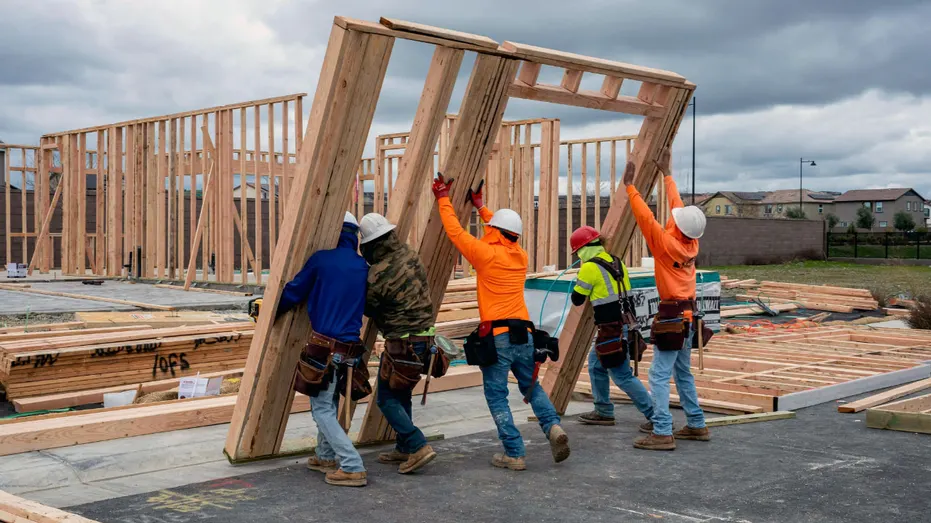
Conversely, select markets that experienced aggressive early-cycle price inflation or maintained sustained homebuilding momentum saw entry-level supply recover. Boise, Idaho, led the top 100 metropolitan areas with a 4.7% expansion in starter home share from August 2019 to August 2026, as cooling post-boom demand helped recalibrate regional pricing dynamics.
The Pacific Northwest region of Portland, Oregon, and Vancouver, Washington, posted the second-highest increase at 4%. Des Moines, Iowa, registered a 3.7% gain, while high-cost San Jose, California, and mountain-metro Denver, Colorado, expanded their starter inventory shares by 2.9% and 2.5%, respectively.
Elevated mortgage borrowing costs continue to exacerbate the shortage nationwide, creating an incentive for existing owners with lower fixed rates to hold onto their residences rather than trade up, leaving entry-level buyers facing fewer options at historically high purchase thresholds.



