Rare Albino Caribou Calf Photographed Near Fairbanks in Aerial Survey
Biologist withholds herd name to protect vulnerable calf from photographers
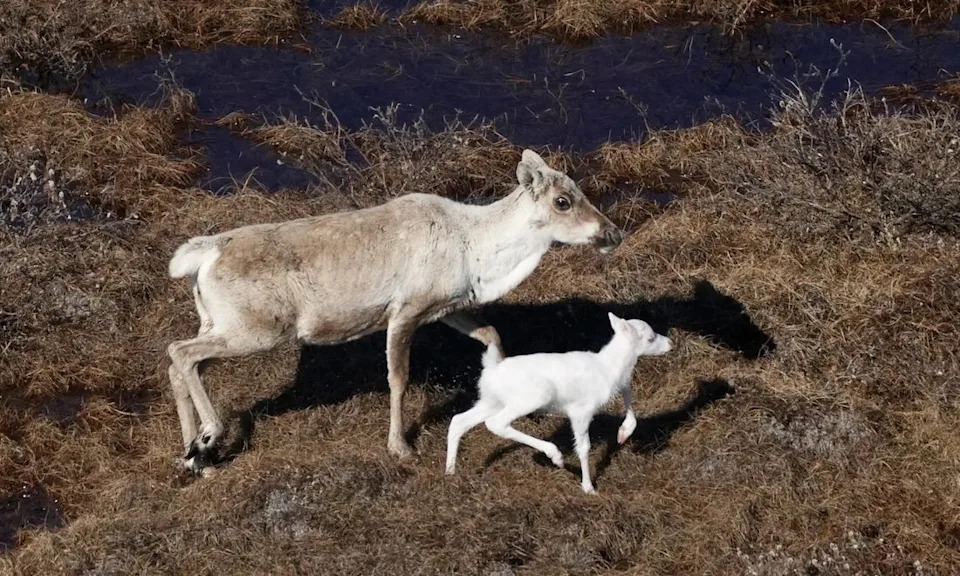
For the first time in nearly five decades, a photograph exists to confirm the existence of an albino caribou calf in Alaska. The images were captured during a routine aerial survey conducted by an Alaska Department of Fish and Game biologist, providing tangible evidence where only a visual account from 1976 remains.
Jordan Pruszenski recounted the encounter to Alaska Public Media. She was conducting an aerial survey north of Fairbanks, Alaska, in late June when the pilot noticed a small, bright-white animal and banked the aircraft for a closer look. The contrast was stark; the white caribou stepped onto a lingering snow patch and seemed to vanish against the landscape before reappearing.
Physical markers confirmed the diagnosis. Pruszenski documented the animal’s beady red eyes and pink hooves, classic signs of a complete absence of melanin. While leucism can produce partial whitening, those specific traits point to true albinism, a recessive genetic condition that leaves the animal fully pigment-free.


The event marks a rare albino caribou sighting in the modern record. The previous documented sighting occurred in 1976, when observers viewed a calf through a spotting scope. No photographs were taken during that earlier observation, leaving a gap in the visual record that spans more than 40 years.
The biological profile of an albino animal presents distinct hurdles in the wild. Without melanin, the calf lacks natural protection against ultraviolet radiation, which can damage sensitive skin and eyes in the bright Arctic summer sun. Beyond physiological concerns, the visual prominence of white fur makes the calf easier for predators to detect in tundra environments.
Age remains a variable in the assessment. Pruszenski estimated the calf was only a few weeks old at the time of the encounter. Whether it has survived the initial weeks since the sighting is unknown, though the biologist expressed cautious optimism as temperatures drop.
Snow cover may offer a temporary shield. Pruszenski noted that increasing snowfall north of Fairbanks could aid caribou calf survival by providing camouflage against the winter ground, masking its visibility from predators.
Conservation protocols dictated how the information was handled. The biologist declined to identify the specific caribou herd, a deliberate choice to prevent photographers and enthusiasts from attempting to locate the vulnerable animal. Disturbing wildlife to capture images poses a risk to an animal that cannot afford additional stress.
Monitoring populations in this region remains a priority for state wildlife officials, who rely on data from these flights to track herd health and numbers across the state.
As of now, the fate of the white calf remains unresolved, with no recent confirmation of its status since the late June sighting.