Slinger Francisco, the Grenada-born vocalist universally acclaimed as the Mighty Sparrow, died Sunday in New York City at age 91 following a brief illness. His daughter, Karen Francisco, confirmed he passed peacefully surrounded by family, marking the end of a seven-decade career that fundamentally altered the trajectory of Caribbean music and established calypso as a vehicle for sophisticated social and political discourse.
Francisco’s death closes a chapter in West Indian cultural history defined by his unprecedented dominance of Trinidad and Tobago’s Carnival competitions and his successful crossover into international markets. While widely celebrated for his wit and stagecraft, his primary legacy lies in transforming calypso from colonial-era entertainment into a respected art form capable of addressing governance, post-colonial identity, and social justice without sacrificing commercial appeal. He won the Trinidad Calypso Monarch title eight times and the Road March competition twice, records that remain benchmarks for contemporary artists.
Born July 9, 1935, in Grand Roy, Grenada, Francisco relocated to Trinidad at age one, where he absorbed the island’s oral traditions and competitive tent culture. His relocation to New York City in the 1960s positioned him at the nexus of the Caribbean diaspora and American civil rights movements, allowing his music to resonate with expatriate communities navigating identity and displacement. Over his lifetime, he composed more than 500 songs and released over 70 albums, creating a catalog that serves as an audio archive of mid-to-late 20th-century Caribbean sociopolitical evolution.
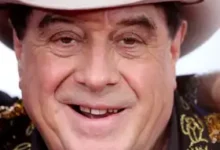

His songwriting distinguished itself through narrative complexity and double entendre, techniques that allowed him to critique authority under the guise of humor during periods of political censorship. Tracks such as “The Slave” and “Congo Man” addressed African heritage and historical trauma at a time when such themes were largely absent from mainstream Caribbean popular music. “Obeah Wedding” and “Saltfish” utilized vernacular storytelling to document everyday life, preserving linguistic and cultural practices that were often marginalized in formal education systems.
International recognition extended beyond the Caribbean diaspora. His collaboration with Jamaican bandleader Byron Lee on “Only a Fool Breaks His Own Heart” spent 27 weeks on European charts, peaking at No. 2 in the Netherlands and United Kingdom in 1978. This success demonstrated calypso’s viability in global pop markets, predating the later worldwide popularity of soca and dancehall. Bob Dylan, in liner notes for his 1985 “Biograph” box set, described Sparrow’s performances as intellectual combat comparable to prize fighting, citing his lyrical dexterity and command of large ensembles as evidence of singular artistry. Former U.S. Secretary of State Colin Powell referred to him as the “Mount Olympus of Calypso,” acknowledging his stature beyond entertainment circles.
Ainsley King, president of the Trinbago Unified Calypsonians’ Organisation, which represents over 600 calypso artists, stated that Francisco’s contributions transcended awards and recordings. She noted that his work gave voice to Caribbean social realities, relationships, and political struggles, establishing performance and compositional standards that current practitioners continue to study. The organization emphasized that while his voice is now silent, the structural foundations he built for calypso as a legitimate literary and musical tradition remain intact.
Francisco’s influence persists through institutional frameworks he helped shape, including the standardization of calypso judging criteria and the professionalization of tent performances. His mentorship of younger artists ensured continuity of the extemporaneous composition techniques that define the genre. As of Sunday, no public memorial arrangements have been announced, though tributes from cultural organizations across the Caribbean and North America have begun to circulate.