Esta Isla Turns Puerto Rico’s Colonial History Into Award-Winning Cinema
An award-winning Puerto Rican film confronts colonial history, political memory, and island identity

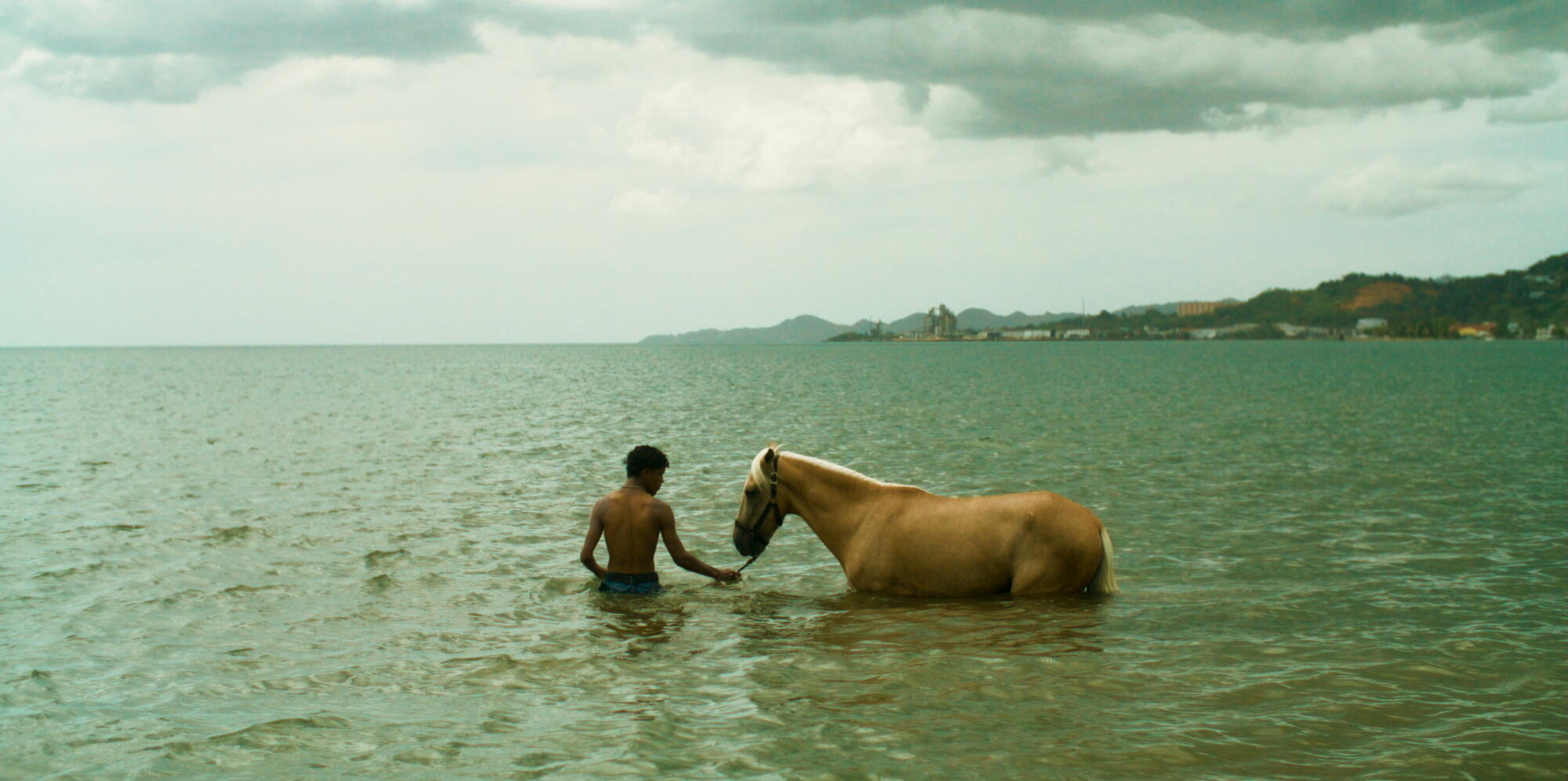
“Esta Isla,” now available on video-on-demand (VOD) platforms, follows Bebo, played by Zion Ortiz, as he flees violence in the urban public housing complexes known as “caseríos.” Lola, played by Fabiola Victoria Brown, is a wealthy young woman trying to escape her privileged social bubble. When their paths collide, they travel into Puerto Rico’s interior highlands, where their perspectives are challenged by a diverse cross-section of Puerto Rican society.
The politically charged coming-of-age road movie made history at the Independent Spirit Awards as the first Puerto Rican production to win the prestigious John Cassavetes Award. The prize is designated for feature films made for under $1 million and honors creative teams that achieve high artistic distinction despite severe financial constraints. “Esta Isla” later received three major accolades at the Tribeca Film Festival, including Best New Narrative Director.
Its setting also carries the memory of one of Puerto Rico’s most consequential political confrontations. Cora, portrayed by veteran Puerto Rican actor Teófilo Torres, is shown living off the land in a mountain home. The house is not a studio set: it is the actual Hormigueros residence where Filiberto Ojeda Ríos, co-founder and leader of the pro-independence militant group Los Macheteros, was killed during a shootout with FBI agents in September 2005.


Ojeda Ríos had spent decades underground after the notorious 1983 robbery of a Wells Fargo depot in West Hartford, Connecticut, which net millions of dollars for the independence movement. He died on September 23, 2005, a date that coincides with El Grito de Lares, Puerto Rico’s historic day of pro-independence commemoration. His death prompted widespread protests and condemnation across the island, particularly after autopsy reports revealed that he had been left to bleed to death inside the home.
The filmmakers captured the physical remnants of the raid during production. The bullet holes, windows, and books visible in the film remain preserved from the day of the siege.
The film’s political history extends beyond the house in Hormigueros. For much of the 20th century, the FBI and local police intelligence forces compiled secret dossiers, known as *carpetas*, on more than 100,000 Puerto Rican citizens suspected of supporting pro-independence views or organizing political dissent. The blacklisting restricted career and educational opportunities for decades, until the Supreme Court of Puerto Rico ruled the practice unconstitutional in 1987.
Cristian Carretero and Lorraine Jones Molina, the husband-and-wife filmmaking duo behind “Esta Isla,” describe their work as an act of political and cultural preservation in an unincorporated territory where local identity is frequently overshadowed by U.S. corporate and political interests. They address historical traumas while seeking to counter what they believe is a colonial inferiority complex perpetuated by historical omission.
Their production method is called “tropical realism.” It responds to the material limitations of working on the island through minimal crews, natural lighting, and organic storytelling. Carretero handled camera work while Jones Molina managed sound, and the couple took on most of the project’s technical responsibilities themselves.
They also founded their production company, Experimento Lúdico, in 2010 in the western coastal municipality of Mayagüez. Establishing the company there deliberately bypassed the San Juan metropolitan area, where most government funding and commercial film opportunities remain concentrated.

When Carretero and Jones Molina met in 2008, local narrative cinema was scarce, while low-budget documentary filmmaking sustained much of Puerto Rico’s film industry. Karen Rossi’s 2007 environmental documentary “Isla Chatarra” influenced local directors by demonstrating how urgent social themes could be explored with minimal resources. The couple later contributed to that documentary tradition with “Seeds, Chronicles of the Earth,” a 2016 mid-length film about the effects of genetically modified crop testing on the island.
At the same time, Puerto Rico’s local industry depended heavily on service work for major Hollywood productions, including the 2011 film “Pirates of the Caribbean: On Stranger Tides.” During the 2010s, independent fiction directors began reclaiming narrative space. Ari Maniel Cruz’s “Under My Nails” and “Before a Rooster Crows,” together with Ángel Manuel Soto’s “La Granja,” showed that Puerto Rican filmmakers could make compelling fiction about local socio-political struggles without relying on foreign studio formulas.
“Esta Isla” places those struggles alongside the infrastructural neglect that has affected Puerto Rico, particularly after Hurricane Maria devastated the island in 2017. Several scenes show residents depending on municipal water trucks, a reality intensified by ongoing droughts, privatization issues, and systemic mismanagement of the island’s aqueduct system. Mayagüez avoided the worst of the recent rationing, but the directors said scenes filmed years earlier had become increasingly representative of daily life on the island.
The film’s central metaphor comes from the opening pages of “The Labyrinth of Solitude,” the landmark 1950 essay collection by Mexican Nobel laureate Octavio Paz. Paz portrays adolescence as a period when people become suddenly aware of their existence and their place in the world, comparing that transition with the historical awakening of entire nations.
In “Esta Isla,” the filmmakers apply the metaphor to Puerto Rico, portraying a society in a prolonged state of political and cultural adolescence. The island’s territorial status leaves it caught between competing identities as it struggles to define its relationship with the United States while asserting its distinct Latin American and Caribbean heritage.
The partnership behind the film began with a chance encounter in 2008 at El Batey, a historic bar in Old San Juan known for graffiti-covered walls and its decades-long role as a gathering place for local artists, bohemians, and writers. The meeting led to a lifelong personal and professional collaboration. The critical recognition of “Esta Isla” has provided a testament, for Carretero and Jones Molina, to the viability of local storytelling and to international audiences’ connection with highly localized, uncompromisingly political cinema from the Caribbean.