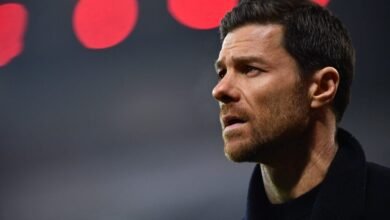
Didier Deschamps Delivers Emotional Farewell Ahead of Final Match as France Manager
The legendary coach prepares for his final match against England in Miami, concluding a historic 14-year tenure.
MIAMI — Didier Deschamps delivered a poignant and deeply emotional farewell address on the eve of his final match as France manager, describing his tenure with the national team as “the most beautiful thing that has happened to me” ahead of Saturday’s World Cup third-place play-off against England.
The fixture at Hard Rock Stadium in Miami marks the end of an era for French football. Deschamps will step into the dugout for the final time, concluding a monumental 14-year tenure that established France as a dominant global force, highlighted by a World Cup victory in 2018 and a runner-up finish in 2022. Having taken charge in 2012 following the departure of Laurent Blanc, Deschamps has spent a significant portion of his life representing Les Bleus, cementing his legacy as one of only three men to win the World Cup as both a player and a manager.
“I feel my responsibility regarding the match. It’s not a friendly,” Didier Deschamps told reporters. “It’s not the one we would have preferred, but it’s here. There is third place at stake, so I have a duty, along with my staff and the players, to do everything to achieve this final objective, which is perhaps certainly less important.”
The manager acknowledged the pain of their semi-final exit to Spain, attributing it to both tactical shortcomings and the sheer caliber of their opponents. “Going out was certainly partly our fault, meaning the technical area, and it’s also undoubtedly due to the quality of this Spanish team, which raised the bar,” he said. “You have to accept it. There is this match ahead of us, and then a holiday. They need it.”
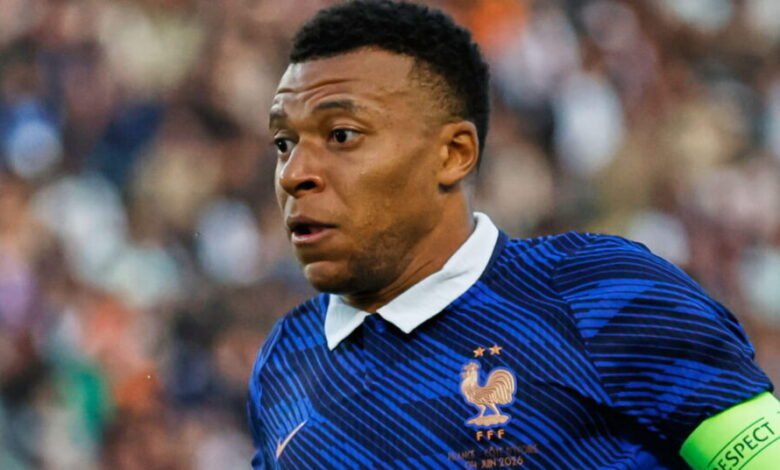
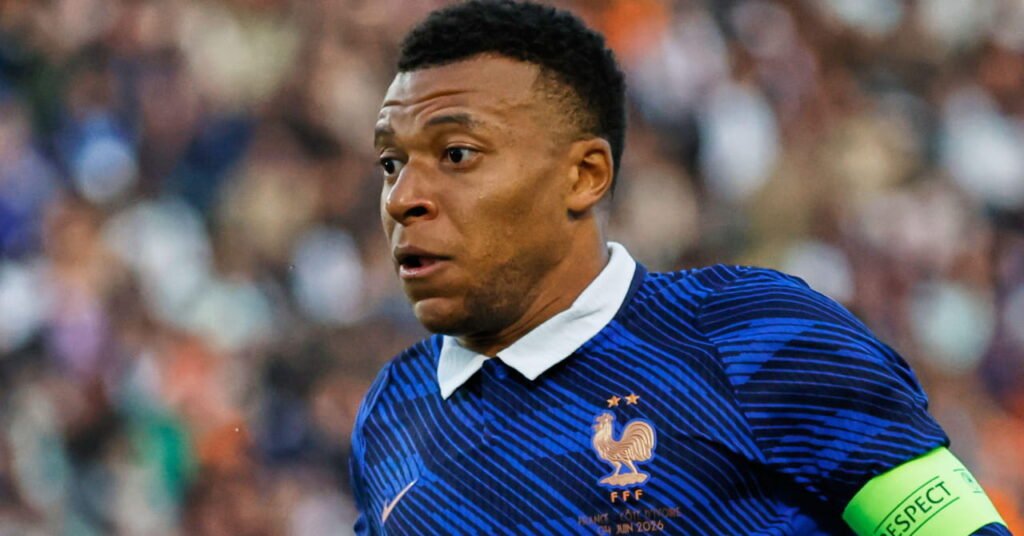 Kylian Mbappe playing for the France national football team at the World Cup 2026 while wearing a blue shirt with a golden logo on the chest and a white collar with a green captain's armband on his left arm while looking to his right with a crowd blurrily visible in the background” />
Injury Woes and Tactical Dilemmas
France’s campaign has been heavily disrupted by physical and psychological challenges. Defender William Saliba was forced off just 30 minutes into the semi-final defeat at AT&T Stadium in Arlington, replaced by Crystal Palace’s Maxence Lacroix. Saliba has been managing a persistent back injury throughout the tournament, and reports suggest the Arsenal center-back may require surgery before the upcoming domestic season.
Deschamps was candid about the severity of the defender’s condition. “William Saliba’s injury is problematic,” he explained. “Tests were done. His injury hasn’t worsened. He has had that, unfortunately for him, since March, so he managed it, he gritted his teeth. And at one point, the pain, unfortunately for him and for us, was at a degree that was not bearable.”
The manager also shed light on the psychological burden carried by midfielder Adrien Rabiot, who played under the threat of a suspension due to his yellow card status.
“Then comes Adrien,” Deschamps recalled. “At the first cooling break, he came to see me and said, ‘Coach, I can’t play normally anymore. I can’t play my game anymore.'”
Drawing on his own illustrious playing career, during which he captained France to their first World Cup title in 1998, Deschamps empathized with the midfielder’s plight. “Excuse me for being able to understand because I was a player and I found myself in two semi-final situations with a yellow card over my head,” he said, describing the feeling of playing with a “sword of Damocles” and the “handbrake on.”
“Could I have done things differently? Yes, but I don’t know how it would have gone,” Deschamps added. “It’s been a long time since I asked myself the question of ‘what if?'”
Golden Boot Race and Emerging Talents
Despite the disappointment of missing out on the final, France captain Kylian Mbappe remains highly motivated. Deschamps confirmed that the forward “is available” for the clash against England. Kylian Mbappe enters the match tied with Argentina’s Lionel Messi on eight goals in the race for the tournament’s Golden Boot, with England’s Harry Kane and Jude Bellingham trailing closely on six goals each.
“There are always motivational levers, but Kylian doesn’t need a lever,” Deschamps noted. “It’s better to finish third than fourth. We are going to do everything to make sure we achieve this objective, and Kylian will as captain, too.”
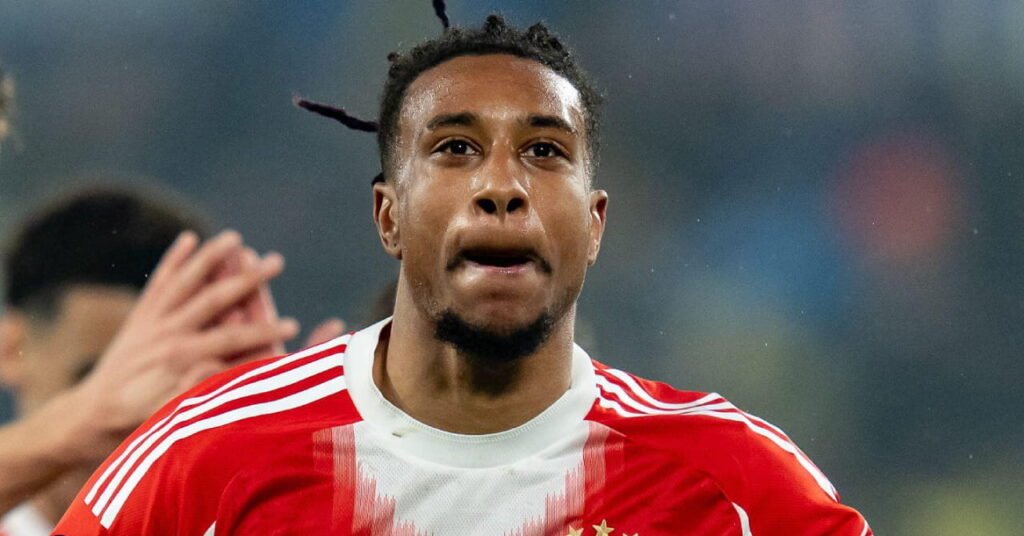
Deschamps also addressed the development of winger Michael Olise, who struggled to make an impact against Spain.
“He wasn’t at his best level, like other players,” Deschamps admitted. “I spoke at length with him, without entering into secrets. He still has, despite everything, a margin for progression. What he is capable of doing today compared to what he used to do? Will he be better? Of course he will be even better.”
He expressed similar optimism for Desire Doue, the 21-year-old talent experiencing his first World Cup. “Is Desire Doue, who is a formidable player at 21 years old, who is playing his first World Cup, going to benefit from this? Of course. It all depends on the characters and the personalities, too.”
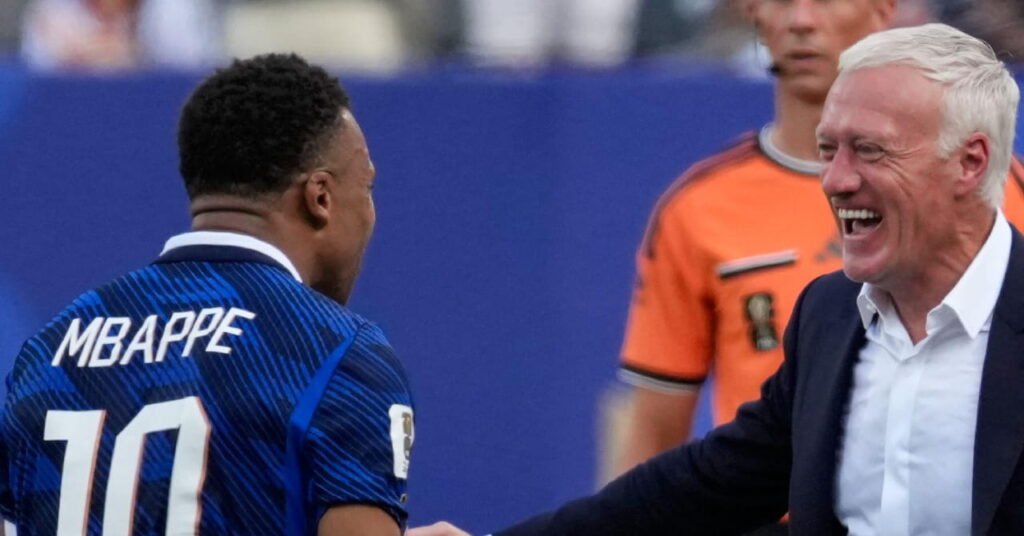
The Final Curtain
While third-place play-offs are often viewed with mixed feelings, Deschamps emphasized the profound responsibility of representing France on the world stage.
“There is a duty when you wear this jersey. I’ve said it since 2012,” he reflected. “It’s there because there is a responsibility to wear this jersey for the millions of Frenchmen and Frenchwomen who are behind us, who were thrilled, who were disappointed, and for the young generation.”
Reflecting on his departure, Deschamps became visibly emotional. “I know very well that the final curtain is tomorrow. Without making anyone cry, I don’t think anyone is going to cry here, I know that the French national team is going to miss me. But I had the privilege for 15 years to be up there with this jersey, experiencing magnificent moments and more difficult moments.”
Deschamps, who spent a combined 25 years of his life serving French football as both a World Cup-winning captain and a highly decorated manager, concluded: “The French national team, with everything that it can entail, in my professional life is the most beautiful thing that has happened to me, and it took 25 years of my life. 25 years of a man’s life, of a woman’s, it leaves a mark, and it leaves an even greater mark because there remain unforgettable memories. But the important thing is always ahead of you.”