
European Futures Signal Upside as Trump Eases Trade Threats
Market sentiment improves after US President steps back from tariffs, military action against Europe.

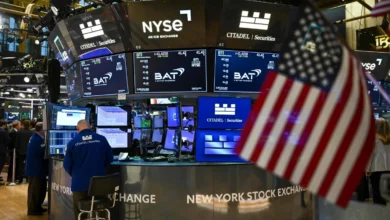
European stock futures are pointing to an upward open, as investors responded positively to U.S. President Donald Trump’s recent statements easing military and tariff pressures on Europe. The announcement reduced fears of a renewed trade war, prompting equity markets to extend gains seen in Asia, including a 2% rise on the Japanese stock exchange.
At the Davos forum, Trump indicated he would refrain from imposing tariffs on Europe and suggested a potential “macro” agreement on Greenland, though details remain undefined. Market participants interpreted the remarks as a signal of reduced geopolitical risk, supporting investor confidence.
Market Trends and Technical Context
Despite the optimism, analysts caution that short-term pullbacks remain normal. Joan Cabrero, technical analyst at elEconomista.es, noted that “mature trends also correct, consolidate, and take breaks.” For the Eurostoxx 50, the index recently tested the 5,800-point zone, previously a resistance level now acting as support. Germany’s DAX followed a similar pattern, reverting to around 24,680 points.
Cabrero added that a more pronounced corrective phase would require the Nasdaq 100 to break below 25,000 points, a level that has so far held. “The trend dictates, not the individual,” she emphasized, underscoring the importance of broader market context over isolated moves.
Bonds and Geopolitical Sentiment
Investors also shifted toward sovereign bonds following recent position closures, pushing prices higher and yields lower in secondary markets. Japanese long-term bonds stabilized after two consecutive days of heavy liquidations, reflecting improving sentiment ahead of snap elections in two weeks. The yield on Japan’s 30-year bond fell by 10 basis points on Thursday to 3.6%. Analysts at Mitsubishi UFJ Morgan Stanley Securities described the decline as a rebound after prior overselling.
Attention now turns to the Bank of Japan’s upcoming policy meeting, where no changes are expected, although investors will monitor any guidance on monetary conditions.
Gold Retreats Amid Rising Risk Appetite
Gold prices eased following Trump’s remarks but remained above $4,800 per ounce. Typically viewed as a safe-haven asset, gold tends to fall when risk appetite increases. However, geopolitical uncertainty has not entirely dissipated, keeping some analysts bullish on the precious metal.
Goldman Sachs recently revised its 2026 forecast, projecting an average price of $5,400 per ounce. The firm cited ongoing geopolitical tensions, central bank purchases, and investor demand as key factors supporting near-term prices.