
Andy Dunn Built Bonobos Through Mania. Now Pie Is Tackling Loneliness
From Bonobos to Pie, Andy Dunn confronts founder mental health and social isolation
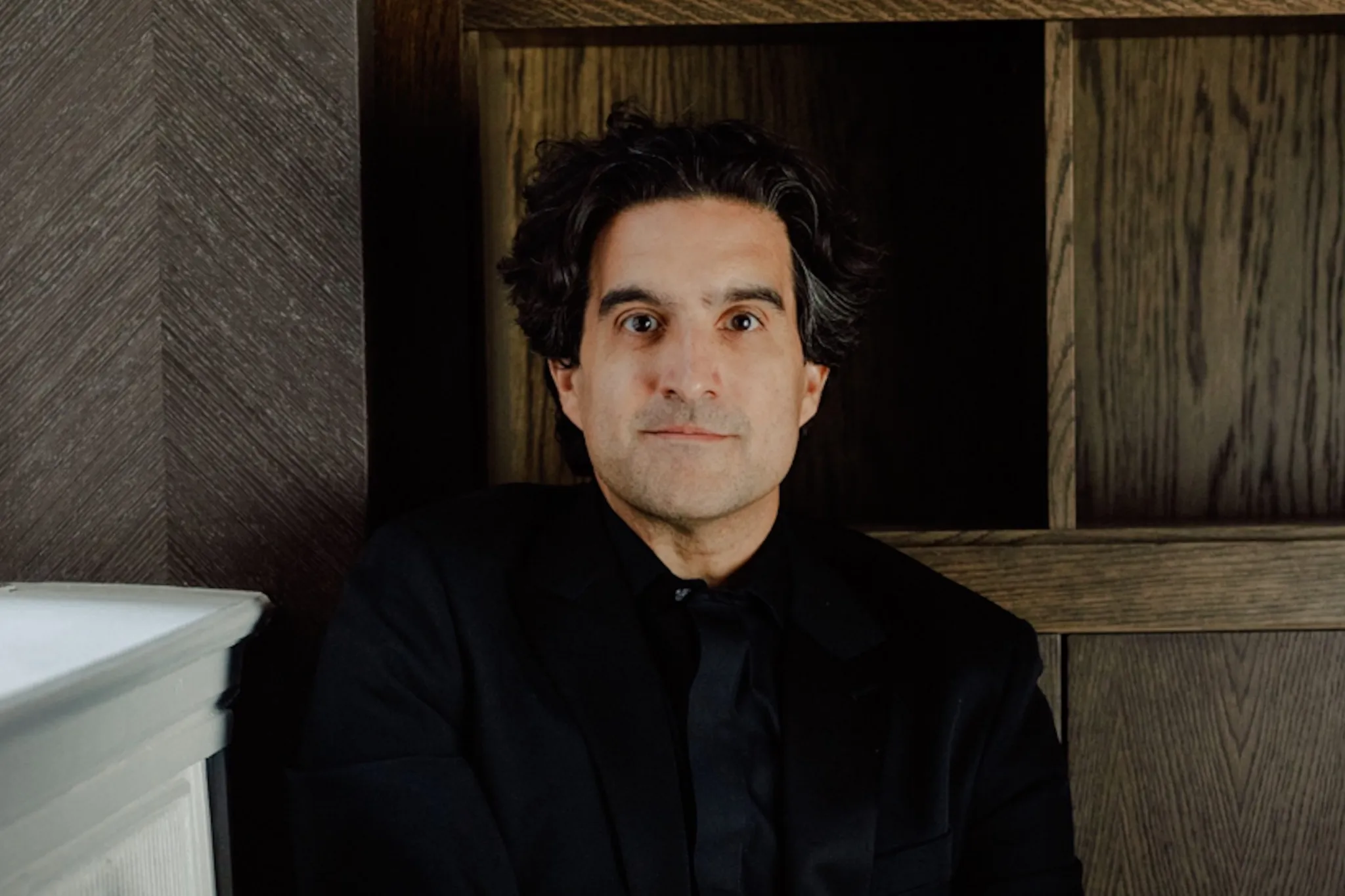
CHICAGO — Andy Dunn was first diagnosed with Bipolar I in 1999, during his senior year at Northwestern University. He attributed his erratic mood swings to the pressures and lifestyle of college, then spent five years largely asymptomatic and in denial of the chronic condition, avoiding medication and therapy.
The traits venture capitalists often celebrate in startup founders—boundless energy, an obsessive work ethic, a high tolerance for risk, and unwavering belief in an improbable vision—closely mirror the clinical symptoms of hypomania. “The characteristics of an entrepreneur are really convergent with the diagnostic criteria for what’s called hypomania,” Dunn said. “The flight of ideas, elevated speech patterns, decreased need for sleep, huge amounts of energy for work, bursts of creativity, a feeling that the universe is conspiring on your behalf, delusions of grandeur, risk-seeking behavior… It’s more or less an entrepreneur having a good day.”
Research led by Dr. Michael Freeman, a clinical professor at the University of California, San Francisco (UCSF) who specializes in the mental health of entrepreneurs, found that startup founders are significantly more likely to experience mental health challenges than the general public. Entrepreneurs are roughly twice as likely to report depression, three times as likely to experience substance abuse, and significantly more likely to report a bipolar diagnosis, which affects roughly 11% of entrepreneurs compared to about 1% of the general population.


After graduating from the Stanford Graduate School of Business, Dunn co-founded Bonobos with his classmate Brian Spaly in 2007. The company sought to revolutionize menswear by selling better-fitting pants directly to consumers online, a highly contrarian business model at the dawn of the modern direct-to-consumer (DTC) era. Dunn and Spaly pooled $60,000 of their own savings, selling pants through word-of-mouth and trunk shows. Within 12 months, Bonobos reached a $2 million annual revenue run rate.
Spaly left the company in 2009 after leadership disagreements, leaving Dunn to steer Bonobos as chief executive officer. Executive turnover increased as Dunn managed the relentless demands of venture capitalists alongside a high-spending, fast-paced personal lifestyle in New York City. In 2010, the company secured $18.5 million in a funding round led by Accel and Lightspeed Venture Partners. By November of that year, monthly sales topped $1 million.
As Bonobos expanded, Dunn’s mental state shifted between depressive slumps that made it difficult to leave his bed and manic periods of intense confidence. In 2012, department store giant Nordstrom invested $16.4 million in Bonobos and began stocking its apparel in brick-and-mortar locations. Over the next two years, the company raised an additional $85 million. To the public, Dunn was a rising star of the e-commerce boom; internally, his untreated bipolar disorder was reaching a boiling point.
That escalation culminated in March 2016, when Dunn experienced a severe psychotic episode in his Manhattan apartment. During the manic state, he suffered acute delusions, believing he was both the president of the United States and the superhero Batman. He struck his head against a doorway, and when his then-girlfriend, Manuela Guillonal, and her mother attempted to intervene and treat the injury, his altered state turned violent. Dunn struck both women before eight officers from the New York City Police Department arrived to restrain him.
Dunn was arrested and admitted to the psychiatric ward at Bellevue Hospital, a historic public medical institution in New York known for its psychiatric care. He spent a week hospitalized under psychiatric supervision. Guillonal stayed by his side and visited him daily; the couple married several years later. “I went through some pretty calamitous events that led to good news on the other side of that, which was getting healthier, acknowledging the condition, being in treatment,” Dunn said. “A new chapter of my life opened up once this was all in the light.”
With support from his family and close business associates, Dunn began a rigorous rehabilitation process. His legal case was eventually sealed and expunged, and he returned to his role as Bonobos CEO. After the hospitalization, he spent six months working with medical professionals to find a stable regimen of psychiatric medications. Over the past decade, his strict health protocol has included weekly consultations with his physician, daily medication adherence, consistent physical exercise, regular exposure to sunlight, and a non-negotiable sleep target of six to eight hours per night.
Dunn guided Bonobos through its final growth phase until June 2017, when Walmart acquired the brand for $310 million in cash. Bonobos had approximately $120 million in annual revenue at the time of the sale. The transaction followed the company’s sale to Walmart for $310 million in 2017, after nearly two decades in which Dunn lived at the intersection of high-growth entrepreneurship and a hidden psychiatric condition.
In May 2022, Dunn published *Burn Rate: Launching a Startup and Losing My Mind*, a memoir published by Crown Publishing Group. The book offered an unusually candid look at how venture capital funding pressures can exacerbate clinical mental health conditions and cemented Dunn as a prominent advocate for mental health awareness in the tech industry.
His experience of isolation and the psychological toll of having his identity entirely tethered to business success also informed his next company. Dunn founded Pie in 2020, amid the height of the COVID-19 pandemic and a rising global loneliness crisis. The platform was originally a dating application intended to help seniors find companionship, but it struggled to gain traction during its first two years.
After Dunn relocated from New York to Chicago, Pie changed its business model and shifted toward combating general social isolation by helping users form platonic, real-world connections. “ [Bonobos] was very much wrapped up in my ego and my identity,” Dunn reflected. “Whether it succeeded or not was a direct referendum on me as a person. And now, with Pie, it’s so important to me that we win… and I know that it’s a company—it’s not me.”
Pie now operates as a utility for hosting, discovering, and organizing real-world gatherings, including running clubs, art exhibitions, watch parties, and casual interest groups. The platform has found a particularly strong foothold among Gen Z users seeking alternatives to traditional, screen-centric social media.
Pie has raised $24 million in total funding from Forerunner Ventures, an early backer of Bonobos, as well as Renegade Partners, Origin Ventures, and Obvious Ventures, the firm co-founded by Twitter and Medium co-founder Ev Williams. In July 2024, the company brought on Nadya Okamoto as a co-founder. Okamoto is a Harvard graduate, social entrepreneur, and influencer with more than 4.4 million followers on TikTok; she previously founded the period care brand August and established Zoomies, a popular run club in New York City.
The Chicago-headquartered startup now reaches all 50 U.S. states and operates across 100 cities. Its largest active user bases are in New York, Los Angeles, Austin, Boston, and San Francisco, and the platform has more than 310,000 active users. Dunn, now 47, is using the venture to move away from retail consumerism and toward infrastructure for human connection.
“I loved building a brand that guys love,” Dunn said. “Then towards the end of that journey, I was like, ‘You know what? I think I’m done working on making men’s butts look good in their pants.’”
If you or someone you know is struggling with mental health challenges or experiencing a psychiatric crisis, support is available. You can call or text the Suicide & Crisis Lifeline at 988, or chat online at 988lifeline.org. These services are free, confidential, and available 24/7. In the event of an immediate medical emergency, please call 911 or proceed to the nearest emergency room.