

Republicans Keep Relitigating 2020 as Senate Battlegrounds Move On
2020 election claims divide Republican primaries and threaten general-election strategy
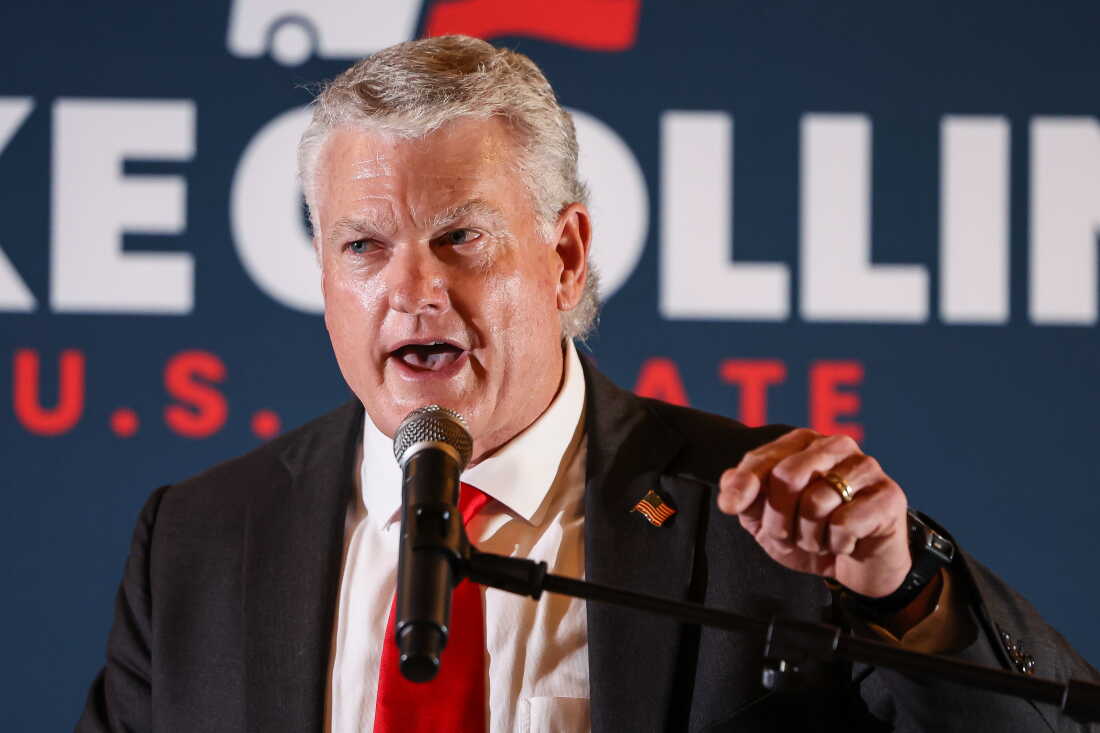
WASHINGTON — Republican primary contests in key Senate battleground states have made the 2020 presidential election a central litmus test as the party fights to maintain and expand its congressional majorities in an impending midterm election cycle.
That emphasis has produced a strategic divide within the Republican Party. Grassroots primary demands increasingly collide with the preferences of suburban swing voters in states including Georgia, Michigan, and Texas, where some voters want candidates to focus on prospective policy platforms rather than certified results from the past.
In Georgia, Democratic Sen. Jon Ossoff’s seat is among the most closely contested in the nation. Republican nominee Rep. Mike Collins, who represents Georgia’s 10th Congressional District, launched his initial congressional bid after the 2020 election. His early campaign advertising showed him firing a long gun into a container labeled “voting machine” while falsely asserting that former President Donald Trump won Georgia.


Trump endorsed Collins in the primary over a rival favored by Republican Gov. Brian Kemp. Kemp certified Georgia’s 2020 election results after three recounts, including a full hand audit of nearly 5 million ballots, that verified Joe Biden’s victory by 11,779 votes. Trump publicly said the rival candidate’s acknowledgement of the 2020 election results was a primary reason he withheld his endorsement.
Collins has continued to say that the 2020 election was stolen from Trump during his Senate campaign. He has also voiced support for compensating people prosecuted in connection with the Jan. 6, 2021, attack on the U.S. Capitol.

In Alpharetta, an affluent suburb outside Atlanta in North Fulton County, the focus on 2020 is affecting how some lifelong Republican voters view the general election. Lynn, a lifelong Republican voter in the Atlanta suburbs who requested that her last name be withheld, said the issue concerns her.
“It bothers me a lot,” Lynn said. “It worries me for him to get elected. It concerns me any time someone gets pulled into those ridiculous looking-back discussions.”
Lynn said Collins’ positions on the 2020 election have led her to consider voting for Ossoff, the Democratic incumbent who won his seat in the January 2021 runoff elections.
Austin Sapp, a regular Republican voter from Georgia, said he supports strict voter identification measures and believes voter fraud occurs. He nevertheless considers the continued focus on 2020 counterproductive.
“It is what it is,” Sapp said. “He lost, then he won. Beating a dead horse serves no purpose. What is your platform? What are you going to do for me?”
The Collins campaign did not respond to requests for comment about its general election strategy or voter reactions.
A September New York Times/Siena College poll found that only 1% of voters identified election integrity as their top issue in deciding their midterm vote. Gabe Sterling, Chief Operating Officer for the Georgia Secretary of State’s office, said the general electorate has largely moved past the disputes.
“It’s really big with the media and the far edges of both parties,” Sterling said. “Regular humans have given this up a long time ago.”
Sterling held frequent press briefings in late 2020 to defend the integrity of Georgia’s voting infrastructure and warned against violent rhetoric targeting election workers. He ran unsuccessfully in a Republican primary for Secretary of State earlier this year, addressing conservative audiences during the campaign about the accuracy of state election counts.
“I would say things like, ‘Georgia has the cleanest voter list in America,'” Sterling said. “We would get some boos and hisses, but I would just keep pounding away, explaining the data and explaining what happened.”

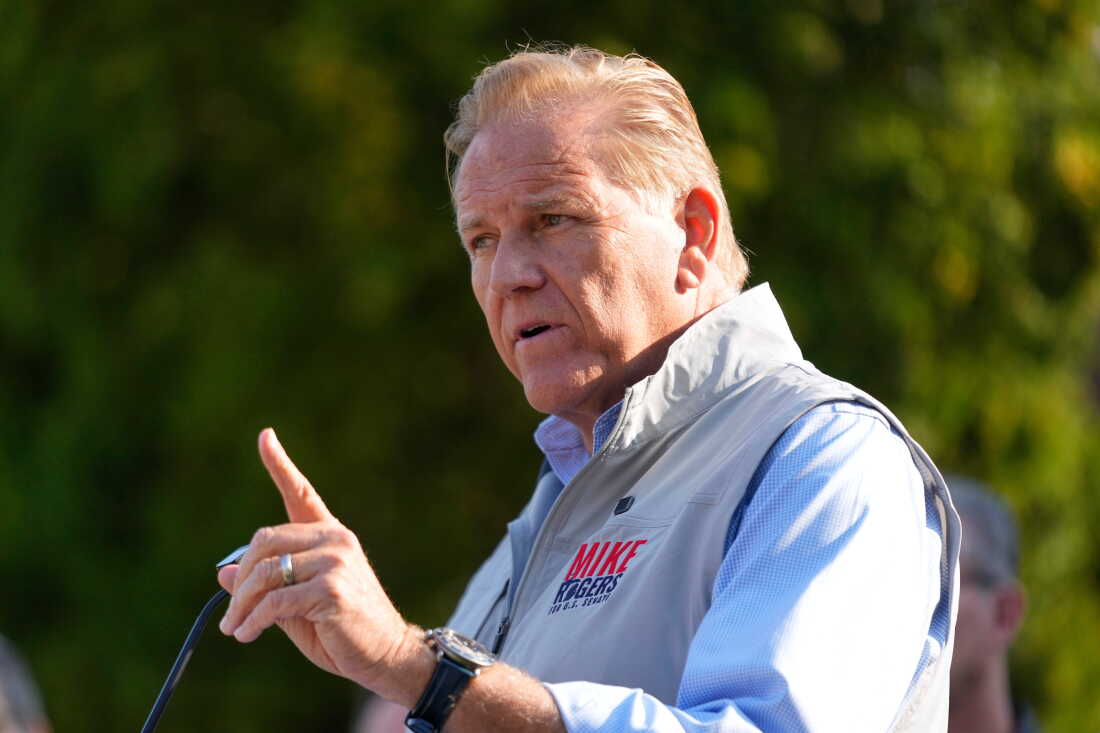
Election integrity claims have nevertheless remained central to Republican primary politics. In Michigan, Republican Senate nominee Mike Rogers previously criticized Trump’s efforts to alter the 2020 outcome in Georgia as “more gangster than presidential” and said Trump bore responsibility for the Jan. 6 Capitol attack. Rogers is a former U.S. Representative who chaired the House Permanent Select Committee on Intelligence from 2011 to 2015.
During his recent Senate campaign, Rogers changed his positioning. He declined to say who won the 2020 presidential election in an interview with the Detroit Free Press editorial board. At a subsequent local Republican meeting, video showed him alleging that unverified ballot deliveries affected election outcomes in Wayne County.
“Now there were some ballots that showed up at 5:30, I wish I were kidding, in a van, and that swung the election on us, and it happened to be here in Detroit,” Rogers told attendees.
After Trump gave a national address resurrecting claims about voting vulnerabilities, Rogers posted a social media message thanking him. Rogers’ Senate campaign did not respond to requests for comment.
Jason Roe, a Republican strategist and former executive director of the Michigan Republican Party, described the embrace of election claims as a tactical decision aimed at core party activists.
“Frankly, I think most of the elected officials that still talk about it, it’s not necessarily a sincerely held belief,” Roe said. “It’s usually at a Republican central committee meeting, throwing red meat to the base.”
Roe said the message was unlikely to work as a general election strategy. “I can’t imagine any Republican in a general election spending any money talking about election integrity or what happened in 2020,” he said.
Texas produced another primary result centered on the issue. Texas Attorney General Ken Paxton defeated long-serving Republican Sen. John Cornyn, after Paxton had spearheaded a December 2020 lawsuit filed directly with the U.S. Supreme Court seeking to overturn election results in four key battleground states. The court ultimately rejected the challenge.
When Cornyn lost the primary, he urged party figures to turn toward upcoming legislative contests. “I think we should talk about 2026 and not 2020,” Cornyn told reporters.
Ken Paxton also made no secret of his need for financial backup while speaking this month at the Republican convention in Dallas, Texas.
The debate over voting laws has reached federal legislative governance. Earlier this year, congressional negotiations over reopening the Department of Homeland Security were delayed by demands to pass the SAVE America Act, or Safeguard American Voter Eligibility Act, which is designed to require proof of citizenship for federal voter registration.
At the same time, a University of California San Diego poll found that 49% of Americans expect the upcoming midterm elections to be free and fair. That confidence level is lower than the level recorded before the 2024 general election.
Sterling said continued emphasis on past election integrity claims shifts public focus while laying groundwork for future political narratives.
“It distracts from the Iran war, it distracts from the Epstein files,” Sterling said. “And this is the ground on which they want to fight.”










One Comment