Newsom’s Presidential Calculus Tested as First State Worker Strike in 20 Years Hits California Budget
Union walkout tests governor's labor record ahead of potential presidential bid amid $46.8 billion budget deficit
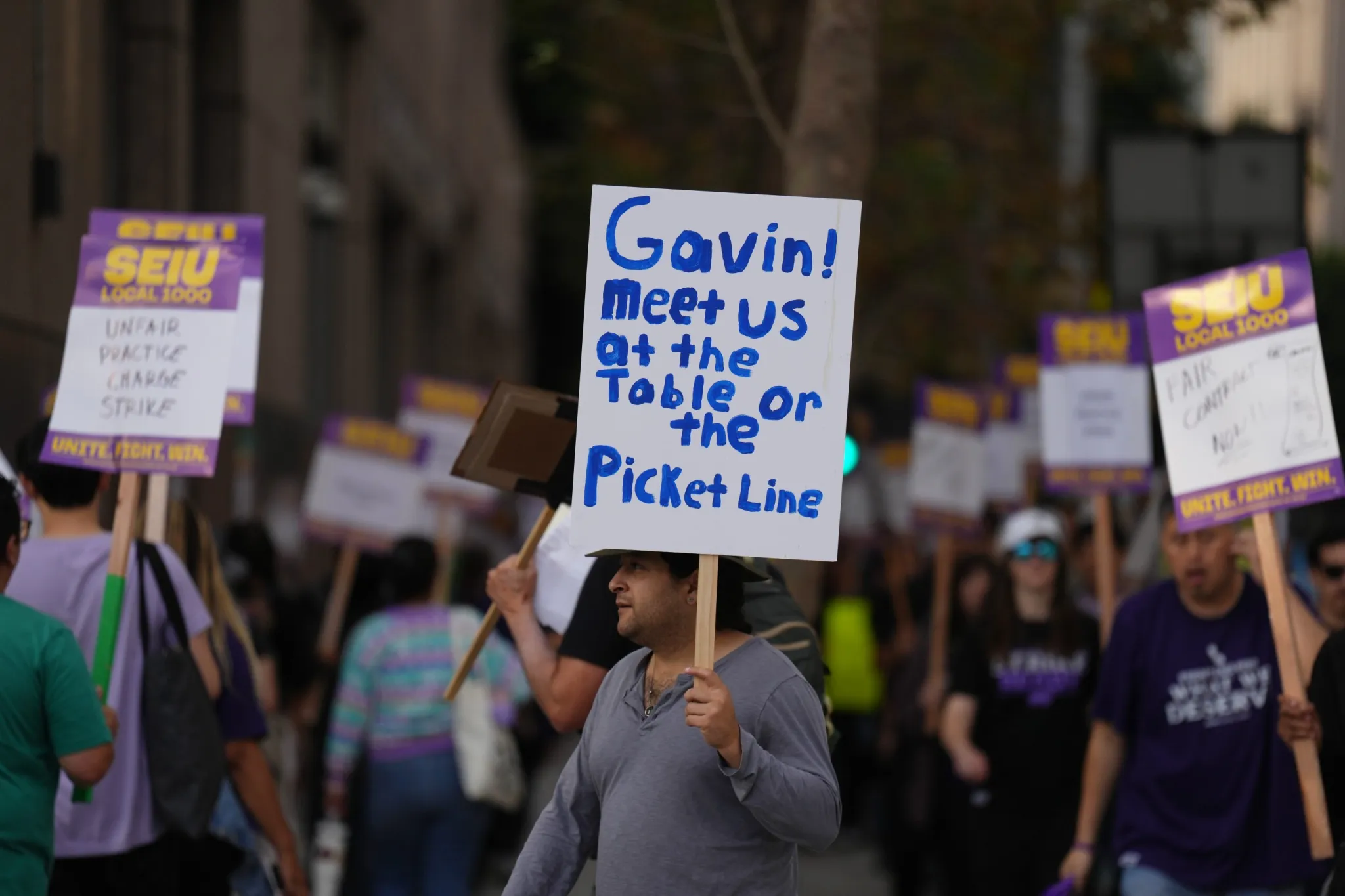
SACRAMENTO — The first strike by California’s largest state employee union in two decades has thrust Gov. Gavin Newsom‘s labor record into the spotlight as he positions for a potential 2028 presidential run, with the walkout exposing tensions between his return-to-office mandate and a budget forecast that already projects multibillion-dollar deficits.
SEIU Local 1000’s one-day work stoppage Wednesday idled a portion of the 100,000-plus auditors, nurses, counselors and other civil servants the union represents. The action marks the first strike since the union’s 2004 founding, ending a 20-year run of labor peace that spanned three governors.
The timing complicates Newsom’s national messaging. The governor has cultivated a pro-labor profile — signing fast-food wage legislation, expanding union organizing rights and vetoing a bill last month that would have required state agencies to justify office mandates in writing. That veto, coupled with his July 1 order requiring four-day office weeks, sparked the strike authorization vote.
“This is the first real test of whether his labor credentials survive a confrontation with his own workforce,” said Dan Schnur, a political strategist who worked on Republican gubernatorial campaigns and teaches at UC Berkeley and USC. “Presidential primary voters in Iowa and New Hampshire will hear about this.”
The fiscal stakes are concrete. The union’s demand for a 20% raise over three years, plus increased state healthcare contributions, would add hundreds of millions to annual personnel costs. The Legislative Analyst’s Office projected a $68 billion deficit for the 2024-25 fiscal year before revising it downward in May; the administration’s latest forecast shows a $46.8 billion gap. Any contract settlement becomes a baseline for negotiations with 20 other state bargaining units representing 250,000 additional workers.
CalHR, the state’s personnel department, said contingency plans kept essential services running Wednesday. Spokesperson Camille Travis said the administration “remains focused on achieving a fair and responsible agreement” and remains at the bargaining table.
Union president Anica Walls said members voted overwhelmingly to strike after the state “failed to bargain in good faith” since the contract expired in June. The union argues remote work saves office-space costs and that workers need raises to offset commuting expenses under the new mandate.
“It’s got to be one or the other: Give us a raise or let us save money, both personally and with the state by working from home,” said Jessica Brooks, an innovation analyst at the Department of Health Care Services.
The strike’s single-day duration limits immediate disruption but signals escalation potential. SEIU Local 1000 has not ruled out longer actions. The last multi-day state worker strike, by a different union in 2001, lasted three days and cost an estimated $15 million daily in lost productivity and overtime.
Newsom’s office did not respond to requests for comment on the strike’s political implications. The governor leaves office in January 2027 under term limits.