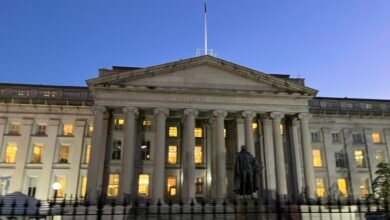

Regulatory exemptions currently shaping the U.S. digital asset market face significant legal and political fragility, according to Rep. French Hill (R-Ark.), who argues that agency rulemaking cannot replace comprehensive legislation. The House Financial Services Committee chair cautioned that while recent actions by the Securities and Exchange Commission and Commodity Futures Trading Commission provide temporary operational clarity, they remain vulnerable to judicial reversal and administrative turnover.
Hill’s assessment challenges a growing industry consensus that federal regulators have effectively filled the void left by congressional inaction. Following the Senate’s 49-50 rejection of the Clarity Act last month, many market participants pivoted toward engaging with agency-level guidance as a pragmatic alternative to stalled statutory reform. Hill contends this reliance is misplaced, asserting that exemptive relief lacks the permanence required for long-term capital formation and institutional adoption.
The distinction between regulatory forbearance and statutory authority carries substantial practical weight. Exemptive orders and no-action letters can be rescinded by future commission votes or invalidated through litigation under the Administrative Procedure Act. By contrast, a federal statute establishes binding jurisdictional boundaries that survive changes in administration and provide stronger defenses against legal challenges. This durability gap is central to Hill’s argument that current agency efforts, while constructive, are insufficient for securing U.S. competitiveness in blockchain technology.


SEC Chair Paul Atkins and CFTC Acting Chair Mike Selig have utilized their existing authorities to define digital commodities and create innovation exemptions for tokenized securities. These measures have enabled certain market activities to proceed without enforcement risk, but they do not resolve the underlying jurisdictional ambiguity between the two agencies. Without legislative text explicitly delineating which tokens fall under SEC versus CFTC oversight, market participants continue to operate under interpretive frameworks rather than codified law.
Hill authored both the FIT21 bill in the previous Congress and the Clarity Act in the current session, positioning him as a primary architect of attempted crypto market structure reform. His warning reflects concern that the window for durable reform is narrowing. He has expressed hope that a legislative solution could still advance during the lame-duck session, though the same Senate dynamics that blocked the Clarity Act remain largely unchanged.
The urgency stems from competitive pressures beyond domestic policy. Other jurisdictions, including the European Union with its Markets in Crypto-Assets regulation and Singapore’s licensing regime, have established statutory frameworks that offer predictable compliance pathways. U.S. firms operating under regulatory exemptions face higher uncertainty premiums when attracting institutional capital or expanding internationally. Hill frames legislative enactment as essential not merely for domestic clarity but for maintaining global market share in digital finance infrastructure.
Market participants have responded to the regulatory activity with cautious optimism. Bitcoin has traded in a narrow range near $83,500 in early October, reflecting investor hesitation amid unresolved structural questions. Trading volumes remain subdued compared to periods of clear legislative momentum, suggesting that exemptive relief alone has not unlocked broader institutional deployment.
The SEC’s innovation exemption for tokenized stocks and proposed custody rules for investment advisers represent the most concrete federal actions since the Clarity Act’s defeat. Simultaneously, the CFTC has advanced rulemakings to bring crypto exchanges under federal oversight and submitted related proposals to the White House for review. These parallel tracks demonstrate agency willingness to act but also highlight the coordination challenges that only Congress can permanently resolve through unified statutory language.
Hill’s position underscores a fundamental tension in U.S. financial regulation: agencies can adapt quickly to emerging technologies, but only legislators can create enduring market structures. As the lame-duck session approaches, the question remains whether lawmakers will treat agency activity as a complement to legislation or accept it as a substitute. For now, the committee chair maintains that regulatory stopgaps, however well-intentioned, cannot deliver the certainty that only statute can provide.