Why Spiders Build Webs on Windows and How to Stop Them
Altering exterior lighting and clearing frame crevices disrupts the biological cycle driving autumn web construction.
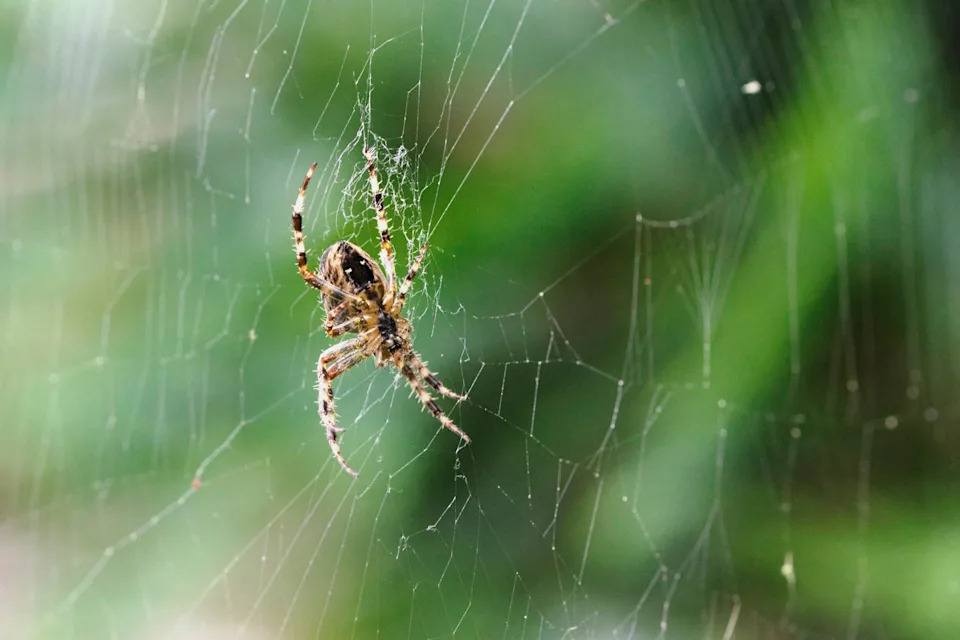
Spiders congregating around residential windows in early autumn is not a Halloween coincidence or an invasion. It is a predictable biological event driven by mating cycles, architectural geometry, and artificial light.
Across North America, orb-weaving spiders such as *Araneus diadematus* (the cross spider) and various *Neoscona* species reach sexual maturity between late August and October. Adult females require massive caloric intake to produce egg sacs before winter temperatures arrive. Window frames offer an engineered hunting ground that natural environments rarely match: rigid corners for anchoring dragline silk, vertical surfaces protected from heavy wind shear, and a built-in prey trap powered by human electricity.
The relationship between glass panes and arachnid activity is fundamentally an entomological issue rather than a pest control one. Spiders do not target homes; they target the insects that homes attract. Phototaxis—the behavioral response of organisms to light—draws moths, midges, crane flies, and mosquitoes toward illuminated windows after dark. A web positioned adjacent to this light source intercepts disoriented prey at high volume. During daylight hours, the same glass reflects ultraviolet light, continuing to lure flying insects even when interior lights are off.


Adam Hart, professor of conservation ecology at the University of Gloucestershire, notes that window frames provide abundant solid attachment points for silk while simultaneously concentrating flying insects. For a web-building spider, positioning a web here maximizes energy return on investment.
Tony Hutchinson / 500px – Getty Images
Homeowners seeking to eliminate webs often rely on folklore rather than biology. Peppermint oil, eucalyptus sprays, chestnuts (conkers), and citrus peels have no peer-reviewed scientific backing as arachnid deterrents. While some essential oils demonstrate mild neurotoxic effects on insects in laboratory settings at high concentrations, their efficacy degrades rapidly outdoors due to UV exposure and evaporation. Relying on them leaves window frames vulnerable to immediate re-colonization.
Effective deterrence requires altering the environment to remove the food supply and the structural advantages.
Exterior lighting modification yields the most significant reduction in spider activity. Standard incandescent and cool-white LED bulbs emit wavelengths in the blue and ultraviolet spectrum, which are highly attractive to nocturnal insects. Switching porch and window-adjacent fixtures to warm-toned LEDs (2700 Kelvin or lower) or sodium vapor bulbs drastically reduces insect congregation. Without the prey density required to sustain an adult spider, the location becomes energetically unviable for web construction.
Physical disruption remains necessary because orb weavers can rebuild a complete capture spiral in under an hour. Removing silk immediately upon detection prevents the spider from reinforcing anchor points with thicker structural threads. A vacuum cleaner equipped with a soft brush attachment clears both active webs and dormant egg sacs hidden in sash tracks and weatherstripping crevices. Cotton swabs effectively extract dead insects and debris from narrow window runners where spiders establish base camps.
Glass cleaning solutions alter surface tension. Wiping panes with a mixture of nine parts water to one part distilled white vinegar removes residual pheromones and microscopic silk anchors left behind by previous occupants. Wood frames require soapy water rather than acidic cleaners to prevent grain damage. The critical focus should be the frame’s corners and joints, not just the transparent glass.
Insect screens installed over operable windows sever the corridor between exterior hunting grounds and interior shelter. Screens block entry without eliminating airflow, addressing both the spiders and the prey insects they follow indoors.
Despite the nuisance factor, webs clustered around windows indicate active pest suppression. A single mature orb weaver consumes hundreds of insects weekly during peak season, including disease vectors like mosquitoes and household pests such as clothes moths, silverfish, and fungus gnats. Where webs do not obstruct visibility or daily function, leaving them intact provides continuous, chemical-free biological control through the final weeks of the insect breeding season.
Spider activity will naturally decline as nighttime temperatures consistently drop below 50 degrees Fahrenheit, triggering die-offs in annual species and forcing overwintering survivors into insulated microhabitats away from exposed glass.