Union Pacific and Norfolk Southern are pressing the Surface Transportation Board to expedite approval of their $85 billion merger, a transaction that would collapse the traditional geographic divide of the U.S. freight rail industry into a single transcontinental network spanning 50,000 miles.
The proposed combination represents the most significant restructuring attempt in American railroading since the late 1990s. If authorized, the merged entity would control nearly half of all domestic rail traffic, directly linking West Coast ports with East Coast industrial centers without requiring cargo handoffs between competing carriers.
Eliminating those handoffs is the primary economic argument driving the deal. Freight moving coast-to-coast currently undergoes interchange delays where cars are transferred between eastern and western networks. Union Pacific CEO Jim Vena said combining the two systems would shave 24 to 48 hours off transit times. In supply chain logistics, where inventory carrying costs compound daily, a two-day reduction alters the competitive calculus against long-haul trucking, which has steadily captured market share from railroads over the past decade.


“We know that the process through the STB, even though it’s… crazy long, they’ll get to the right decision,” Vena said. “And the right decision is, you have to do what’s better for the country and more opportunity to move ahead and not look backwards.”
President Donald Trump has publicly backed the transaction, but presidential endorsement does not bypass the independent regulatory review required by federal law. The Surface Transportation Board, an independent agency within the Department of Transportation, holds exclusive jurisdiction over railroad mergers under the Interstate Commerce Act. A final ruling is expected next year.
The STB applies a stringent public interest standard that effectively halted Class I railroad consolidation after 2001. Following a wave of megamergers in the 1990s—most notably Burlington Northern Santa Fe and CSX’s split of Conrail—the board raised the evidentiary bar, requiring applicants to prove a transaction would enhance rather than merely preserve competition. No major Class I merger has been approved under these modernized rules, making the current application a historic test of the regulatory framework.
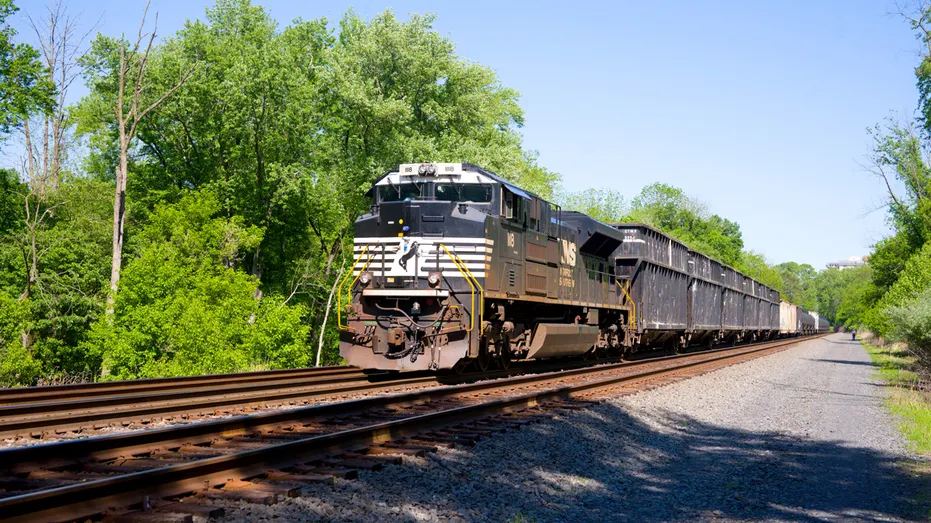
Opponents argue this specific deal fails that test. The Stop the Rail Merger Coalition, comprising labor unions, agricultural organizations, and competing transport firms, warned the Trump administration in August that concentrating such vast infrastructure under one corporate umbrella threatens domestic manufacturers, energy producers, and consumers. The coalition contends the loss of parallel routing options will ultimately drive up shipping rates and introduce severe supply chain vulnerabilities if the combined network experiences systemic disruptions.
Vena dismissed those objections as defensive posturing by competitors. “In the business world, if they thought we were doing something illogical and it made no sense, they would just stay quiet… and let us fail, but we’re not failing,” he said. “That’s what they’re worried about. We’re gonna have a better product, lower price, more capability to move and win in the marketplace.”
Labor stability remains a critical variable in the STB’s evaluation. Railroad mergers historically trigger steep workforce reductions as redundant yards, dispatching centers, and administrative functions are consolidated. To neutralize union opposition, Union Pacific has pledged lifetime employment guarantees to all workers holding unionized positions at the time the deal closes.
Karl Joost, a conductor based at a Union Pacific rail yard in the Chicago suburbs, acknowledged the guarantee does not insulate workers from operational shifts. “Your job might change slightly, but it means that you don’t have to worry about the merger happening and you not being a part of the organization anymore,” Joost said.
The Chicago terminal network will serve as the physical fulcrum of the integrated system. As the primary interchange hub for North American freight, Chicago’s rail infrastructure currently forces eastern and western carriers to negotiate complex switching arrangements. Unifying operations there would resolve decades of chronic congestion that routinely delays national shipments.
When asked to quantify his confidence in securing regulatory clearance, Vena offered a precise assessment: “You always have to have a little bit of doubt, but I’m 99.99%.”
Shares of Union Pacific (UNP) recently traded at $277.06, while Norfolk Southern (NSC) stood at $316.23, reflecting Wall Street’s pricing of the pending acquisition.