UC Asks Federal Judge to Dismiss $2 Billion UCLA Antisemitism Lawsuit, Calling It Political Coercion
The 539-page filing argues the Justice Department lacks legal authority to retroactively seize funds for completed research and accuses the administration of weaponizing civil rights laws.
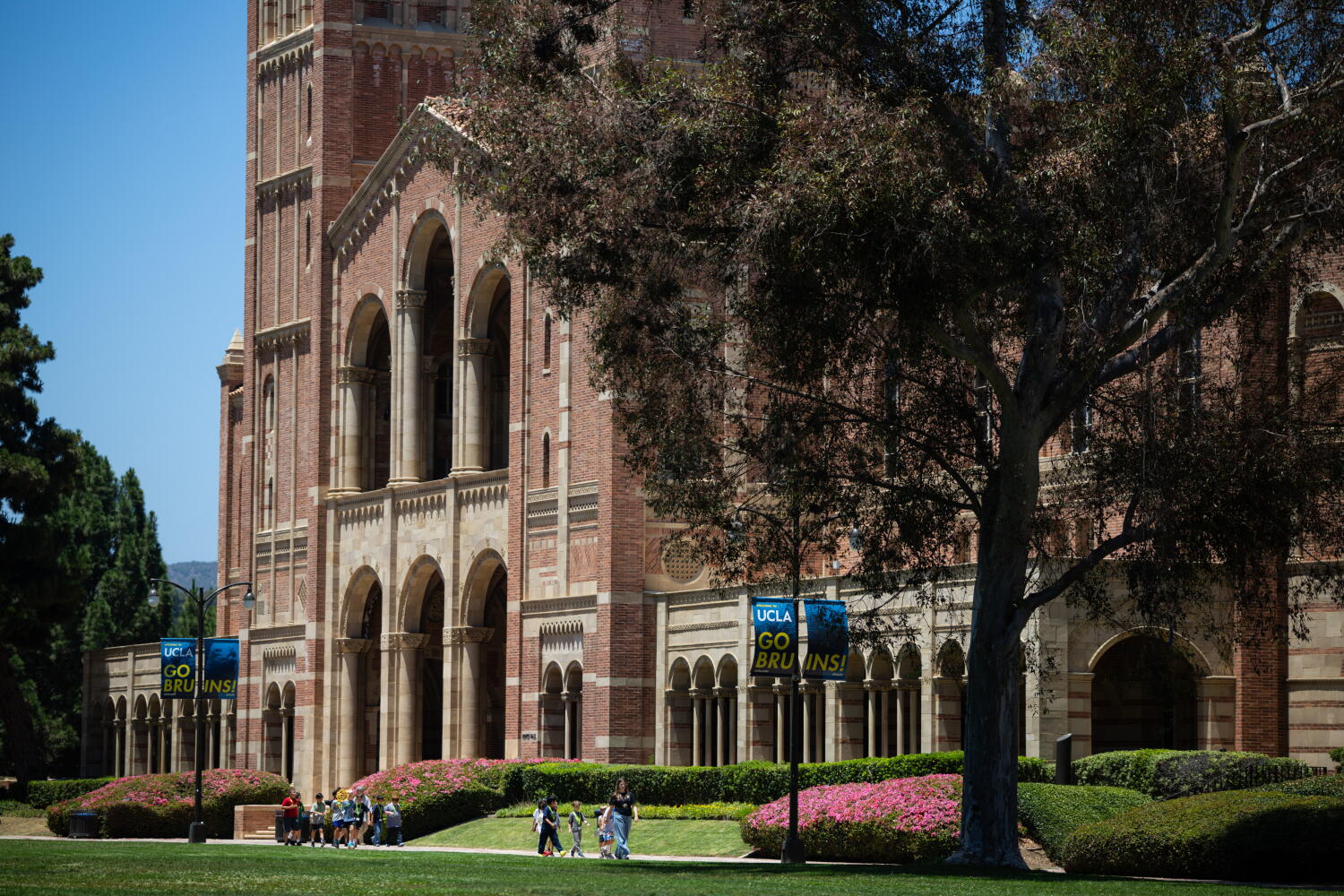
The University of California has formally asked a federal judge to dismantle the Justice Department’s civil rights lawsuit against UCLA, arguing that the government’s attempt to claw back more than $2 billion in research grants is an unconstitutional effort to force the nation’s largest public university system into political submission.
In a 539-page motion filed late Wednesday in Los Angeles federal court, UC lawyers urged U.S. District Judge Christina A. Snyder to dismiss the May lawsuit brought under Title VI of the Civil Rights Act of 1964. The filing represents the university system’s most aggressive legal counterattack since the Trump administration began targeting higher education institutions over their handling of campus protests following the Oct. 7, 2023, Hamas attack on Israel.
The Justice Department alleges UCLA demonstrated “deliberate indifference” to the harassment of Jewish and Israeli students between October 2023 and January 2026. Federal authorities are seeking repayment for more than 2,000 research projects funded since the protests began, a demand UC argues lacks any statutory basis because Title VI does not authorize the retroactive seizure of funds already spent on completed scientific and academic work.


“DOJ’s action does nothing to improve the environment on campus,” UC President James B. Milliken said Thursday. He accused the government of ignoring the structural changes UCLA has implemented since the unrest.
The financial stakes extend far beyond the immediate grant dispute. The $2 billion clawback demand dwarfs a $1.2 billion fine the administration attempted to impose in August 2025 after suspending $584 million in active UCLA grants. That earlier penalty was blocked by a federal judge in November following litigation by faculty unions, and the administration abandoned its appeal in February. Unlike those earlier fights, where UC relied on outside groups to lead the courtroom battles, the university system is now directly litigating the core civil rights claims with sworn declarations from top administrators.
UCLA’s defense rests heavily on the argument that the government is prosecuting historical events rather than ongoing violations. To secure a judgment under Title VI, UC contends, the Justice Department must prove current noncompliance. The university points to sweeping operational overhauls enacted since the spring 2024 pro-Palestinian encampment, which culminated in an overnight melee where counterprotesters attacked the camp while police stood by for hours—a failure documented in a subsequent UC-commissioned review.
Chancellor Julio Frenk, who took office in January 2025, detailed those reforms in court documents. UCLA has banned protest encampments and prohibited masks used to conceal identities during rule violations. The university restructured its civil rights compliance office, appointed a dedicated Title VI officer, created a new executive position for campus safety, and revoked recognition of Students for Justice in Palestine after the group was accused of vandalizing the Brentwood home of Jay Sures, a Jewish UC regent.
Frenk characterized combating antisemitism as “a moral imperative.” The Anti-Defamation League upgraded UCLA’s campus climate grade from an F in 2024 to a B this year. However, organizations including the Council on American-Islamic Relations have criticized the administration for failing to apply the same urgency to reports of anti-Muslim, anti-Arab and anti-Palestinian discrimination.
The legal strategy mirrors a successful defense mounted by Harvard University. In August, U.S. District Judge Richard G. Stearns in Boston dismissed materially identical Title VI claims against Harvard, ruling that the protest-related incidents cited by the government were “too isolated and episodic” to establish an ongoing civil rights violation. The Justice Department has appealed that decision.
By refusing to settle, UC has broken ranks with a wave of elite private universities that capitulated to similar federal pressure campaigns last year. Columbia, Northwestern, Cornell and Brown agreed to pay hundreds of millions of dollars combined to resolve antisemitism investigations. Other institutions, including the University of Pennsylvania and the University of Virginia, settled disputes with the administration without financial penalties, though those cases centered on transgender athlete policies and diversity programs rather than protest responses.
Title VI prohibits discrimination based on race, color or national origin in any program receiving federal financial assistance. While the Supreme Court ruled in 2023 that race-conscious college admissions violate the Equal Protection Clause, the application of Title VI to temporary protest environments remains legally unsettled. In a related 2024 case, U.S. District Judge Mark C. Scarsi ruled that Jewish students had been illegally excluded from parts of the UCLA campus during the encampment because they refused to denounce their faith, ordering the university to guarantee equal access. The Justice Department relies on Scarsi’s ruling in its current complaint, while UC argues the resulting settlement proves the university corrected the issue.
The dismissal motion arrives as the Justice Department expands its legal offensive across the entire UC network. Earlier this year, federal prosecutors joined a separate lawsuit alleging UCLA’s David Geffen School of Medicine violated the 2023 Supreme Court ban on affirmative action by favoring Black and Latino applicants. The medical school denies the allegations.
Since May, the department has also issued formal findings accusing the medical schools at UC Davis, UC San Diego and UC San Francisco, along with UC Berkeley’s law school, of illegal racial preferences in admissions, threatening litigation if the campuses refuse to alter their policies. Simultaneously, the government filed a Title VII employment discrimination lawsuit against UC over alleged antisemitic harassment of UCLA staff members, a case joined by six Jewish faculty members and employees. UC’s response in that employment suit is due Oct. 26.