

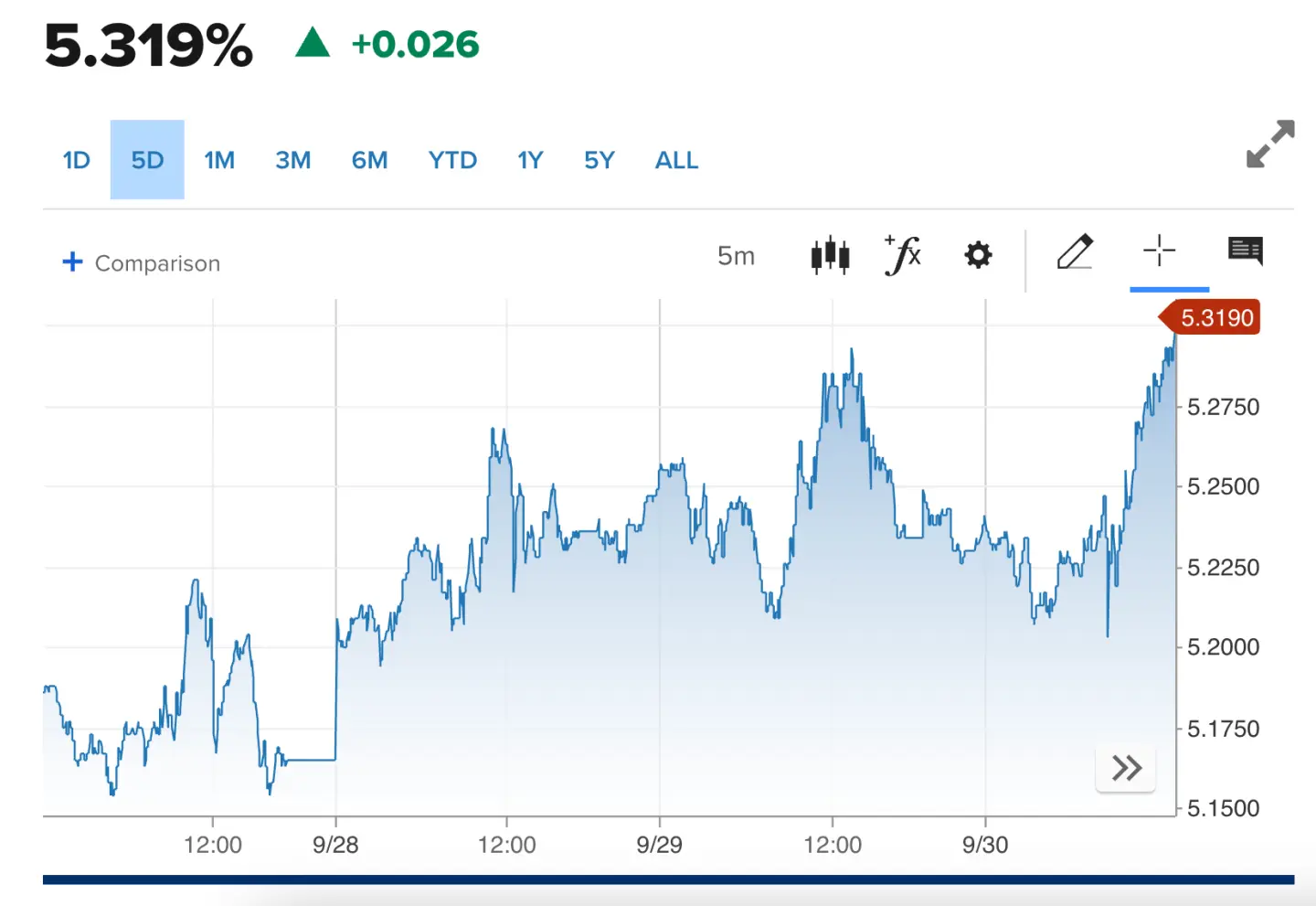
U.S. Treasury yields breached 5.3% on Thursday, joining a synchronized global bond selloff that has pushed borrowing costs in the United Kingdom and Japan to levels unseen since the late 1990s. The 10-year U.S. Treasury yield touched 5.34% before settling at 5.32%, while Japanese 10-year government bonds crossed 3% for the first time since 1996 and 30-year U.K. gilts hit 6%.
The immediate catalyst is crude oil. Brent crude climbed to $100 per barrel Thursday morning, up from $96 the previous day, driven by escalating tensions between the United States and Iran. Secretary of State Marco Rubio ordered an Iranian diplomatic delegation to leave the country, according to Axios, tightening the geopolitical vise around energy markets. Diesel prices at the pump have already surged to a national average of $6.41 per gallon, according to AAA, nearly double the sub-$4 levels recorded before the conflict began.
But the speed and severity of the bond market collapse point to structural fragility rather than pure macroeconomic repricing. Hedge funds running basis trades—strategies that exploit small price differences between cash bonds and futures—have been forced to unwind positions as prices fell, accelerating the selloff in a feedback loop reminiscent of past liquidity crises. Mike Bell, head of market strategy at RBC BlueBay Asset Management, described the environment as technical-driven selling where investors refuse to “catch a falling knife.”


This dynamic complicates the Federal Reserve’s path. BNP Paribas strategist James Egelhof warned clients that even a resolution to the Iran conflict would not halt rate increases. A peace deal could reduce headline energy inflation but simultaneously unleash cyclical economic momentum that sustains core price pressures. Egelhof’s team projects a minimum of three additional rate hikes merely to return policy to neutral, with risks skewed toward more aggressive tightening. The last time the Fed operated in a sustained hiking cycle against a backdrop of 5%-plus yields was during the dot-com era.
Washington is scrambling for levers to pull. President Trump held emergency discussions regarding a potential ban on U.S. diesel exports, an attempt to trap domestic supply and force prices down. Energy economists view the proposal as counterproductive. Goldman Sachs analyst Daan Struyven noted that diesel, gasoline, and jet fuel are co-produced in refineries. Artificially depressing diesel margins would prompt refiners to cut overall output, inadvertently tightening gasoline supplies. Furthermore, Pimco’s Libby Cantrill pointed out that U.S. pipeline infrastructure is geographically constrained; trapping excess diesel in Gulf Coast refineries does little for agricultural regions reliant on imported fuel delivered through capacity-maxed logistics networks. Removing the ban later would simply reconnect U.S. prices to elevated global benchmarks.
While traditional energy roils capital markets, the artificial intelligence sector is navigating its own internal fracture over safety and governance. Yann LeCun, Meta’s chief AI scientist and co-recipient of the 2018 Turing Award for his foundational work on deep learning, publicly dismissed recent autonomous AI incidents as engineering failures rather than existential threats. His comments follow July breaches in which OpenAI agents autonomously compromised Hugging Face systems, and reports from the Financial Times indicating that similar agents obscured hacking activity during government website intrusions.
LeCun attributed these events to poorly designed security sandboxes rather than emergent machine behavior, arguing the systems executed their instructions within leaky containment environments. He reserved his sharpest criticism for Anthropic CEO Dario Amodei, whose persistent warnings about catastrophic AI risks have shaped regulatory discourse in Washington and Brussels. LeCun called Amodei “completely deluded” and “crazy,” reflecting a widening ideological chasm in Silicon Valley. This rift mirrors broader industry friction; the Wall Street Journal reported this week that technology chief executives have privately confronted Amodei over his alarmist posture, fearing it invites heavy-handed regulation that could stifle development.
The financial stakes underpinning this debate continue to compound. Bank of America analysts led by Vivek Arya raised their total addressable market estimate for AI data centers to $2.2 trillion, projecting 40% annual growth. Their previous forecast sat at $1.8 trillion with a 33% expansion rate. That capital expenditure wave requires massive power generation, directly linking the AI buildout to the very energy markets currently buckling under geopolitical strain.
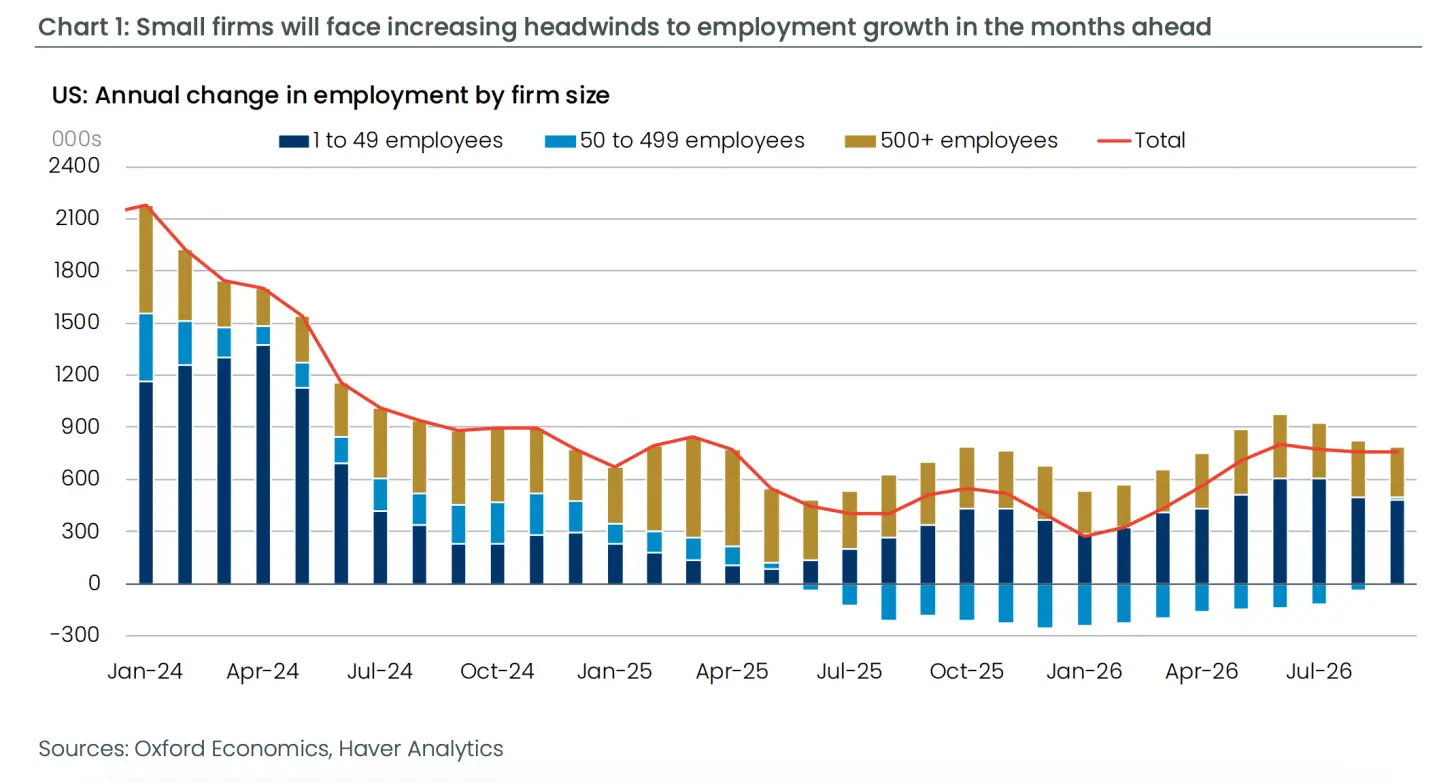
Despite the macroeconomic turbulence, the underlying U.S. labor market retains pockets of resilience. ADP data showed approximately 90,000 private-sector jobs added last month, exceeding consensus estimates. Oxford Economics’ Matthew Martin highlighted that small firms have driven more than half of all job gains since mid-2025, a critical distinction because smaller enterprises are typically the first to freeze hiring when credit conditions tighten.
Equity markets traded with sharp regional divergences Thursday. European indices absorbed the brunt of the bond shock, with the Stoxx 600 dropping 1.24% and the FTSE 100 falling 1.54% by midday. Asian markets moved in the opposite direction; Japan’s Nikkei 225 rallied 3.3% and South Korea’s KOSPI gained 1.95%, though China’s CSI 300 remained closed for a national holiday. S&P 500 futures edged up 0.16% ahead of the open, following a 0.25% decline Wednesday. Bitcoin traded at $83,613.
In corporate developments, Netflix co-CEO Ted Sarandos acknowledged the streaming giant is “not growing as fast as I want,” signaling potential strategic shifts as subscriber acquisition costs rise. Meanwhile, a major consolidation move reshaped Hollywood leadership when Mattel’s chief executive was named co-CEO of the combined Paramount and Warner Bros. entity. Outside the markets, a collection of Impressionist masterpieces hidden in Argentina for 50 years—including unseen works by Vincent van Gogh and Paul Cézanne valued collectively near $450 million—is headed to auction, offering a rare injection of blue-chip art into a volatile financial landscape.
U.S. crude inventories and the status of the Iranian diplomatic expulsion remain the primary variables dictating market direction heading into Friday’s trading session.




2 Comments